
The Authority in Global Agricultural Chemistry & Bio-Resources
ANVISA Expands Natural Ingredients Exemption for Plant-Based Protein Powders in Brazil
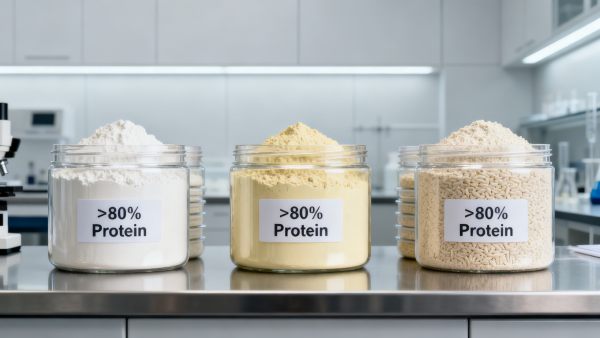
On May 6, 2026, Brazil’s National Health Surveillance Agency (ANVISA) updated Annex to Portaria RDC No. 127/2026, expanding the list of natural ingredients exempt from full registration — specifically including soy, pea, and brown rice protein isolates/powders (≥80% protein) as low-risk substances. This change shortens the regulatory pathway for these products entering the Brazilian market, reducing the备案 cycle from 21 to 10 working days and waiving accelerated stability testing. Food ingredient suppliers, plant-based food manufacturers, and international exporters targeting Brazil should closely monitor implications for market access, supply chain planning, and compliance strategy.
Event Overview
On May 6, 2026, ANVISA published an update to Portaria RDC No. 127/2026, amending its annex to include soy, pea, and brown rice-derived protein isolates and powders (with protein content ≥80%) in the ‘low-risk natural ingredients’ fast-track registration category. Under this revision, the official review period is reduced to 10 working days, and applicants are no longer required to submit accelerated stability study data.
Industries Affected
Direct Exporters & International Trade Firms
These entities are directly impacted because the revised pathway applies only to products registered under ANVISA’s ‘natural ingredients’ framework — a route typically used by foreign manufacturers or their local representatives. The shortened timeline improves predictability for customs clearance and inventory planning but requires accurate classification and documentation alignment with the updated annex criteria (e.g., protein source, purity threshold, and manufacturing process claims).
Raw Material Sourcing & Ingredient Suppliers
Suppliers of soy, pea, and brown rice protein isolates must ensure their specifications meet the ≥80% protein requirement and that their production processes support the ‘natural’ designation under ANVISA’s current definition. Any deviation — such as use of chemical solvents beyond permitted limits or non-compliant drying methods — may disqualify the product from the exemption, triggering full registration requirements.
Plant-Based Food Manufacturers (B2B & B2C)
Manufacturers incorporating these protein powders into finished foods (e.g., nutritional bars, beverages, meat alternatives) benefit indirectly: faster ingredient approval enables more agile formulation and labeling updates. However, they remain responsible for verifying that their suppliers’ registrations are valid and correctly scoped — particularly where blends or multi-source proteins are used.
Regulatory & Compliance Service Providers
Firms offering ANVISA registration support face increased demand for targeted filings under the natural ingredients pathway. Yet the scope remains narrow: only isolated/powdered forms of the three specified sources qualify. Services must now differentiate between ‘natural ingredient’ filings and standard food additive or novel food applications — misclassification risks delays despite the new exemption.
Key Considerations for Enterprises and Practitioners
Monitor Official Updates on Scope Clarification
ANVISA has not yet published interpretive guidance on how ‘natural’ is assessed for protein isolates (e.g., acceptable extraction methods, residual solvent thresholds). Companies should track upcoming technical notes or Q&A documents from ANVISA’s Directorate of Food (DIALIM), especially regarding process-related eligibility.
Verify Product Eligibility Against Exact Criteria
The exemption applies strictly to protein isolates/powders derived solely from soy, pea, or brown rice — not hydrolysates, concentrates, or mixed-source blends. Firms must confirm analytical reports (e.g., Kjeldahl or Dumas protein assay) demonstrate ≥80% protein on a dry basis, and that the product is marketed without added vitamins, minerals, or functional additives that could shift its regulatory classification.
Distinguish Policy Signal from Operational Readiness
This update reflects ANVISA’s ongoing effort to streamline oversight of well-characterized natural ingredients — not a broad deregulation of plant-based proteins. It does not alter requirements for finished food products, allergen labeling, or GMP compliance. Companies should avoid assuming broader applicability beyond the narrowly defined categories listed in the annex.
Prepare Documentation and Supplier Coordination Early
Although the review window is now 10 working days, submission packages still require certified translations, power of attorney, Good Manufacturing Practice (GMP) declarations, and full specifications. Firms intending to leverage the exemption should align with Brazilian legal representatives and prepare core documentation at least four weeks before filing — especially if sourcing from multiple facilities or jurisdictions.
Editorial Perspective / Industry Observation
Observably, this amendment signals ANVISA’s incremental alignment with international approaches to low-risk food ingredients — prioritizing efficiency where safety profiles are well established. Analysis shows it is not a standalone policy shift but part of a broader trend since RDC No. 251/2022, which began categorizing natural ingredients by risk tier. From an industry perspective, the change is best understood as a procedural optimization rather than a fundamental regulatory relaxation: eligibility remains tightly bounded, and enforcement rigor around documentation integrity is unchanged. Continued observation is warranted for potential expansions to other plant proteins (e.g., fava bean, lentil) or inclusion of additional processing parameters in future revisions.
Ultimately, this update lowers entry friction for a specific subset of plant-based protein ingredients in Brazil — but does not eliminate the need for precise regulatory navigation. Its significance lies less in immediate market transformation and more in reinforcing a predictable, science-informed pathway for ingredients with robust historical safety data.
Information Source: Official text of Portaria RDC No. 127/2026, published by ANVISA on May 6, 2026; Annex update available via ANVISA’s electronic gazette (Diário Oficial da União). Note: No supplementary technical guidance or implementation FAQs have been released as of publication date — these remain under observation.
Related Intelligence
- Natural IngredientsANVISA Expands Natural Ingredients Exemption List, Grants Fast-Track for Chinese Plant-Based Protein PowdersANVISA fast-tracks Chinese plant-based protein powders — soy, pea, rice isolates now exempt from full registration, cutting approval to 5 days.
- Natural IngredientsANVISA Expands Natural Ingredients Exemption for Plant-Based Protein Powders in BrazilANVISA expands natural ingredients exemption for plant-based protein powders—soy, pea & brown rice isolates (≥80% protein) now fast-tracked in Brazil.
- Natural IngredientsANVISA Launches Fast-Track for Natural Ingredients in BrazilANVISA fast-track for natural ingredients in Brazil cuts import registration to 21 working days—key for exporters, formulators & compliance teams. Act now!
The Morning Broadsheet
Daily chemical briefings, market shifts, and peer-reviewed summaries delivered to your terminal.
