

The Authority in Global Agricultural Chemistry & Bio-Resources
AI-AeroSense Launched at 2026 Global AI Terminal Expo in Shenzhen
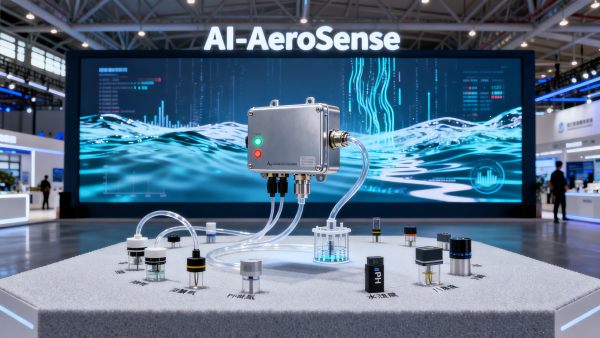
On May 7, 2026, ahead of the 2026 Global Artificial Intelligence Terminal Expo (May 14–16, Shenzhen), multiple Chinese aeration and water technology enterprises jointly unveiled the ‘AI-AeroSense’ water quality prediction module — a development with direct implications for aquaculture operations, environmental monitoring equipment providers, and global OEM partners serving smart water infrastructure markets.
Event Overview
The pre-exhibition technical launch took place on May 7, 2026, in Shenzhen. During the event, several China-based Aeration & Water Tech companies introduced the AI-AeroSense module — an AI-powered system designed to predict eutrophication risk in aquaculture water bodies up to 48 hours in advance, using real-time streaming data from eight parameters including dissolved oxygen, pH, and turbidity. The module has obtained NSF-Aquaculture certification from Norway and supports API integration. OEM licensing is now open to global channel partners.
Industries Affected
Aquaculture Operations (Farm-Level Users)
These end-users may experience shifts in operational planning cycles due to predictive capability. Impact manifests primarily in reduced reactive interventions (e.g., emergency aeration or chemical dosing) and increased reliance on forecast-driven scheduling of maintenance, feeding, and harvest timing.
Smart Aquaculture Equipment Manufacturers
Manufacturers integrating water quality sensing into aerators, recirculating aquaculture systems (RAS), or pond controllers may face pressure to adopt or interface with AI-AeroSense-compatible data protocols. Impact centers on firmware update requirements, API documentation alignment, and potential recalibration of onboard analytics logic.
Global Channel Distributors & OEM Partners
Distributors serving aquaculture or municipal water sectors may see new product bundling opportunities or technical support obligations. Impact includes evaluation of OEM licensing terms, regional compliance readiness (e.g., local data handling norms), and training needs for field engineers deploying AI-integrated hardware.
What Relevant Enterprises or Practitioners Should Focus On Now
Monitor official certification pathways beyond NSF-Aquaculture
While Norwegian NSF-Aquaculture certification is confirmed, regulatory acceptance in key export markets — such as the EU’s CE marking framework or U.S. EPA guidance for predictive water tools — remains unconfirmed. Enterprises should track updates from national standards bodies in target regions before committing to large-scale integration.
Evaluate API integration scope and data governance requirements
The module supports API connectivity, but documentation on authentication methods, payload formats, rate limits, and data residency provisions has not yet been publicly released. Technical procurement teams should request detailed integration specs prior to pilot deployment.
Assess OEM licensing terms for scalability and territorial exclusivity
OEM authorization is now open globally, yet public details on minimum order volumes, regional exclusivity clauses, or white-label branding flexibility are unavailable. Companies exploring co-development or private-label arrangements should initiate direct engagement with the consortium to clarify commercial conditions.
Prepare for field-level validation under local water chemistry profiles
The model was trained and certified using datasets aligned with Nordic aquaculture conditions. Performance in tropical, brackish, or high-alkalinity environments — common in Southeast Asia, Latin America, or Middle Eastern shrimp farms — has not been disclosed. Pilot testing under representative local conditions is advisable before operational rollout.
Editorial Perspective / Industry Observation
Observably, AI-AeroSense represents an early-stage convergence of edge-capable AI inference and standardized aquaculture telemetry — not yet a market-ready turnkey solution, but a signal of accelerating vendor-led standardization in predictive water management. Analysis shows this is less about immediate product displacement and more about shifting expectations: buyers increasingly treat predictive accuracy, certification transparency, and interoperability as baseline criteria rather than differentiators. From an industry perspective, the launch signals growing institutional comfort with AI models operating in regulated biological environments — though widespread adoption will hinge less on algorithmic novelty and more on verifiable performance consistency across geographies and species-specific systems.
Current evidence suggests this is a capability signal — not a fully deployed market outcome. Its significance lies in formalizing a reference architecture for AI-augmented water sensing, which may influence upcoming IEC/ISO working group discussions on smart aquaculture device interoperability.
Conclusion
This initiative marks a step toward operationalizing AI in precision aquaculture infrastructure — but its near-term value is procedural rather than transformative. It better reflects evolving vendor commitments to certifiable, integrable AI tools than it does imminent industry-wide adoption. For stakeholders, the most rational interpretation is that AI-AeroSense establishes a new benchmark for technical readiness; actual impact will depend on how quickly complementary ecosystem elements — certification harmonization, API documentation, and localized validation — follow.
Information Sources
Main source: Official pre-exhibition technical release from the 2026 Global AI Terminal Expo (Shenzhen), dated May 7, 2026. No third-party verification or independent test reports have been published to date. Certification scope (NSF-Aquaculture) and OEM licensing availability are confirmed; all other implementation details — including API specifications, regional compliance status, and validation geography coverage — remain pending official disclosure and are flagged for ongoing observation.
Related Intelligence
- Aeration & Water TechGlobal Shipping Alliance Launches Green Corridor Asia-Europe Cold Chain RouteGreen Corridor Asia-Europe cold chain route launched: 22% lower surcharges, –25°C to +15°C control for agri-tech exports. Book now!
- Aeration & Water TechCommercial protein skimmers: what foam quality tells youCommercial protein skimmers reveal more than waste removal—foam quality helps operators spot loading shifts, imbalance, and maintenance needs early for steadier performance.
- Aeration & Water TechDissolved oxygen controller alarms that point to sensor driftDissolved oxygen controller alarms may signal sensor drift, not process upset. Learn key alarm patterns, faster field checks, and service tips to reduce downtime and protect compliance.
The Morning Broadsheet
Daily chemical briefings, market shifts, and peer-reviewed summaries delivered to your terminal.
