

The Authority in Global Agricultural Chemistry & Bio-Resources
Commercial protein skimmers: what foam quality tells you
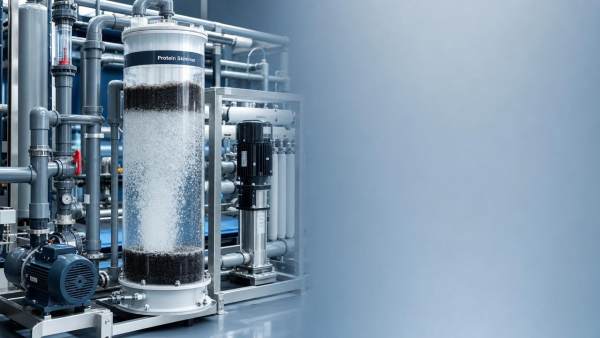
In large-scale aquaculture and industrial water treatment, commercial protein skimmers do more than remove suspended organics. They also function as visible diagnostic tools: foam behavior reflects loading conditions, air-water balance, contamination shifts, and maintenance status. As water systems become more automated, regulated, and cost-sensitive, reading foam quality has become a practical operating skill rather than a niche technical detail. For facilities seeking stable performance, lower intervention rates, and better consistency, understanding what foam quality reveals is an effective first step toward getting more value from commercial protein skimmers.
Foam behavior is becoming a frontline performance signal
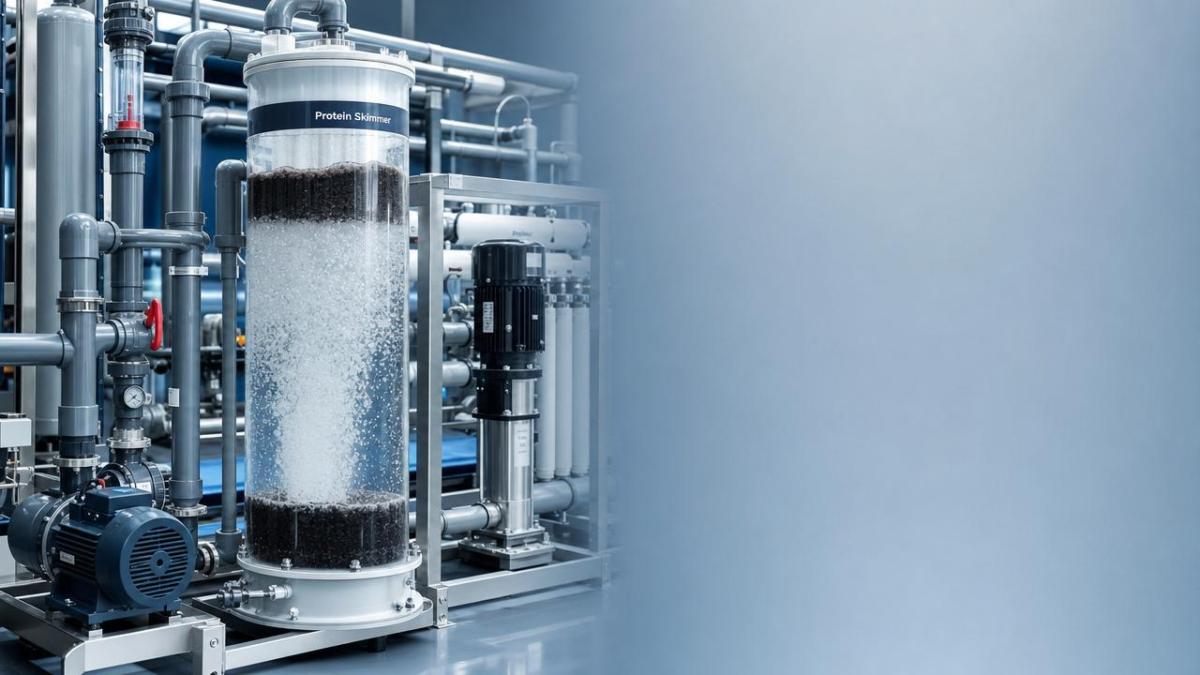
Across recirculating aquaculture systems, hatcheries, marine holding operations, and industrial process-water loops, operators increasingly judge commercial protein skimmers not only by installed capacity but by foam character over time. Thick, stable foam usually indicates a productive interaction between dissolved organic compounds, contact time, and air injection. Thin, collapsing, or erratic foam often points to imbalances that may not yet appear in broader water quality reports. This is why foam is now treated as an early operational signal rather than a superficial byproduct.
The trend is driven by a wider shift toward continuous observation. In systems where feed density, biological load, salinity, temperature, and cleaning chemistry fluctuate daily, visible foam quality provides fast feedback between scheduled testing intervals. Well-tuned commercial protein skimmers can reveal whether the system is carrying too much organic waste, pulling too much water into the collection zone, or losing efficiency because of fouled injectors and reaction surfaces.
This matters because many facilities now run closer to optimized thresholds. Water reuse rates are rising, discharge expectations are tighter, and biosecurity standards continue to strengthen. Under these conditions, foam quality becomes part of a broader operating language—one that connects mechanical performance, water chemistry, and process discipline.
What current foam trends are telling the industry
A noticeable change in recent operations is that foam assessment is being used to spot subtle shifts before they become visible losses in water clarity, dissolved oxygen stability, or downstream filtration burden. In practical terms, the foam produced by commercial protein skimmers is increasingly read through four variables: density, color, stability, and volume. Together, these indicators offer a fast operating snapshot.
This trend also reflects a move away from one-dimensional equipment evaluation. Instead of asking whether commercial protein skimmers are simply “working,” facilities now ask whether the foam profile is repeatable across production cycles, stocking changes, cleaning routines, and seasonal input variations. Consistency is becoming the benchmark.
The drivers behind better foam interpretation are practical, not theoretical
The growing attention to foam quality is rooted in operational pressure. Water treatment systems are expected to do more with tighter tolerances, lower waste, and stronger traceability. For that reason, foam interpretation around commercial protein skimmers is being shaped by a set of practical drivers.
- Higher organic loading: Intensive production and recirculation systems create faster swings in dissolved and colloidal waste.
- Closer energy monitoring: Air draw, pump load, and hydraulic efficiency are under greater review, making foam output a useful optimization metric.
- Regulatory expectations: In environments affected by GMP-style discipline, EPA oversight, or strict discharge control, visible process indicators matter more.
- Automation growth: Sensors provide numeric data, but foam in commercial protein skimmers still offers immediate visual confirmation of operating reality.
- Maintenance economics: Foam changes often appear before complete performance decline, allowing less disruptive servicing.
In other words, the industry is not becoming more interested in foam for cosmetic reasons. It is becoming more interested because foam quality reduces uncertainty. In systems where downtime, fish stress, biological instability, or process contamination can carry significant cost, early interpretation has direct business value.
What foam quality changes mean across different operating stages
The meaning of foam behavior depends on where the change occurs in the process. During startup, commercial protein skimmers may produce inconsistent foam while bio-load and water chemistry stabilize. During steady-state operation, however, sudden shifts are more meaningful and often tie back to feed composition, solids carryover, salinity changes, or cleaning residues.
In aquaculture, reduced foam density may signal that dissolved organics are changing form, that airflow is restricted, or that water depth in the skimmer body has shifted. In industrial water applications, unstable foam can point to surfactant contamination, process chemistry variation, or upstream separator inefficiency. In both cases, the lesson is the same: foam should be interpreted in context, not in isolation.
Where the impact is most visible
- Pre-filtration load: Underperforming commercial protein skimmers can increase burden on biofilters, drum filters, and polishing units.
- Water clarity and gas balance: Better foam fractionation often supports more stable oxygen transfer and lower organic haze.
- Cleaning schedules: Foam inconsistency can reveal nozzle scaling, venturi blockage, or reaction chamber fouling before failure occurs.
- Waste handling efficiency: Wet foam may remove too much water, while overly dry but low-volume foam may indicate insufficient processing.
The strongest operators watch a small set of foam-linked indicators
As commercial systems become more integrated, the most reliable approach is to combine visual foam observation with simple operating records. Effective use of commercial protein skimmers depends on linking foam quality to measurable conditions rather than relying on memory or subjective impressions alone.
- Track foam height at fixed time intervals rather than occasional observation.
- Note foam color and dryness relative to feed events, harvest events, or process-water changes.
- Compare air intake readings against foam stability to detect hidden restrictions.
- Record collection cup or waste stream volume to distinguish productive skimming from excessive water carryover.
- Check whether cleaning agents or additives correlate with sudden foam collapse in commercial protein skimmers.
- Review salinity, temperature, and suspended solids when foam behavior changes unexpectedly.
These points matter because foam quality rarely changes for only one reason. It is usually the result of multiple interacting variables. A disciplined observation routine makes those relationships easier to identify and act on.
A practical response framework helps turn foam signals into decisions
When foam quality shifts, the goal is not to react blindly. The better approach is to follow a short decision framework that separates loading changes from mechanical faults. This is especially important for commercial protein skimmers in high-throughput environments, where unnecessary adjustment can create more instability than the original issue.
This kind of structured response is increasingly valuable because modern commercial protein skimmers sit within connected treatment trains. A skimmer issue can affect filtration efficiency, oxygen management, waste concentration, and even treatment chemistry downstream. Faster diagnosis protects the whole system.
The next step is to standardize foam observation before scaling complexity
For facilities looking to improve water quality control, the immediate opportunity is not necessarily to replace equipment. It is often to standardize how commercial protein skimmers are observed, logged, and interpreted. A simple baseline of normal foam density, color, collection rate, and daily variability can make future deviations much easier to understand.
That baseline becomes especially useful when production expands, feed formulas change, seasonal temperatures shift, or new treatment steps are introduced. Instead of guessing whether performance has declined, operators can compare current foam behavior against known system history and respond with greater precision.
In that sense, foam quality is more than an operating detail. It is one of the clearest visual indicators of how well commercial protein skimmers are translating design capacity into real-world treatment performance. Building a routine around that signal is a practical, low-cost move that improves consistency, supports better maintenance timing, and strengthens confidence in overall system control.
Related Intelligence
- Aeration & Water TechGlobal Shipping Alliance Launches Green Corridor Asia-Europe Cold Chain RouteGreen Corridor Asia-Europe cold chain route launched: 22% lower surcharges, –25°C to +15°C control for agri-tech exports. Book now!
- Aeration & Water TechCommercial protein skimmers: what foam quality tells youCommercial protein skimmers reveal more than waste removal—foam quality helps operators spot loading shifts, imbalance, and maintenance needs early for steadier performance.
- Aeration & Water TechDissolved oxygen controller alarms that point to sensor driftDissolved oxygen controller alarms may signal sensor drift, not process upset. Learn key alarm patterns, faster field checks, and service tips to reduce downtime and protect compliance.
The Morning Broadsheet
Daily chemical briefings, market shifts, and peer-reviewed summaries delivered to your terminal.
