

The Authority in Global Agricultural Chemistry & Bio-Resources
Seed oil expeller wholesale margins depend on more than price
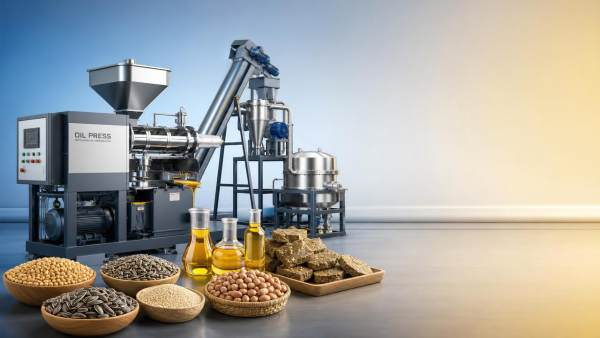
Seed oil expeller wholesale is being re-priced by performance, not just quotations
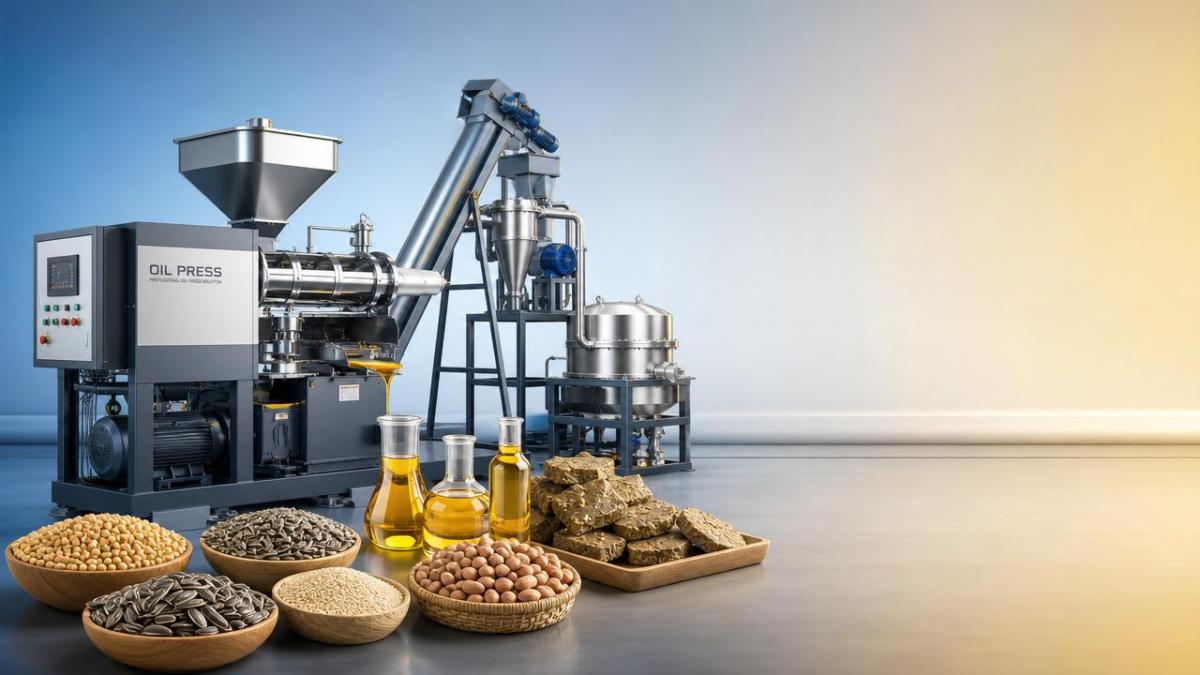
In the seed oil expeller wholesale business, margins are shaped by far more than the quoted unit price. For distributors, agents, and regional dealers, profitability depends on machine durability, oil yield efficiency, spare-parts support, compliance, and supplier reliability across volatile agricultural markets. Understanding these deeper cost drivers is essential for building stronger channel performance and protecting long-term resale value.
Across the broader industrial and agricultural equipment market, buyers are becoming more analytical about total ownership cost. In seed oil expeller wholesale, that shift is especially visible because the equipment sits at the intersection of raw material variability, energy use, mechanical wear, and food-grade processing expectations. A machine that looks cheaper at the factory gate can easily become more expensive after installation, downtime, inconsistent extraction rates, or delayed parts replacement.
This change matters because channel margins are increasingly won through lifecycle performance. Stronger resale economics now come from fewer service claims, more stable throughput, easier operator training, and clearer documentation for installation and compliance. As a result, seed oil expeller wholesale is moving away from price-led competition toward evidence-led evaluation.
Current market signals show a wider definition of value in seed oil expeller wholesale
Several market signals explain why this shift is accelerating. First, end users are processing a broader range of oil-bearing materials, from soybean and sunflower to mustard, sesame, peanut, copra, and multi-seed blends. That diversity exposes machine design differences in pressing efficiency, barrel wear, temperature control, and cake discharge consistency. Second, freight costs, customs delays, and after-sales expectations have made reliability more valuable than headline discounting. Third, compliance and food safety awareness are raising the importance of material traceability, electrical standards, and documentation readiness.
In practical terms, seed oil expeller wholesale now rewards suppliers and channel partners that can prove predictable operating outcomes. Buyers increasingly ask not only, “What is the unit price?” but also, “How many tons per day can this model sustain under local conditions?”, “What is the expected wear-part cycle?”, and “How fast can key components be delivered if a screw shaft fails?” These questions reshape margin structure because every uncertainty becomes a hidden cost.
The main drivers behind margin pressure and margin expansion
Why lower purchase price can weaken wholesale profit over time
A common mistake in seed oil expeller wholesale is treating factory price as the primary lever of competitiveness. In reality, low-price machines often create margin leakage in four places: installation adjustment, performance inconsistency, parts replacement, and post-sale support. If a machine requires repeated calibration to handle different seed moisture levels or feed rates, labor costs rise and customer confidence falls. If throughput claims are overstated, the gap becomes a direct challenge to resale credibility.
Another overlooked issue is yield variability. Even a modest drop in oil recovery can become more expensive than the original purchase savings, especially in operations processing high-value seeds. This is why technical benchmarking matters. Seed oil expeller wholesale becomes more defensible when sellers can compare actual extraction rates, residual oil in cake, and continuous run stability under realistic operating conditions rather than laboratory-style best cases.
There is also a financing dimension. Equipment that generates more complaints or uncertain service needs tends to slow payment cycles, increase requests for concessions, and force deeper discounting on future orders. In that environment, headline margin looks acceptable on paper while net margin deteriorates after support costs are counted.
The strongest margin gains in seed oil expeller wholesale come from operational proof points
The most resilient channel performance usually comes from a clear set of operational proof points. In seed oil expeller wholesale, these proof points help justify price discipline while shortening decision cycles. They also support stronger positioning in markets where many machines appear similar in photos or simplified specifications.
- Verified throughput ranges by seed type, moisture condition, and pre-treatment method
- Documented residual oil benchmarks in press cake
- Expected maintenance intervals for screws, rings, bearings, and filters
- Power load data under normal and peak operation
- Availability of local-voltage motors, control panel standards, and safety protections
- Spare-parts lead times, recommended stock lists, and remote troubleshooting procedures
These details matter because seed oil expeller wholesale increasingly rewards transparency. When support materials are precise, channel partners spend less time defending performance claims and more time building confidence around total value. That shift improves conversion quality and lowers the cost of post-sale corrections.
Different business stages feel the impact in different ways
The impact of this pricing-to-performance transition is not uniform. Early-stage market entry tends to focus on pricing access, but as installed base grows, service burden becomes the dominant margin variable. In mature channels, seed oil expeller wholesale profitability often depends more on uptime and spare-parts planning than on first-order discount structure.
At the transaction stage, poor machine fit can delay deals or trigger last-minute renegotiation. At the installation stage, unclear site requirements can add hidden logistics and engineering costs. During operation, weak support systems create the largest long-tail margin erosion through claims, emergency shipments, and reputational damage. This is why wholesale strategy should be mapped to the full equipment lifecycle rather than only to landed cost.
Where attention should shift immediately
- Evaluate seed oil expeller wholesale offers by cost per operating hour, not by unit price alone
- Compare oil yield and residual cake performance across multiple seed categories
- Confirm the metallurgy and machining quality of high-wear components
- Check whether spare parts can be stocked regionally with predictable replenishment
- Review documentation for electrical safety, food-contact suitability, and export compliance
- Use service response time as a pricing variable, not as a secondary courtesy
A practical framework for judging future-ready wholesale offers
Because market conditions remain volatile, the best approach is to score seed oil expeller wholesale options against a forward-looking framework. This reduces overreliance on optimistic sales language and aligns decisions with measurable business outcomes.
The next step is to build margin models around evidence
The future of seed oil expeller wholesale will favor businesses that quantify value better than competitors. That means building margin models that include oil yield, maintenance frequency, energy use, parts lead time, compliance readiness, and service effort alongside the ex-works price. When these variables are visible, discount pressure becomes easier to manage because the conversation shifts from cheapest machine to strongest operating return.
A practical next step is to standardize a comparison sheet for every seed oil expeller wholesale offer. Include seed-specific output data, wear-part schedules, spare-parts kits, technical drawings, power requirements, and support commitments. This creates a stronger basis for negotiations, reduces preventable disputes, and helps protect channel value over time.
In a market defined by agricultural volatility and tighter performance expectations, the best margins no longer come from buying lowest. They come from choosing equipment and supplier structures that keep oil extraction running, support claims low, and resale confidence high.
Related Intelligence
- Milling Machinery5 Milling Machinery Firms Approved for Belt and Road Smart Farm Machinery Cloud Platform5 milling machinery firms approved for Belt and Road Smart Farm Machinery Cloud Platform — enabling multilingual remote diagnostics, cross-border spare parts ordering & national API integration.
- Milling MachineryTea leaf rolling machine pressure settings and leaf appearanceTea leaf rolling machine pressure settings directly shape twist, appearance, and quality. Learn how to balance pressure for cleaner leaves, less breakage, and more consistent tea processing results.
- Milling MachineryTea processing machines wholesale and the spare parts questionTea processing machines wholesale buyers now focus on spare parts, uptime, and lifecycle support. Learn how to compare suppliers, reduce downtime risk, and protect tea quality.
The Morning Broadsheet
Daily chemical briefings, market shifts, and peer-reviewed summaries delivered to your terminal.
