

The Authority in Global Agricultural Chemistry & Bio-Resources
Tea leaf rolling machine pressure settings and leaf appearance
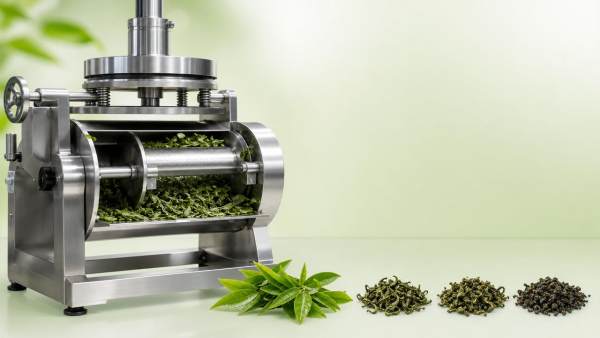
Getting consistent style, aroma, and market-ready shape starts with understanding how a tea leaf rolling machine applies pressure. In tea processing, pressure is not a fixed number that works for every batch. It interacts with leaf tenderness, withering level, moisture distribution, cultivar traits, and the intended tea style. When pressure is set correctly, rolling improves leaf twist, encourages controlled cell rupture, releases juices for later oxidation or flavor development, and creates a clean, attractive appearance. When pressure is too high or poorly timed, the same machine can flatten leaves, generate excessive fines, darken edges, and reduce visual grade. For practical operation, pressure settings must therefore be treated as a process variable linked directly to finished leaf appearance and production consistency.
Pressure control in a tea leaf rolling machine
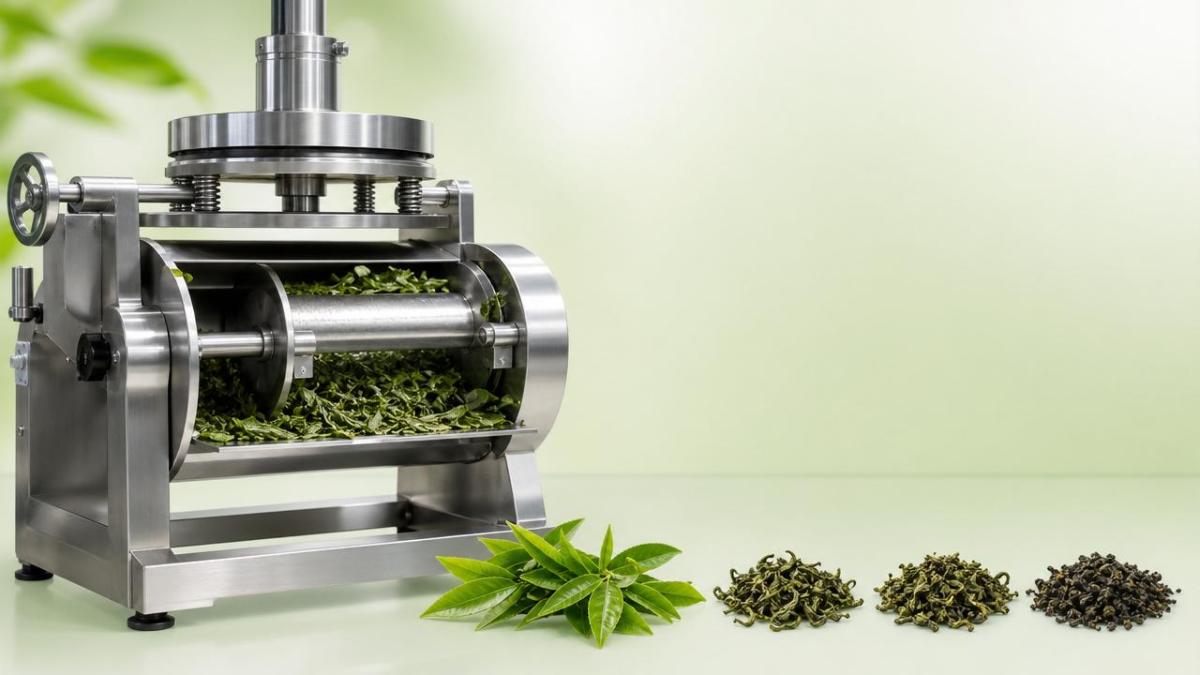
A tea leaf rolling machine uses rotational force and mechanical compression to shape tea leaves after withering or preliminary preparation. The pressure mechanism may be manual, spring-loaded, hydraulic, or pneumatically assisted depending on machine design. Regardless of configuration, the purpose is similar: apply enough force to twist and bruise the leaf in a controlled way without crushing structure beyond the target style.
In practical terms, pressure settings influence four visible and measurable outcomes. First, they determine the tightness and uniformity of the twist. Second, they affect the degree of cell breakage, which changes how much sap is released. Third, they influence heat buildup and moisture migration during rolling. Fourth, they shape the external appearance of the leaf, including color brightness, edge integrity, and the proportion of whole leaf to fragments.
This is why operators often adjust a tea leaf rolling machine progressively instead of starting at maximum pressure. Gentle initial contact helps gather and align the leaf mass. Moderate pressure can then develop twist and bruising. A final controlled increase may be used only if the batch requires a tighter style. The best result usually comes from staged pressure rather than a single aggressive setting.
Key factors that connect pressure settings and leaf appearance
Leaf appearance after rolling is the result of both machine settings and raw material condition. A well-tuned tea leaf rolling machine cannot compensate fully for poor withering or uneven plucking, but it can protect quality and improve consistency when the batch is prepared correctly.
- Leaf moisture: Leaves that are too wet often smear, clump, and bruise excessively under pressure. Leaves that are too dry may crack, break, or fail to twist evenly.
- Tenderness and plucking standard: Bud-heavy fine plucks generally need gentler pressure than coarser leaves with stronger structure.
- Withering quality: Evenly withered leaf accepts rolling pressure more predictably and produces a cleaner appearance.
- Batch load: Overloading a tea leaf rolling machine reduces effective movement and creates uneven compression zones.
- Rolling time: Pressure and time work together. Low pressure for too long may still damage leaves, while high pressure for a short period may produce uneven twist.
- Tea type objective: Orthodox black tea, green tea, oolong, and specialty handcrafted styles all require different visual outcomes.
A common operating mistake is to judge pressure only by machine feel instead of by leaf response. Good control comes from observing whether the leaf mass is moving freely, whether sap release is moderate rather than excessive, and whether the leaf emerges twisted rather than flattened. Visual checkpoints remain essential even when the tea leaf rolling machine includes modern pressure indicators.
Current processing priorities across tea operations
Across tea processing lines, pressure management is gaining attention because appearance quality now affects not only traditional grading but also export presentation, shelf appeal, and downstream process stability. A consistent tea leaf rolling machine setup supports more uniform drying, sorting, and packing.
These priorities show why pressure settings in a tea leaf rolling machine should be documented alongside raw leaf input and environmental conditions. A visual result that looks acceptable one day may come from a different pressure profile than the same result on a cooler or drier day. Process notes help identify the true cause of appearance changes.
Operational value of proper tea leaf rolling machine settings
The most immediate value of proper tea leaf rolling machine pressure settings is visual consistency. Leaves with a balanced twist and intact structure are easier to sort, grade, and present. This matters for premium loose-leaf products, orthodox lines, and export-focused production where leaf appearance is part of the quality decision.
There is also a technical value beyond appearance. Proper rolling pressure can improve later-stage process behavior. Evenly bruised leaves oxidize more predictably. Uniformly shaped leaves dry more evenly. Reduced breakage lowers dust generation in handling and packing. In this way, pressure control in a tea leaf rolling machine supports both product quality and line efficiency.
Another benefit is reduced waste. Excess pressure often converts valuable whole leaf into broken fragments that may enter lower value grades. Under-pressure, on the other hand, can leave leaves loose, pale, or poorly formed, which may require rework or cause quality drift later. A correct pressure range protects yield as well as appearance.
Typical rolling targets by leaf condition and style
Different tea styles call for different pressure behavior. The same tea leaf rolling machine may therefore be used in very different ways depending on process intent.
These are operating references rather than fixed rules. The actual performance of a tea leaf rolling machine depends on machine geometry, table speed, pressure plate response, and the way the leaf mass circulates during rolling.
Practical adjustment methods and warning signs
A practical pressure routine begins with small-batch observation. Start with a moderate load, apply low pressure, and inspect leaf movement after the first interval. If the leaves are sliding without taking shape, pressure may be too low. If they appear glossy-wet, heavily bruised, or compacted into lumps, pressure may be too high for the current moisture condition.
- Increase pressure when: twist is weak, leaf mass remains too loose, or bruising is insufficient for the target style.
- Reduce pressure when: leaves flatten, break excessively, release too much juice, or lose edge definition.
- Reduce batch load when: the tea leaf rolling machine shows uneven circulation or pressure is concentrated in one area.
- Shorten rolling stage when: desired shape has already formed and continued compression only increases damage.
Warning signs should be captured early. Excessive fine particles, dull-looking leaf surfaces, darkened bruised patches, and inconsistent twist across one batch all indicate that pressure settings, timing, or load level need review. In contrast, a good output from a tea leaf rolling machine shows regular shape, controlled moisture expression, and clear visual uniformity across the tray.
Implementation steps for better consistency
To improve results, establish a simple operating standard for each main leaf type and season. Record incoming leaf moisture, wither condition, batch weight, rolling duration, pressure stages, and final appearance notes. Even without advanced automation, this approach turns the tea leaf rolling machine from a manual craft tool into a controlled process asset.
Next, compare outcomes across multiple batches instead of judging one run in isolation. If appearance problems repeat only on certain days, the root cause may be leaf condition rather than machine design. If problems repeat on all batches, calibration, worn components, pressure transmission, or operator sequence may be responsible. Routine inspection of moving parts, pressure assemblies, and contact surfaces is therefore part of quality control.
For operations refining quality targets, the most useful next step is to define appearance standards in visual terms: degree of twist, allowable breakage, surface brightness, and uniformity across the batch. Then adjust the tea leaf rolling machine pressure profile to match those targets under real production conditions. That method produces repeatable settings, clearer staff guidance, and more reliable finished tea appearance over time.
Related Intelligence
- Milling Machinery5 Milling Machinery Firms Approved for Belt and Road Smart Farm Machinery Cloud Platform5 milling machinery firms approved for Belt and Road Smart Farm Machinery Cloud Platform — enabling multilingual remote diagnostics, cross-border spare parts ordering & national API integration.
- Milling MachineryTea leaf rolling machine pressure settings and leaf appearanceTea leaf rolling machine pressure settings directly shape twist, appearance, and quality. Learn how to balance pressure for cleaner leaves, less breakage, and more consistent tea processing results.
- Milling MachineryTea processing machines wholesale and the spare parts questionTea processing machines wholesale buyers now focus on spare parts, uptime, and lifecycle support. Learn how to compare suppliers, reduce downtime risk, and protect tea quality.
The Morning Broadsheet
Daily chemical briefings, market shifts, and peer-reviewed summaries delivered to your terminal.
