

The Authority in Global Agricultural Chemistry & Bio-Resources
Quaculture & Fishery equipment trends shaping 2026 projects
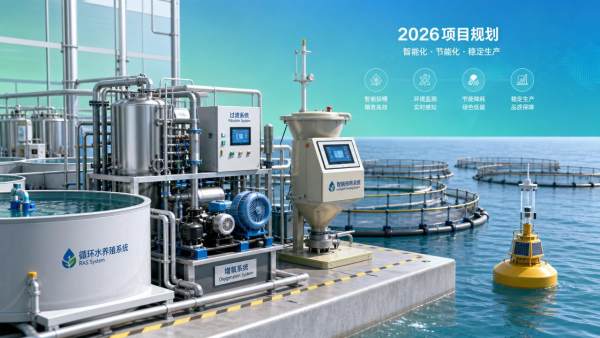
As capital planning accelerates for 2026, quaculture & Fishery equipment is moving from a routine operations topic to a board-level investment question across primary industries. Expansion projects are no longer judged only by output capacity. They are increasingly evaluated by biosecurity performance, energy intensity, labor efficiency, digital traceability, and the ability to maintain stable production under volatile feed, power, and logistics conditions. In this environment, the latest quaculture & Fishery trends are shaping how new farms, retrofit programs, hatcheries, and processing-linked operations define return on investment.
For 2026 projects, the most important shift is practical rather than theoretical: equipment choices now depend heavily on operating scenario. A coastal cage expansion, an inland recirculating aquaculture system, a shrimp hatchery, and a vertically integrated fishery processing site may all invest in automation, but the decision criteria differ sharply. Water control, disease pressure, labor availability, permitting standards, and export compliance each change the preferred technical path. Understanding these scenario differences helps turn broad market signals into sound equipment planning.
Why scenario-based planning is defining quaculture & Fishery equipment decisions
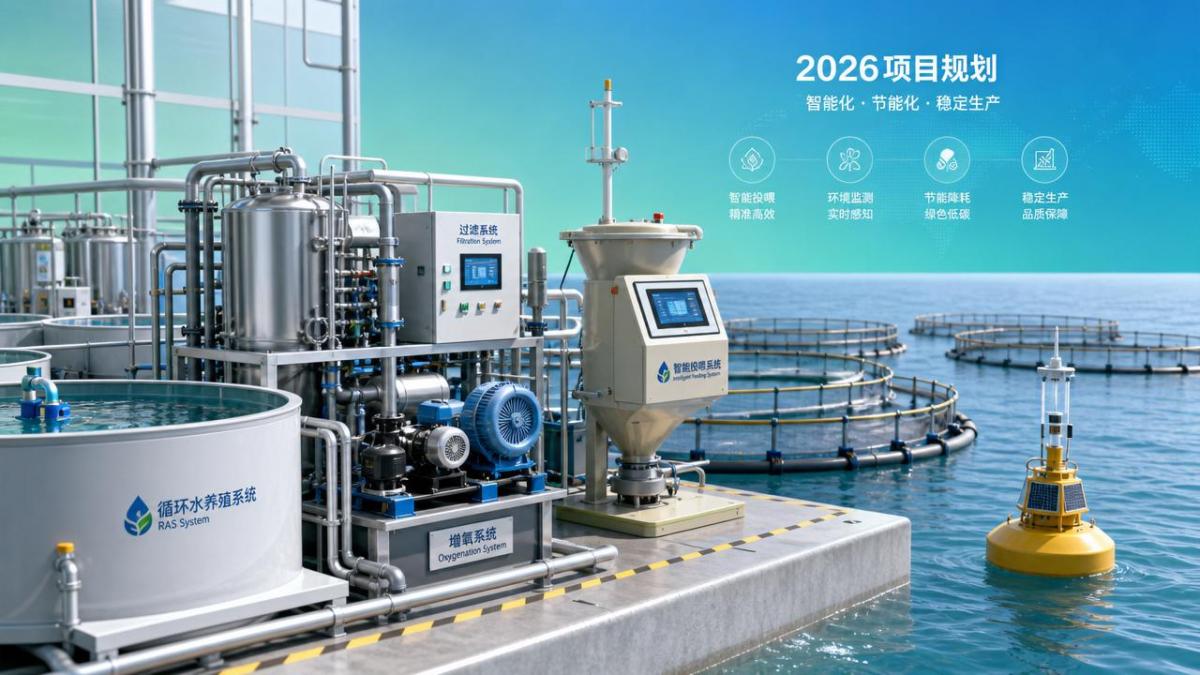
The next wave of quaculture & Fishery investment is not driven by one universal technology. It is driven by the fit between technology and site conditions. In high-density production, automated feeding and dissolved oxygen control may produce the fastest gains. In energy-constrained regions, low-consumption pumping, aeration, and backup systems may matter more than advanced analytics. In regulated export channels, data logging, traceability, and water discharge monitoring can become the deciding factors for project approval.
This is why 2026 capital planning increasingly starts with scenario mapping. Instead of asking which quaculture & Fishery equipment is “best,” planners are asking which configuration best supports species biology, local utility costs, climate exposure, labor models, and downstream market requirements. The result is a more disciplined procurement process and fewer mismatches between installed systems and real operating needs.
Scenario 1: Coastal expansion projects need resilience first, then scale
Coastal projects entering 2026 often aim to increase tonnage while facing stricter environmental scrutiny and more unpredictable weather windows. In this quaculture & Fishery scenario, the strongest equipment trend is resilient design. Operators are prioritizing corrosion-resistant materials, remote monitoring buoys, smart feeders with weather-linked controls, and mooring systems built for rougher marine conditions. Scale still matters, but durability and continuity now shape the economics of expansion.
The core judgment point is whether added automation reduces biological and operational risk in exposed environments. If feed distribution remains inaccurate during current shifts or storms, conversion ratios can deteriorate quickly. If sensors fail under saltwater stress, managers lose visibility at the exact moment when intervention is critical. For coastal quaculture & Fishery projects, investment value comes from systems that maintain performance under environmental stress, not simply from adding more equipment features.
Key indicators to assess
- Resistance to corrosion, wave impact, and biofouling
- Remote alert capability for oxygen, temperature, and feed interruptions
- Energy use per ton of harvested biomass
- Ease of maintenance when offshore access is limited
Scenario 2: Inland intensive systems are being shaped by water and energy economics
Inland projects, especially recirculating or semi-closed systems, face a different set of priorities. Here, 2026 quaculture & Fishery trends center on water reuse efficiency, filtration performance, thermal stability, and energy optimization. Investment decisions are increasingly tied to life-cycle operating cost rather than initial purchase price. A lower-cost setup that consumes more electricity, generates unstable water parameters, or requires frequent manual intervention can become the more expensive option within a short operating cycle.
The critical judgment point is system balance. Pumps, drum filters, biofilters, UV or ozone units, oxygenation modules, and control software must work as one operational ecosystem. If one link is undersized, the entire quaculture & Fishery installation can lose efficiency. For inland projects, the best-performing investments often come from integrated engineering, not from selecting isolated best-in-class components without compatibility review.
What deserves closer attention in 2026
- Variable-frequency drives to reduce power draw during fluctuating loads
- Automated dosing and sensor calibration to protect water consistency
- Modular layouts that allow phased capacity expansion
- Data dashboards linking biomass growth to water-quality events
Scenario 3: Hatchery and nursery operations demand precision over volume
Hatchery and nursery environments are among the most sensitive quaculture & Fishery applications because small deviations in water quality, live feed handling, or disinfection routines can create major downstream losses. For 2026, the defining trend is precision control. Temperature management, salinity stability, micro-aeration, larval tank circulation, backup power, and sanitation automation are receiving more investment than large-scale throughput equipment at this stage of the value chain.
The key judgment point is whether equipment reduces variability between batches. A hatchery with inconsistent survival rates cannot be stabilized only through better staff routines. It needs dependable instrumentation, alarm systems, and repeatable process control. In this quaculture & Fishery scenario, even modest hardware upgrades can produce outsized value if they improve survival, uniformity, and disease prevention early in the cycle.
Scenario 4: Processing-linked fishery projects are integrating harvest, handling, and traceability
When production is linked closely to cold chain, grading, slaughter, or primary processing, quaculture & Fishery equipment decisions extend beyond the pond, cage, or tank. For 2026 projects, the trend is toward integrated handling systems that reduce stress before harvest, shorten transfer time, and preserve product quality through automated sorting, chilling, weighing, and digital lot tracking. This matters especially where export documentation, food safety verification, or premium quality positioning shapes commercial value.
The central question is whether harvest-day equipment aligns with upstream production rhythm. If biomass is ready but grading or transport equipment creates delays, losses appear in mortality, downgraded quality, and labor inefficiency. In this quaculture & Fishery setting, operational advantage comes from synchronization across grow-out, harvest, and processing rather than optimization in one isolated stage.
How demand differs across quaculture & Fishery project scenarios
Practical fit recommendations for 2026 project planning
- Map the biological bottleneck first. In quaculture & Fishery planning, the best equipment decision often starts with the stage where mortality, feed waste, growth inconsistency, or stress is highest.
- Model operating cost, not just capex. Energy, maintenance intervals, spare parts, and sensor reliability frequently determine the true value of a system.
- Check compliance readiness early. Water discharge limits, food safety documentation, and traceability requirements should influence equipment specification before installation begins.
- Prioritize integration. Standalone devices rarely deliver full gains if they cannot exchange data or operate under a shared control logic.
- Design for interruption scenarios. Backup aeration, power redundancy, and alarm escalation are now essential in many quaculture & Fishery environments.
Common misreads that weaken quaculture & Fishery investments
A frequent mistake is treating digitalization as a substitute for mechanical reliability. Sensors and dashboards add value only when pumps, feeders, pipes, cages, and handling systems are physically suited to the operating environment. Another common misread is specifying equipment for peak capacity without considering average operating conditions. Oversized systems can waste power and complicate process stability.
There is also a tendency to copy a successful quaculture & Fishery model from another geography without adjusting for species, salinity, local regulation, labor skill base, or utility pricing. What performs well in one region may underperform elsewhere if environmental and commercial assumptions are different. Sound planning depends on adaptation, not imitation.
Next-step actions to strengthen 2026 quaculture & Fishery projects
The most effective next step is to evaluate every planned quaculture & Fishery investment through a scenario lens: site conditions, species sensitivity, utility profile, compliance exposure, and harvest pathway. From there, compare equipment options based on measurable fit criteria such as survival impact, feed efficiency, labor reduction, maintenance burden, and traceability performance. A short scenario-based review often reveals where capital should be concentrated first and which upgrades can wait for a second phase.
As 2026 projects take shape, the competitive edge will belong to operations that connect equipment selection with real production context. In quaculture & Fishery, the trend story is ultimately a decision story: matching the right technical architecture to the right operating scenario, then building a resilient, efficient, and compliant system that can deliver consistent output under changing market conditions.
Related Intelligence
- Commercial FishingQuaculture & Fishery equipment trends shaping 2026 projectsQuaculture & Fishery equipment trends for 2026: discover scenario-based insights on resilient design, energy efficiency, biosecurity, and traceability to plan smarter, higher-ROI projects.
- Commercial FishingCommercial fish farm equipment mistakes that slow expansionCommercial fish farm equipment mistakes can quietly block aquaculture growth. Learn how to avoid bottlenecks, cut retrofit costs, and choose scalable systems for faster expansion.
- Commercial FishingWhy Some Wholesale Fishing Waders Wear Out Too FastWholesale fishing waders wear out fast when material grade, seam design, and QC fall short. Learn how commercial neoprene chest waders and smart aquaculture buying reduce hidden replacement costs.
The Morning Broadsheet
Daily chemical briefings, market shifts, and peer-reviewed summaries delivered to your terminal.
