

The Authority in Global Agricultural Chemistry & Bio-Resources
RAS aquaculture systems: when modular design saves money
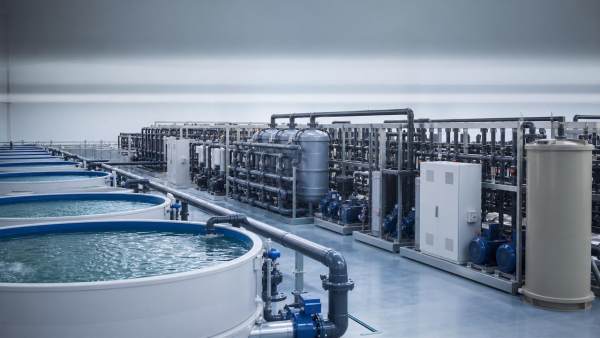
For project planning in modern aquaculture, cost control no longer depends only on growth rates, feed conversion, or water quality. In many buildouts, ras aquaculture systems are now evaluated through a broader lens: civil works exposure, utility integration, startup risk, compliance burden, and the ability to scale without stopping production. That shift is why modular design has become commercially important. When engineered correctly, modular ras aquaculture systems can lower upfront uncertainty, shorten commissioning, and create more flexible expansion paths. Yet modularity is not always the lowest-cost answer. The real savings appear only in specific scenarios where design standardization, phased capacity, and predictable site conditions align.
When early-stage projects benefit most from modular RAS architecture
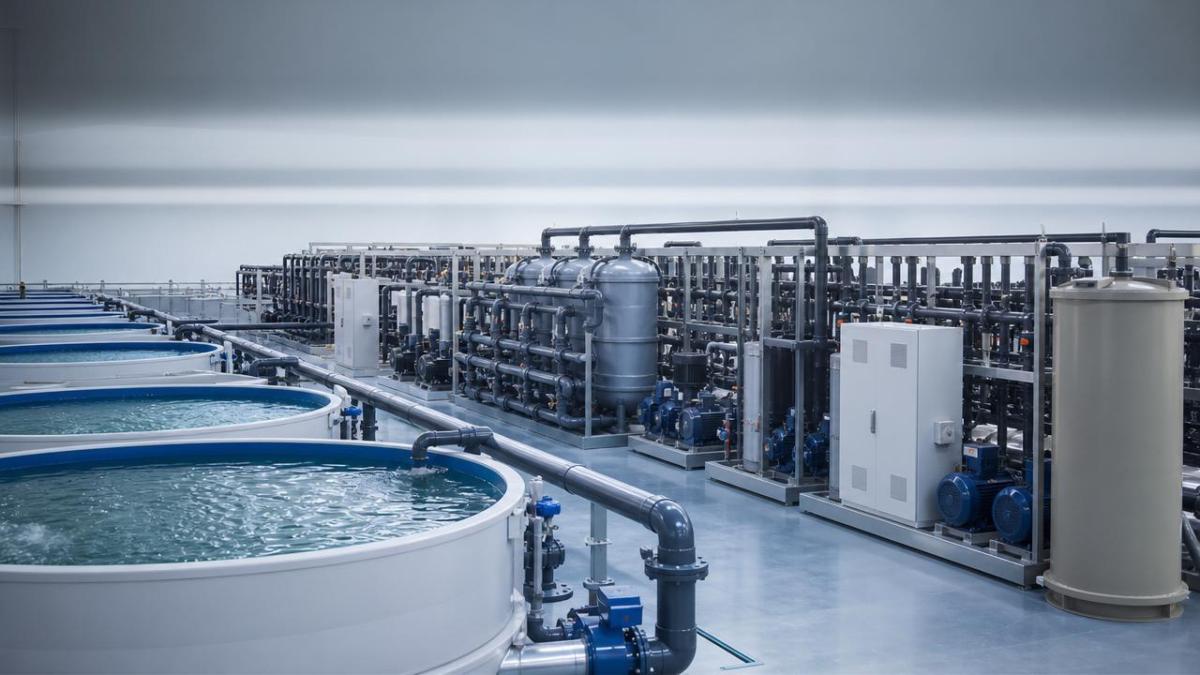
The first scenario is the greenfield project with limited construction certainty. In this setting, ras aquaculture systems often face hidden cost drivers: uneven site preparation, weather delays, local contractor variability, and late changes to permitting or utilities. A modular approach can reduce these risks by shifting a larger share of fabrication into controlled manufacturing environments. Skid-mounted filtration units, pre-tested pump loops, and packaged control systems generally arrive with more predictable performance than site-built assemblies.
Savings in this scenario do not always come from a lower equipment price. They usually come from reduced rework, fewer installation errors, faster startup, and clearer accountability between engineering and construction. For facilities processing fish, shrimp, or specialty species under strict water treatment requirements, that predictability may materially improve project economics. In other words, modular ras aquaculture systems save money when risk-adjusted CAPEX matters more than the lowest quoted line item.
Where phased expansion makes modular design financially stronger
The second scenario is gradual market entry. Not every facility needs full production capacity on day one. Some operations enter with cautious biomass targets, validate husbandry protocols, then expand after the first commercial cycle proves technical and financial assumptions. In this case, modular ras aquaculture systems support staged investment. Core treatment blocks, oxygenation units, solids removal trains, and biofiltration packages can be added in planned increments instead of forcing a single oversized build.
This phased approach protects cash flow and reduces idle capacity. It also limits the common error of overbuilding utilities before production data is available. If energy demand, sludge load, or thermal performance differs from the original model, later modules can be adjusted before major sunk cost accumulates. For operators balancing financing constraints with growth ambitions, modular ras aquaculture systems often outperform monolithic designs because they preserve optionality.
Core judgment point for phased projects
Modularity creates value when expansion is realistic, not merely aspirational. If the expansion path, site footprint, utility corridors, and process interfaces are designed from the beginning, future modules can be integrated with minimal disruption. If not, the project may suffer duplicated piping, undersized electrical infrastructure, or control system incompatibility that erodes the expected savings.
Why remote or compliance-sensitive sites often favor modular ras aquaculture systems
A third high-value scenario involves remote regions, labor-constrained areas, or jurisdictions with demanding environmental oversight. In these conditions, modular ras aquaculture systems can reduce dependence on scarce installation expertise and compress time spent on site. Factory-assembled process units also improve documentation consistency, which matters when approval processes require traceable mechanical, electrical, and environmental records.
This is especially relevant where discharge control, backup redundancy, and biosecurity are under close scrutiny. Standardized module packages can simplify validation because component logic is repeated across treatment trains. The result is not just easier commissioning; it can also support cleaner compliance reporting, more orderly maintenance, and more straightforward spare parts planning over the life of the facility. In compliance-heavy environments, ras aquaculture systems with modular architecture may save money indirectly through lower downtime risk and more disciplined lifecycle management.
Which project conditions make modular design less economical
Not every project should default to modularization. Large, highly customized facilities with stable construction conditions may achieve lower total cost through integrated site-built systems. If the design requires unusual tank geometry, species-specific process deviations, or extensive custom civil integration, modular packages may introduce compromises. Shipping dimensions, lifting constraints, and repeated framing elements can add cost without adding equivalent value.
Modular ras aquaculture systems may also underperform financially when project teams treat modules as plug-and-play products rather than engineered subsystems. Even the best packaged unit still depends on correct hydraulic balancing, utility redundancy, drainage logic, control integration, and maintenance access. If those interfaces are poorly resolved, savings on fabrication can disappear in field modifications and delayed biological stabilization.
How major application scenarios differ in cost logic
The economic case for ras aquaculture systems changes by application. Species profile, harvest rhythm, density targets, thermal load, and regulatory exposure all influence whether modular design delivers superior value. The comparison below highlights the most important scenario differences.
Practical fit criteria before selecting modular ras aquaculture systems
A sound decision should test modularity against measurable project conditions, not vendor narratives alone. The following criteria help determine whether modular ras aquaculture systems are a financial fit:
- The site has schedule pressure or weather exposure that makes off-site fabrication valuable.
- Capacity expansion is expected within a defined time horizon.
- Mechanical and electrical standards can be repeated across process blocks.
- Transport routes permit module delivery without excessive handling cost.
- Operations teams prefer standardized spare parts, controls, and maintenance procedures.
- Compliance documentation and commissioning traceability are high priorities.
If most of these conditions are absent, a fully modular solution may not provide the expected return. In that case, a hybrid model is often stronger: modular treatment skids combined with site-specific tanks, buildings, and utility networks.
Common misjudgments that weaken the business case
One frequent mistake is comparing modular and conventional ras aquaculture systems only on equipment purchase price. True economics include commissioning duration, startup stability, maintenance complexity, spare parts rationalization, future retrofit cost, and biological interruption risk during expansion. A cheaper installed system can become more expensive if it requires extensive troubleshooting before reaching design performance.
Another misjudgment is assuming every module can be added later without penalty. Expansion-ready design requires reserved pad space, oversized headers where justified, compatible automation architecture, and carefully planned hydraulic isolation. Without that groundwork, a “phased” facility can become a patchwork of mismatched subsystems.
A third oversight concerns energy. Modular ras aquaculture systems should not sacrifice pump efficiency, heat recovery logic, or blower optimization merely to fit standard package dimensions. In high-utilization facilities, operating expenditure can outweigh modest CAPEX savings surprisingly quickly.
A clearer next step for evaluating total project value
The most reliable way to assess modular ras aquaculture systems is to map the project into scenarios rather than asking whether modularity is universally better. Start with three questions: How certain is the final production scale? How exposed is the project to schedule, labor, or compliance risk? How costly would future expansion or retrofit be if the first phase is undersized or misconfigured? These answers usually reveal whether modular design is a strategic advantage, a partial fit, or an unnecessary premium.
From there, compare at least two engineering pathways: a fully site-built concept and a modular or hybrid concept. Use the same assumptions for biomass ramp-up, energy consumption, utility redundancy, commissioning duration, and future expansion timing. When the analysis includes lifecycle impacts instead of headline CAPEX alone, the value of modular ras aquaculture systems becomes much easier to judge.
In the right setting, modularity is not just a construction preference. It is a financing, compliance, and operational resilience strategy. That is when modular design truly saves money—and when ras aquaculture systems become more scalable, more predictable, and more investable over the long term.
Related Intelligence
- RAS SystemsFAO Updates Global RAS Procurement Guide, Chinese Modular Systems Recommended for AfricaFAO recommends Chinese modular RAS systems for Africa — discover how this global procurement shift unlocks export opportunities and ODA financing.
- RAS SystemsRAS aquaculture systems: when modular design saves moneyRAS aquaculture systems can cut costs through modular design when projects need phased expansion, faster commissioning, and lower site risk. See when modular RAS really pays off.
- RAS SystemsAquaculture drum filters and the solids load they often missAquaculture drum filters often miss fine solids that impact water clarity, biofilter stability, and biosecurity. Learn how to assess real capture performance before you buy.
The Morning Broadsheet
Daily chemical briefings, market shifts, and peer-reviewed summaries delivered to your terminal.
