

The Authority in Global Agricultural Chemistry & Bio-Resources
FAO Updates Global RAS Procurement Guide, Chinese Modular Systems Recommended for Africa
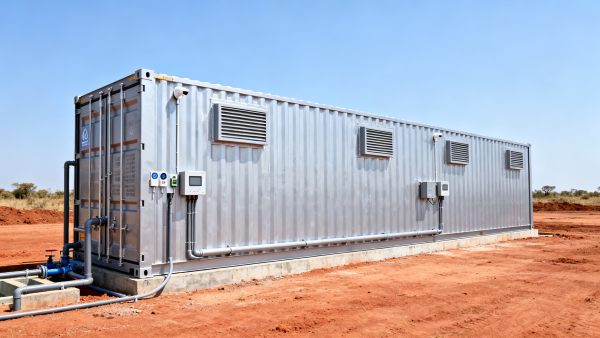
On 7 May 2026, the Food and Agriculture Organization of the United Nations (FAO) released a revised edition of its International Procurement and Deployment Guide for Recirculating Aquaculture Systems (RAS), marking the first time China-developed containerized modular RAS systems have been formally recommended for new RAS projects in low- and middle-income countries. This development carries implications for international aquaculture equipment trade, agricultural development finance, and cross-border technical standard alignment — particularly for stakeholders engaged in aquaculture infrastructure export, import procurement, and donor-funded rural development programs.
Event Overview
On 7 May 2026, the FAO published the updated International Procurement and Deployment Guide for Recirculating Aquaculture Systems (RAS). The revision explicitly includes China-led ‘containerized modular RAS’ as a recommended configuration for new RAS installations in low- and middle-income countries. It accompanies this recommendation with a technical interoperability checklist and a whitelist of Chinese manufacturing enterprises. As of publication, the guide has been formally adopted by the Ministries of Agriculture of Nigeria, Ghana, Kenya, and nine other countries — totaling 12 — as an official reference for import procurement decisions. This adoption implies that procurement of listed Chinese RAS equipment may now qualify for official development assistance (ODA) financing and streamlined customs or regulatory review under national agricultural investment frameworks.
Industries Affected
Export-oriented aquaculture equipment manufacturers
Manufacturers producing containerized modular RAS units — especially those already on or seeking inclusion in the FAO’s published whitelist — face a newly formalized procurement pathway into 12 national markets. The guide does not mandate procurement but serves as a de facto technical benchmark for public-sector buyers backed by multilateral or bilateral development funding. Impact manifests in tender eligibility, prequalification requirements, and alignment expectations for system modularity, energy efficiency, and local serviceability.
Importing agri-infrastructure agencies and state-owned agricultural development companies
National agricultural ministries and implementing agencies in adopting countries now have an internationally endorsed reference for evaluating RAS technology options. The guide influences budget allocation priorities, procurement documentation (e.g., technical specifications, warranty clauses), and vendor evaluation criteria — particularly where projects are co-financed by FAO, World Bank, or African Development Bank instruments. Its adoption signals a shift toward standardized, transportable, and rapidly deployable RAS solutions over site-built alternatives.
International development finance institutions and project implementers
Donor-funded aquaculture projects — especially those supporting smallholder intensification or climate-resilient fish production — may increasingly align procurement language and due diligence protocols with the FAO guide. Its use as a procurement reference strengthens consistency across country programs but also introduces new compliance considerations, including verification of manufacturer whitelist status and adherence to listed interoperability parameters.
Logistics, after-sales service, and local assembly partners
The emphasis on modular, containerized systems increases demand for coordinated shipping, customs clearance support, on-site commissioning, and localized maintenance capacity. Partners providing these services — especially those with experience in cold-chain or industrial equipment deployment across Sub-Saharan Africa — may see expanded scope in upcoming tenders, particularly where national procurement rules require local value addition or service commitments.
What Relevant Enterprises or Practitioners Should Monitor and Do Now
Track official adoption status beyond the initial 12 countries
While 12 national agricultural ministries have publicly adopted the guide, formal integration into procurement regulations or national aquaculture strategies varies. Stakeholders should monitor updates from FAO regional offices (e.g., FAO Subregional Office for Eastern Africa), national gazettes, and tender portals for explicit references to the guide’s technical annexes or whitelist in bid documents.
Verify inclusion on, and scope of, the FAO-published manufacturer whitelist
The whitelist is a defined list — not a general endorsement of all Chinese RAS suppliers. Exporters must confirm whether their specific product models, certifications (e.g., ISO, CE), and after-sales commitments meet the guide’s stated criteria. Non-listed firms may still compete, but will likely need to demonstrate equivalent technical compliance through third-party verification.
Distinguish between policy signal and operational readiness
Adoption of the guide reflects political and technical consensus, not immediate market readiness. Many adopting countries lack established RAS operation protocols, trained technicians, or grid-stable power infrastructure. Companies should assess actual project pipeline maturity — e.g., confirmed budget allocations, feasibility studies completed, or pilot sites selected — rather than relying solely on policy-level endorsements.
Prepare for interoperability and localization requirements
The guide emphasizes technical compatibility (e.g., pump interfaces, sensor communication protocols, water treatment module dimensions). Firms should audit existing system designs against the published interoperability checklist and consider early engagement with local partners on assembly, spare parts warehousing, and technician training — elements increasingly referenced in national tender evaluation matrices.
Editorial Perspective / Industry Observation
Observably, this update functions primarily as a coordination mechanism — not a market access guarantee. It standardizes expectations among donors, governments, and suppliers, reducing technical ambiguity in cross-border RAS procurement. Analysis shows it reflects growing recognition of modular RAS as a viable entry point for countries with limited civil engineering capacity but strong logistics networks. However, the guide itself does not alter tariff regimes, harmonize certification standards across borders, or resolve financing gaps at the project level. From an industry perspective, its significance lies less in immediate sales uplift and more in signaling a structural shift: toward procurement frameworks that prioritize scalability, serviceability, and alignment with development finance due diligence norms. Continued attention is warranted because implementation fidelity — how consistently national agencies apply the guide’s technical annexes — will determine its real-world influence.
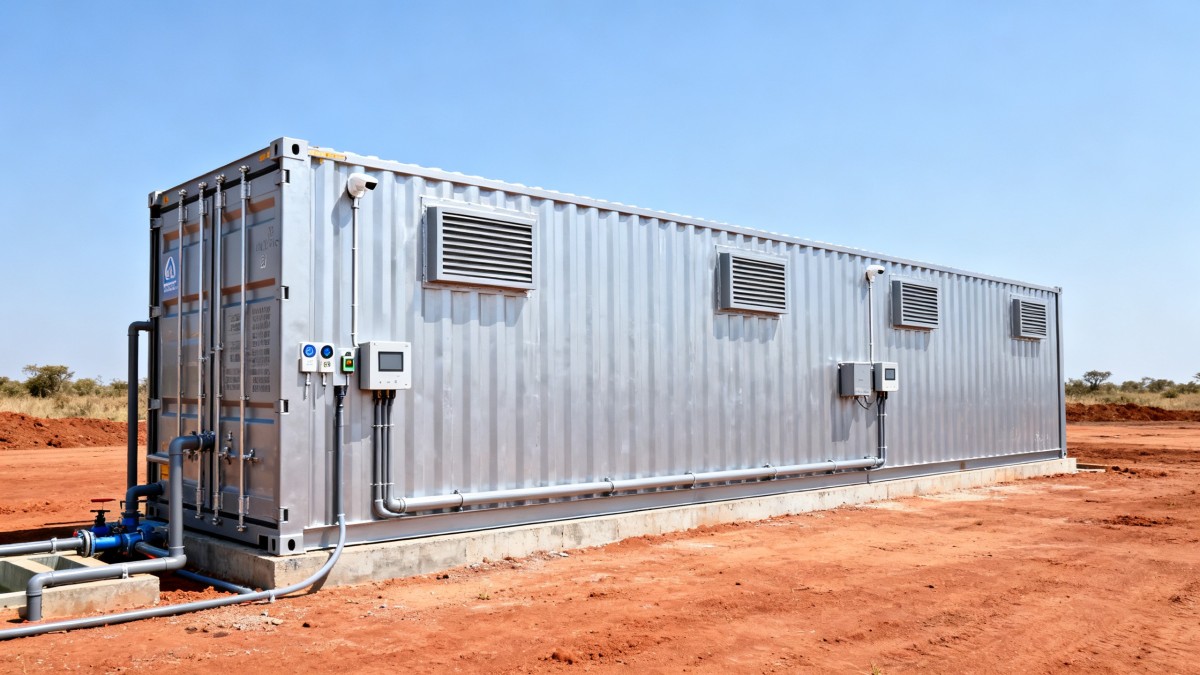
In summary, the FAO’s updated RAS guide represents a formalized technical endorsement — not a commercial mandate — for containerized modular systems in targeted geographies. Its primary effect is to lower information asymmetry and raise baseline expectations for system design, documentation, and post-installation support. For industry participants, the event is best understood not as a sudden market opening, but as a calibration point: one that clarifies what technical and procedural readiness now means when engaging with public-sector aquaculture infrastructure procurement in Africa and similar contexts.
Source: Food and Agriculture Organization of the United Nations (FAO), International Procurement and Deployment Guide for Recirculating Aquaculture Systems (RAS), Revised Edition, published 7 May 2026. Adoption status confirmed via official statements from the Ministries of Agriculture of Nigeria, Ghana, and Kenya, as reported by FAO regional communications channels.
Note: Ongoing observation is required regarding the frequency and scope of actual procurement actions referencing the guide’s technical annexes and whitelist — data not yet publicly available beyond initial adoption announcements.
Related Intelligence
- RAS SystemsFAO Updates Global RAS Procurement Guide, Chinese Modular Systems Recommended for AfricaFAO recommends Chinese modular RAS systems for Africa — discover how this global procurement shift unlocks export opportunities and ODA financing.
- RAS SystemsRAS aquaculture systems: when modular design saves moneyRAS aquaculture systems can cut costs through modular design when projects need phased expansion, faster commissioning, and lower site risk. See when modular RAS really pays off.
- RAS SystemsAquaculture drum filters and the solids load they often missAquaculture drum filters often miss fine solids that impact water clarity, biofilter stability, and biosecurity. Learn how to assess real capture performance before you buy.
The Morning Broadsheet
Daily chemical briefings, market shifts, and peer-reviewed summaries delivered to your terminal.
