
Why Some Wholesale Fishing Waders Wear Out Too Fast
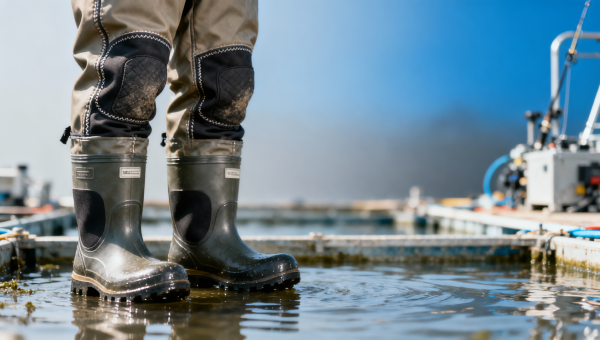
For buyers comparing wholesale fishing waders, early failure is rarely just a pricing issue—it often signals problems in material grade, seam construction, and factory quality control. From commercial neoprene chest waders used in demanding fishery operations to procurement decisions tied to broader aquaculture systems such as smart buoys for aquaculture, durability directly affects safety, uptime, and total operating cost.
That matters across more than one buying role. Operators care about mobility, dryness, and cold-water protection over 8- to 12-hour shifts. Technical evaluators focus on seam sealing, abrasion panels, and puncture resistance. Commercial teams compare unit cost against replacement frequency, claims rate, and shipment consistency. Quality and safety managers look for repeatable manufacturing controls, not just attractive sample pieces.
In wholesale channels, a wader that fails in 3 months instead of 12 months can create a chain reaction: worker discomfort, increased replacement orders, inventory disruption, and disputes between importers, distributors, and end users. Understanding why some fishing waders wear out too fast helps procurement teams reduce hidden cost and choose suppliers that are built for commercial fishery and aquaculture conditions.
Material Grade: The First Reason Wholesale Fishing Waders Fail Early
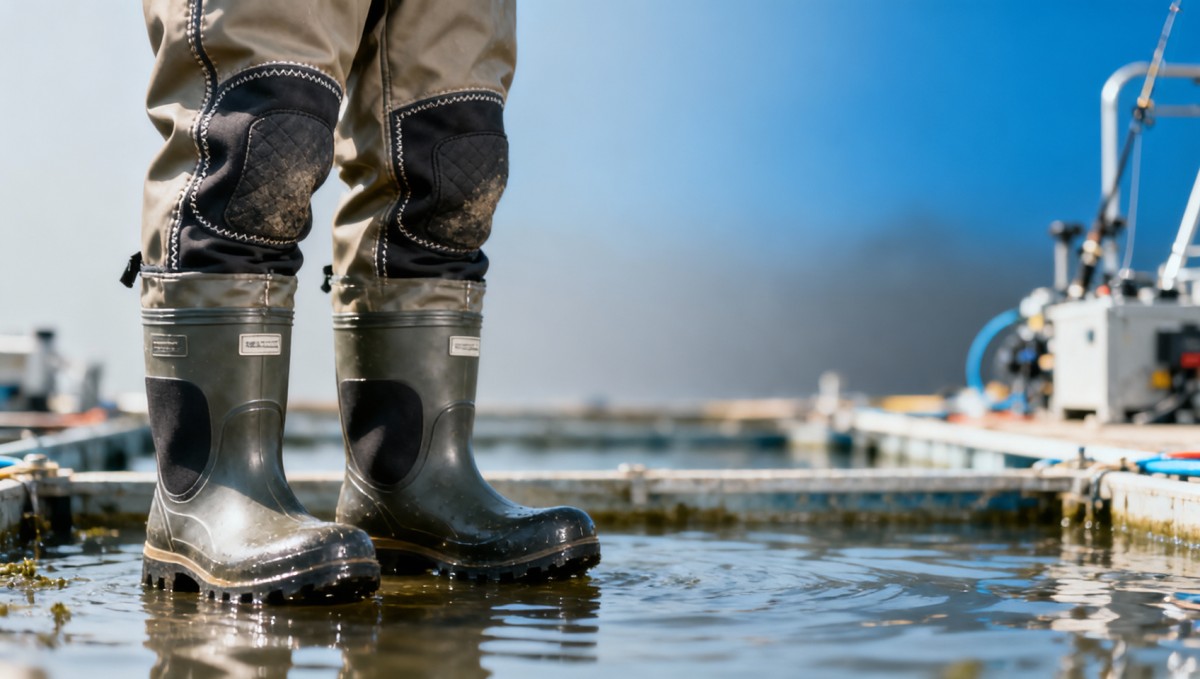
The most common source of premature wear is not visible from a catalog image. It starts with material selection. In wholesale fishing waders, the difference between lower-grade PVC, entry-level nylon laminates, and commercial neoprene can translate into very different service lives under wet, abrasive, and temperature-variable working conditions.
For example, lightweight breathable waders designed for recreational angling may perform adequately for weekend use, but they often break down quickly in hatcheries, fish processing areas, pond maintenance work, or shoreline deployment environments. In those settings, daily contact with rocks, concrete edges, fish crates, ladders, and wet deck hardware creates wear cycles that are 5 to 7 times higher than casual use.
Neoprene thickness also matters, but thickness alone is not enough. A 3.5 mm neoprene chest wader made with inconsistent foam density may fail sooner than a well-laminated 3.0 mm construction with reinforced knees and better seam support. Likewise, fabric denier, coating adhesion, and boot compound quality all affect durability. If the upper remains intact but the boot cracks after repeated flexing at low temperature, the wader still becomes an early replacement item.
Typical material-related weak points in bulk orders
- Low denier face fabric that abrades quickly at knee, shin, and seat contact points.
- Thin PVC coatings that soften under heat or become brittle after repeated cold exposure below 5°C.
- Neoprene with poor elasticity recovery, causing stress tears after 60 to 90 days of heavy use.
- Boot compounds that crack at flex zones after repeated stepping, crouching, and climbing.
Buyers should request not only material descriptions but also practical ranges: neoprene thickness, face fabric denier, boot hardness range, and reinforcement placement. Even when suppliers do not disclose every formulation detail, they should be able to explain whether the product is intended for seasonal retail demand or year-round commercial use.
The table below outlines how common wholesale fishing wader materials generally perform in industrial and fishery use scenarios.
The key takeaway is simple: material should match duty cycle, not just target price. Wholesale buyers sourcing for aquaculture crews, fishery maintenance teams, or processing support staff should treat material grade as a lifecycle variable. A unit that costs 12% more but lasts twice as long often reduces annual ownership cost significantly.
Seam Construction and Pattern Design Often Decide Real-World Lifespan
Even when the material is acceptable, fishing waders often wear out too fast because the seam system is weak. In real operating environments, leak points rarely appear in the middle of a fabric panel. They usually begin at stitched joins, crotch intersections, boot transitions, suspender anchors, and bend zones around knees and ankles.
For commercial neoprene chest waders, seam construction should be assessed in 3 layers: stitch integrity, adhesive or bonding quality, and external or internal sealing method. A visually neat seam does not guarantee long-term waterproofing. If seam tape adhesion is inconsistent or glue cure time is rushed, leakage may begin after only 20 to 40 field uses.
Pattern design is another overlooked factor. Poorly engineered cuts create tension concentration in the crotch and inner leg. That becomes critical for workers who climb pond embankments, step on floating platforms, or handle fish cages. If the pattern does not account for stride extension and crouching, seam fatigue accelerates even when the fabric itself is still sound.
Why boot-to-upper joints fail so often
The boot connection is one of the highest-risk zones in wholesale fishing waders. It combines flex, water pressure, mud, salt, and repeated torsion. Low-cost production may rely on fast bonding with limited surface preparation. In high-use settings, that can lead to micro-separation in as little as 6 to 10 weeks.
What technical buyers should inspect
- Whether stress points use reinforcement patches or only a single seam pass.
- Whether seam tape coverage extends fully across curved joins and junctions.
- Whether boot attachment shows clean adhesive spread without gaps or overflow.
- Whether the pattern includes articulated knee shaping or extra ease in stride zones.
In practical procurement reviews, requesting inside-out sample photos is useful. External appearance can hide stitching inconsistency, skipped bonding, or poor tape application. A supplier prepared for institutional or distributor-level business should be able to share close-up production details and explain the intended performance level of each seam type.
This is where technical and commercial evaluation meet. If 8% to 15% of a shipment develops leakage claims within one season, the cost is not limited to replacement product. There are freight losses, complaint handling time, and lost trust at the distributor or site-operator level. Seam quality is therefore a procurement risk issue, not merely a manufacturing detail.
Factory Quality Control Gaps Create Inconsistent Batch Performance
Another reason some wholesale fishing waders wear out too fast is inconsistency between sample approval and batch production. Many buyers receive a strong pre-production sample, then encounter variable material thickness, bonding quality, or sizing accuracy in the bulk order. This usually points to weak incoming material inspection, unstable process control, or limited final testing.
Factory quality control should cover at least 4 checkpoints: raw material verification, in-process seam inspection, waterproof testing, and final visual plus dimensional review. If one of these checkpoints is skipped, failure rates can rise quickly. For example, minor variation in tape temperature or bonding dwell time can affect waterproof reliability across hundreds or thousands of pairs.
Commercial buyers should ask not only “Do you inspect?” but “How do you inspect?” Useful answers include test frequency per batch, air or water leak testing method, acceptable defect threshold, and whether finished goods are spot-tested by size run. If a supplier cannot describe its routine controls in operational terms, batch stability may be weak.
A practical QC checklist for bulk wader procurement
The following table can help importers, distributors, and procurement managers compare suppliers beyond quotation price.
A supplier with consistent QC discipline usually provides more reliable lead time as well. Typical wholesale production cycles for standard wader orders range from 25 to 45 days depending on material availability, reinforcement complexity, and quantity. When factories operate without stable process control, delays and defect spikes tend to occur together.
For institutional buyers in aquaculture and fishery technology supply chains, the best approach is to combine sample validation with batch verification. A pilot order of 100 to 300 pairs, followed by field-use feedback over 30 to 60 days, often reveals more than a catalog specification sheet.
How Different Use Environments Accelerate Wader Wear
Not every premature failure is caused by poor manufacturing alone. Environment and use profile also influence how fast wholesale fishing waders degrade. A product suitable for freshwater pond checks may underperform in shellfish operations, cold-storage transitions, or brackish shoreline work where salt, UV, and sharp surfaces are more severe.
In aquaculture and fishery operations, wear usually concentrates in 5 zones: sole tread, heel cup, shin, knee, and crotch seam. These areas experience repeated stress from wet ladders, rope contact, crate handling, and kneeling on rough concrete. If users work 6 days per week and spend 4 to 8 hours standing in shallow water or mud, degradation can accelerate rapidly.
This is why environment mapping should be part of procurement. A distributor serving river anglers may prioritize weight and comfort. A hatchery manager may prioritize thermal retention and puncture resistance. A seafood processor may need fast-clean surfaces and slip-resistant boots. The same product is not ideal for all three scenarios.
Environment-based selection considerations
- Cold-water operations below 10°C often require thicker insulation and more flexible boot compounds.
- Rocky banks and cage systems need stronger shin and knee reinforcement than smooth pond edges.
- Saltwater exposure increases the importance of corrosion-resistant hardware and easy-rinse surfaces.
- Long walking distances favor lighter construction, but only if abrasion resistance remains adequate.
The table below connects common fishery and aquaculture environments with typical failure risks and preferred wader characteristics.
Matching product to duty environment reduces both over-specification and under-specification. Paying for features that workers never use is inefficient, but underbuying for harsh environments is usually more expensive within one operating season.
What Procurement Teams Should Check Before Placing a Wholesale Order
A disciplined buying process reduces the risk of fast wear far more effectively than negotiating for the lowest possible unit price. Whether the buyer is an OEM sourcing channel product, a distributor building stock, or an aquaculture enterprise buying for internal crews, the evaluation should include technical review, wear testing, and commercial risk assessment.
At a minimum, buyers should compare 4 elements: material suitability, seam durability, factory QC transparency, and replacement economics. Replacement economics means calculating expected service life against use frequency, not just comparing quotation sheets. If one model lasts 9 to 12 months and another lasts 3 to 4 months under the same use, the lower-priced option may still cost more over a year.
It is also wise to define acceptance standards before production begins. That may include allowable visual defects, waterproof failure threshold in sample inspection, size tolerance expectations, and packaging accuracy requirements. Clear specifications reduce dispute risk after shipment.
Recommended pre-order process
- Request a specification sheet covering material type, thickness or denier, seam method, and reinforcement zones.
- Review physical samples and inspect inside seams, boot joints, and high-stress areas.
- Run a limited field test for 30 days in the real working environment whenever possible.
- Confirm QC checkpoints, testing method, lead time, and after-sales handling for defect claims.
- Approve the order only after sample, test feedback, and commercial terms align.
Common procurement mistakes
- Approving based on photos only without checking seam and bond details.
- Using recreational-use product standards for industrial fishery applications.
- Failing to define acceptable defect levels before production starts.
- Ignoring carton-level consistency, size mix accuracy, and shipment traceability.
For distributors and agents, one additional point matters: repeatability. A supplier that delivers one good batch and one unstable batch creates channel risk. The stronger long-term partner is often the one with stable medium-cost production, consistent QC records, and realistic communication about use limits.
Wholesale fishing waders are not isolated purchases in many primary industry settings. They are part of broader operational reliability, just like pumps, feeders, smart buoys for aquaculture, and processing support equipment. Buyers who treat PPE and protective gear as system-level assets usually make better procurement decisions.
FAQ for Buyers, Distributors, and Technical Evaluators
How long should commercial fishing waders typically last?
Service life depends on environment, use frequency, and product grade. In moderate-duty use, a commercial-grade model may deliver 6 to 12 months of reliable service. In heavy-duty aquaculture or fishery work with daily wear, lower-grade products may show leaks or boot issues within 2 to 4 months if materials or seam systems are weak.
Are neoprene chest waders always the best choice for industrial fishery work?
Not always. Neoprene is strong for cold-water insulation and demanding conditions, especially in the 3.0 mm to 5.0 mm range. But for warm environments, long walking routes, or washdown-heavy operations, coated or breathable constructions may be more practical if they include adequate reinforcement and waterproof seam quality.
What defect signals should trigger concern during sample review?
Watch for uneven seam tape, glue overflow or dry gaps at the boot joint, irregular stitching density, poor symmetry, and wrinkles at high-stress joins. Even small defects in these areas can become early leak points after 20 to 50 usage cycles.
What is a reasonable lead time for wholesale fishing waders?
For standard models and normal material availability, 25 to 45 days is common. Custom reinforcement, special size runs, or high-volume seasonal demand can extend that to 45 to 60 days. Buyers should confirm whether lead time includes sample approval, production, testing, and export packaging.
Fast wear in wholesale fishing waders usually traces back to a manageable set of causes: mismatched material grade, weak seam construction, poor pattern engineering, limited QC discipline, or product-use mismatch. For commercial buyers in fisheries, aquaculture, and adjacent primary industry operations, the right decision is rarely the cheapest line item. It is the product that holds up under real duty cycles, reduces replacement frequency, and supports predictable field performance.
If you are evaluating bulk wader supply, channel partnerships, or broader aquaculture equipment procurement, a more technical comparison will save time and cost later. Contact AgriChem Chronicle to explore deeper supplier evaluation perspectives, request tailored procurement content, or learn more solutions for industrial fishery and aquaculture operations.
Related Intelligence
- Commercial FishingWhy Some Wholesale Fishing Waders Wear Out Too FastWholesale fishing waders wear out fast when material grade, seam design, and QC fall short. Learn how commercial neoprene chest waders and smart aquaculture buying reduce hidden replacement costs.
- Commercial FishingLeak Points to Check in Commercial Neoprene Chest WadersCommercial neoprene chest waders: learn the key leak points to inspect in wholesale fishing waders, with practical tips for safer bulk buying, longer wear life, and lower return risk.
- Commercial FishingWhat Sets Reliable Wholesale Fishing Waders ApartWholesale fishing waders and commercial neoprene chest waders compared by durability, waterproof seams, safety, and supplier transparency—plus aquaculture equipment sourcing insights.
The Morning Broadsheet
Daily chemical briefings, market shifts, and peer-reviewed summaries delivered to your terminal.
