
Smart Buoys for Aquaculture Are Changing Remote Pond Checks
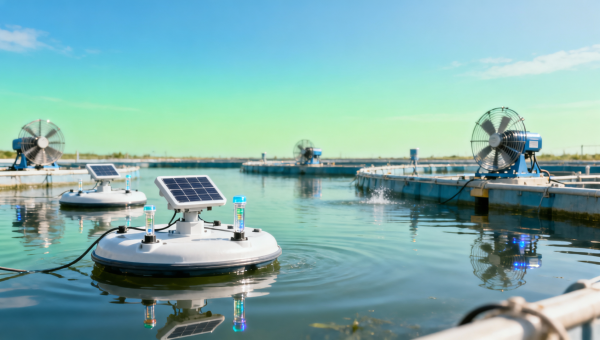
Smart buoys for aquaculture are reshaping remote pond checks by turning scattered field data into actionable decisions. For operators and buyers comparing water quality online monitor aquaculture systems, aquatic oxygen generators, uv sterilizers for fish farms, ozone generators for aquaculture, aquaculture probiotics bulk, and fish disease treatment chemicals, this shift means faster risk control, lower labor pressure, and clearer investment logic across modern farm management.
For commercial ponds, shrimp raceways, nursery tanks, and integrated fish farms, remote pond monitoring is no longer a convenience feature. It is becoming a core management layer that connects sensing, aeration, disinfection, treatment planning, and compliance records. Smart buoys sit at the center of that layer because they collect real-time water parameters where risk actually develops: in the pond, not only at the control room.
This matters to more than farm operators. Technical evaluators need sensor reliability and integration logic. Business buyers need a clear return profile over 12–36 months. Quality and safety managers need traceable readings for dissolved oxygen, pH, temperature, ORP, turbidity, ammonia risk indicators, and alarm history. Distributors and solution providers need equipment combinations that are practical rather than overengineered.
Within the broader industrial readership of AgriChem Chronicle, smart buoys are also relevant because aquaculture technology buying is increasingly linked to chemical inputs, sanitation strategy, feed efficiency, and environmental controls. The strongest procurement decisions now compare devices as part of a system, not as isolated hardware.
Why smart buoys are becoming the new operating baseline
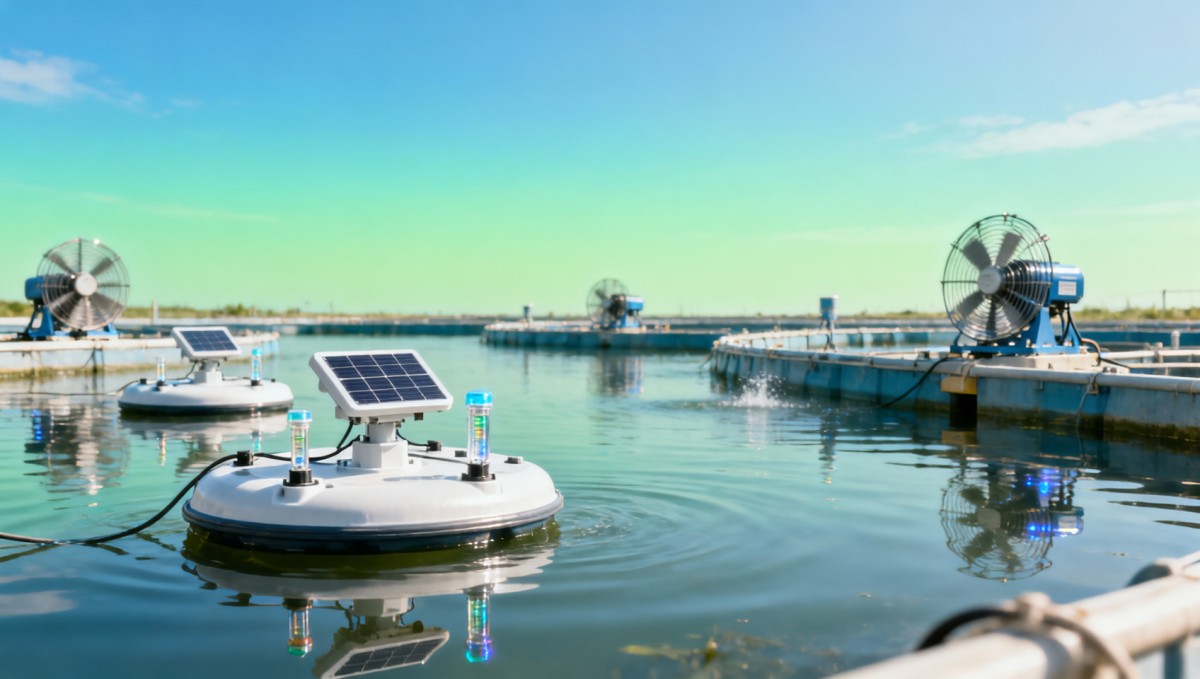
Traditional pond checks rely on manual sampling at fixed times, often 2–4 times per day. That approach can miss early morning oxygen crashes, midday temperature spikes, or localized water quality shifts near feed zones. A smart buoy extends visibility to 24/7 monitoring, which is especially useful in ponds above 1 hectare or in farms managing 10, 20, or even 50 ponds across a distributed site.
The value is not just more data. It is better timing. If dissolved oxygen drops from 5.5 mg/L to 3.8 mg/L within 90 minutes, a buoy-linked alert can trigger aeration decisions before fish show surface stress. If pH rises above 8.8 in strong algal conditions, operators can reassess feeding, water exchange, and sanitizer use before a secondary problem appears.
For commercial buyers, smart buoys also reduce decision lag. Instead of waiting for end-of-shift reports, managers can compare pond trends by hour, day, and week. That supports practical actions such as moving oxygen generators to the right ponds, adjusting UV sterilization schedules in recirculating systems, or changing probiotic application frequency from every 7 days to every 3–5 days when water instability increases.
This shift is particularly relevant where labor is tight. A farm that once needed 3 technicians for routine checks across 30 ponds may still need the same team, but their work can move from repetitive measurement to exception-based intervention, calibration control, and treatment verification. That improves both labor quality and risk response.
What smart buoys typically monitor
A modern aquaculture buoy usually combines floating housing, solar-assisted power or battery packs, onboard controller modules, telemetry, and multi-parameter probes. Depending on farm type, common monitoring points include:
- Dissolved oxygen, often the first threshold for emergency response, with action points commonly set near 4.0–5.0 mg/L.
- Temperature, especially important where species performance changes across ranges such as 22–28°C or 26–32°C.
- pH and ORP, which influence microbial activity, sanitizer effectiveness, and chemical treatment decisions.
- Conductivity, salinity, and turbidity, which support broader interpretation of water exchange and solids load.
Operational gains that matter to procurement teams
In procurement reviews, the main question is whether the buoy adds measurable value beyond a handheld meter. In many farms, the answer depends on how often instability occurs and how expensive missed events are. One oxygen crash during a hot week can have more financial impact than the annual maintenance cost of several monitoring nodes.
The table below compares manual pond checks with buoy-based remote checks from an operational and purchasing perspective.
The core conclusion is simple: smart buoys are most valuable where ponds are numerous, water conditions change fast, and actions such as aeration or dosing must be timed precisely. They become less of a gadget and more of an operating control point.
How smart buoys connect with aeration, sterilization, and treatment systems
A buoy is rarely the complete solution on its own. Its practical value rises when data is tied to the equipment and consumables that actually change pond conditions. That is why buyers often compare smart buoy platforms alongside water quality online monitor aquaculture packages, aquatic oxygen generators, UV sterilizers for fish farms, ozone generators for aquaculture, probiotics, and fish disease treatment chemicals.
For example, dissolved oxygen trends influence when and where to run paddlewheel aerators or fine-bubble oxygen systems. If one pond repeatedly falls below 4.5 mg/L between 03:00 and 05:00, that site may need an aeration schedule adjustment, more oxygen transfer capacity, or lower nighttime biomass loading. The buoy does not create oxygen, but it prevents guesswork in deploying oxygen equipment.
The same logic applies to disinfection. In hatchery or recirculating applications, UV sterilizers and ozone generators perform best when water quality is stable enough for treatment conditions to be meaningful. High turbidity or elevated organic load can reduce treatment efficiency. Remote monitoring helps operators recognize whether a sanitation issue is caused by microbial pressure alone or by upstream solids and water chemistry problems.
Biological products also benefit from better timing. Probiotic programs are often scheduled every 5–7 days, but dosing intervals may need revision during sudden weather shifts, feed changes, or after partial water exchange. Buoy data adds context to those choices and helps quality teams document why a treatment step was taken.
System-level pairing logic
The best equipment combinations depend on culture density, species, water source, and management style. The matrix below shows common pairings and what each combination is meant to solve.
This kind of pairing framework helps technical and business teams speak the same language. Instead of buying disconnected products, they can build a response chain: monitor, verify, intervene, and document.
A practical selection sequence
- Define the top 3 water risks by species and production phase.
- Choose the 2–4 parameters that must be monitored continuously, not occasionally.
- Match alarm thresholds to actual intervention tools such as oxygen, UV, ozone, or treatment chemicals.
- Confirm data export, dashboard access, and maintenance frequency before final procurement.
What technical evaluators should check before buying
Not every smart buoy fits every pond. The most common buying mistake is focusing on sensor quantity rather than operating suitability. A system used in a 0.3 hectare nursery pond may not be ideal for a wind-exposed grow-out pond of 2 hectares. Float stability, anti-fouling design, communication range, and probe serviceability are often more important than long feature lists.
Sensor maintenance is another key point. Electrochemical and optical dissolved oxygen sensors have different service routines. pH and ORP probes may require regular cleaning and recalibration every 2–6 weeks depending on fouling pressure. If the supplier cannot explain expected calibration intervals, spare part availability, and replacement lead times, the system may underperform in real farm conditions.
Connectivity should also be evaluated early. Some farms rely on 4G coverage, others on LoRa-based local networks, and some need hybrid options due to terrain or remote location. Alarm delivery delay of even 10–15 minutes can matter during acute oxygen decline. Decision-makers should ask whether data is buffered locally during outages and how quickly the system resynchronizes.
For quality and safety teams, data integrity matters as much as sensor accuracy. Readings should be time stamped, exportable, and easy to audit. This is useful not only for internal farm management but also for distributor support, warranty review, and environmental recordkeeping.
Key technical checkpoints
The following checklist can shorten technical review cycles and reduce mismatch between procurement expectations and field performance.
- Probe accuracy and drift profile for DO, pH, temperature, ORP, conductivity, or turbidity.
- Power autonomy, such as battery endurance across 15–60 days depending on logging interval and solar support.
- Ingress protection and corrosion resistance for long outdoor exposure.
- Cleaning and calibration workflow, including whether one technician can complete service within 20–40 minutes.
- Dashboard usability, multi-site access, alarm hierarchy, and export format compatibility.
Commercial review factors
Commercial buyers and finance approvers should compare not only purchase price but also 3 cost layers: installation, recurring sensor upkeep, and operational savings. In many projects, a lower upfront cost can become more expensive if probes foul quickly, spare parts are slow to ship, or service visits are too frequent during the first 12 months.
A practical commercial table is shown below.
Strong procurement teams usually approve smart buoy projects faster when the proposal links technical durability with a realistic service plan, not just a hardware quotation.
Implementation, maintenance, and common mistakes in remote pond checks
Even good equipment can fail to deliver value if deployment is rushed. The first step is pond mapping. Farms should identify where measurements represent real conditions rather than convenient access points. In large ponds, one buoy may not reflect the worst zone if water circulation is uneven. A practical planning rule is to define high-risk areas first, then decide whether 1, 2, or more nodes are needed.
Installation should also include threshold design. Too many alarms create fatigue; too few delay action. Many farms benefit from a 3-tier structure: advisory alert, action alert, and critical alert. For example, dissolved oxygen at 5.0 mg/L may trigger review, 4.5 mg/L may trigger aeration preparation, and 4.0 mg/L may trigger immediate response. Thresholds should reflect species and stocking density rather than generic defaults.
Maintenance discipline is essential. Biofouling can affect sensor readings in less than 7–14 days under heavy nutrient load. A remote pond monitoring plan should define inspection intervals, cleaning agents, calibration checks, spare sensor inventory, and responsibility by person or shift. This is where many projects succeed or fail.
Another frequent mistake is treating data as passive history. Smart buoys create value when the farm links readings to actions, such as changing feed timing, starting oxygen support earlier, postponing chemical dosing during unstable pH, or escalating disease checks after repeated overnight stress signals.
A 5-step field rollout model
- Survey pond layout, power conditions, and communication coverage over 3–7 days.
- Install buoys in representative risk zones and validate readings against handheld references.
- Set alarm thresholds and response ownership for day shift, night shift, and weekend coverage.
- Run a 2–4 week stabilization period to identify drift, fouling patterns, and false alarms.
- Finalize SOPs for maintenance, data review, and cross-linking with oxygen, UV, ozone, and treatment plans.
Common misconceptions to avoid
- One buoy automatically covers every condition in a large pond. In reality, water heterogeneity can require multiple nodes.
- More parameters always mean better management. Often 3–5 high-value parameters outperform a long list of poorly maintained probes.
- Remote monitoring eliminates manual work. It reduces routine sampling, but it increases the importance of calibration, interpretation, and response discipline.
- Alarm thresholds can remain fixed year-round. Seasonal temperature, rainfall, and biomass changes often require periodic adjustment.
FAQ for buyers, operators, and distribution partners
Because smart buoys are often reviewed alongside aeration, sterilization, and water treatment inputs, the same practical questions appear across procurement teams. The answers below focus on operational fit, cost logic, and deployment realism.
How many smart buoys does a farm usually need?
There is no universal number. A small intensive unit may start with 1 buoy for every critical pond cluster, while a larger grow-out farm may assign 1 buoy to each high-density pond or to every 1–2 hectares depending on circulation and risk profile. The right number depends on species sensitivity, stocking density, and how different one pond is from another.
Are smart buoys only useful for large industrial farms?
No. Large farms often see faster system-wide gains, but smaller operations can also benefit when labor is limited, ponds are far apart, or a single mortality event would be financially significant. For smaller sites, a phased approach over 1–2 ponds is often the best way to test value before expanding.
What is a realistic service expectation?
Buyers should expect routine cleaning, periodic calibration, and occasional probe replacement. A credible supplier should be able to explain weekly or biweekly inspection needs in fouling-prone water, software support response times, and spare part logistics. Systems that appear low maintenance on paper may still require disciplined field service.
What should distributors emphasize when presenting these systems?
Distributors should focus on use case clarity rather than generic innovation claims. Show how buoy data links to oxygen management, sanitation timing, probiotic scheduling, and treatment records. Buyers respond better to workflow improvements, 24-hour visibility, and risk reduction than to abstract digitalization language.
Smart buoys are changing remote pond checks because they turn isolated readings into continuous management signals. For aquaculture operators, technical reviewers, safety managers, and commercial decision-makers, that means better timing for aeration, clearer logic for UV and ozone deployment, more disciplined use of probiotics and fish disease treatment chemicals, and stronger oversight across multi-pond operations.
The best results come when buoy selection is tied to real pond risks, maintainable sensor plans, and a broader water quality strategy. If your team is assessing remote monitoring for aquaculture, now is the right time to compare system architecture, maintenance expectations, and equipment pairing logic in a structured way.
To evaluate suitable monitoring configurations, integration options, or editorial partnership opportunities in aquaculture and related industrial supply chains, contact AgriChem Chronicle for deeper solution analysis, tailored content collaboration, or product-focused technical visibility.
Related Intelligence
- Aeration & Water TechAsia–Middle East Aeration & Water Tech Container Freight Up 18%Aeration & Water Tech container freight surges 18% on Asia–Middle East route—urgent implications for exporters, OEMs & forwarders. Act now.
- Aeration & Water TechFDA Updates Cybersecurity Guidance for Aeration & Water Tech DevicesFDA's new cybersecurity guidance for aeration & water tech devices mandates UL 2900-2-1 and SBOM compliance by Q1 2027 — act now to secure U.S. market access.
- Aeration & Water TechFDA Updates Cybersecurity Guidance for Aeration & Water Tech DevicesFDA’s new cybersecurity guidance for aeration & water tech devices mandates immediate compliance—secure firmware, audit logs & password controls required for U.S. market access.
The Morning Broadsheet
Daily chemical briefings, market shifts, and peer-reviewed summaries delivered to your terminal.
