
FDA Updates Cybersecurity Guidance for Aeration & Water Tech Devices
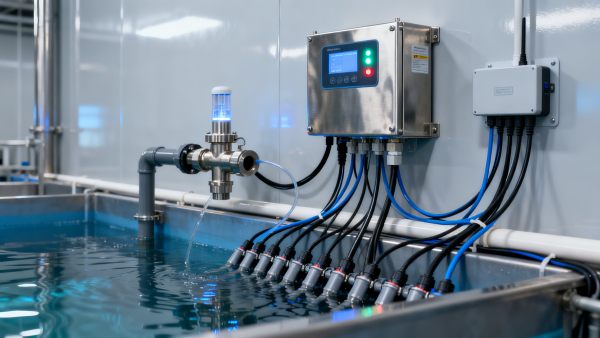
FDA issued updated cybersecurity guidance for aeration and water technology devices used in food production and aquaculture on April 27, 2026 — marking the first time that equipment such as smart aeration controllers and intelligent曝气 valves (e.g., solenoid曝气 valves) is explicitly brought under FDA’s medical-device-level cybersecurity framework. Exporters targeting the U.S. market — particularly those supplying to seafood farms, recirculating aquaculture systems (RAS), and food-grade water treatment facilities — must now comply immediately, as enforcement begins May 1, 2026.
Event Overview
On April 27, 2026, the U.S. Food and Drug Administration (FDA) released Cybersecurity Guidance for Aeration & Water Tech Devices Intended for Food & Aquaculture Use (Version 2.1). The guidance formally extends FDA’s cybersecurity expectations — previously applied primarily to connected medical devices — to aeration and water management equipment deployed in food processing and aquaculture settings. Key requirements include remote firmware update protection, mandatory default password modification upon first use, and tamper-resistant audit logging capabilities. No grace period is provided: compliance is mandatory for all such devices seeking U.S. market entry effective May 1, 2026.
Industries Affected
Direct Exporters & OEM Manufacturers
Manufacturers exporting aeration controllers, smart solenoid valves, dissolved oxygen regulators, or integrated water quality control units to the U.S. are directly subject to the guidance. Non-compliant devices will be denied entry at U.S. ports starting May 1, 2026 — impacting shipment timelines, customs clearance, and contractual delivery obligations.
Aquaculture System Integrators
Companies assembling turnkey RAS or land-based aquaculture systems that incorporate third-party aeration or water control hardware must verify cybersecurity features of each embedded component. Failure to validate compliance may expose integrators to liability if non-conforming subsystems trigger FDA scrutiny or import refusal.
Food-Grade Water Treatment Equipment Suppliers
Vendors providing water disinfection, circulation, or oxygenation modules for USDA/FDA-regulated food processing facilities (e.g., seafood washing lines, ready-to-eat produce rinsing systems) now face new validation responsibilities. Their devices — even if not labeled as ‘medical’ — fall under this guidance due to intended use in food safety-critical environments.
What Enterprises and Practitioners Should Monitor and Do Now
Confirm device classification and scope applicability
Verify whether your exported product meets the guidance’s functional definition: ‘a device intended to manage dissolved oxygen, water flow, or gas injection in food production or aquaculture operations, and capable of network connectivity or remote configuration’. If yes, full v2.1 requirements apply — regardless of branding or prior regulatory status.
Review firmware architecture and authentication workflows
Assess whether current remote update mechanisms prevent unauthorized code execution, whether initial setup enforces password reset before operational use, and whether audit logs record configuration changes with immutable timestamps. These three functions are explicitly required — no partial implementation qualifies as compliant.
Prepare documentation for FDA review and customs verification
Compile technical summaries demonstrating how each requirement is met — including architecture diagrams, secure boot chain descriptions, and log retention policies. While FDA does not require pre-submission approval, U.S. importers and CBP officers may request evidence during entry review.
Engage with U.S. import partners ahead of May 1
Coordinate with U.S.-based agents or distributors to align labeling, user manuals, and declaration statements with v2.1 terminology (e.g., explicit mention of ‘cybersecurity controls’, ‘audit log capability’, ‘secure firmware update’). Misalignment may delay customs release even if technical compliance is achieved.
Editorial Perspective / Industry Observation
Observably, this guidance reflects FDA’s broader shift toward treating digitally enabled food safety infrastructure as part of its regulated digital health ecosystem — not as industrial IoT peripherals operating outside oversight. Analysis shows the agency is applying precedent from its Content of Premarket Submissions for Management of Cybersecurity in Medical Devices (2023), adapting it to non-traditional contexts where cyber failure could compromise food integrity or animal welfare. This is less a one-off rule than an early signal of expanding jurisdiction over connected environmental control systems in regulated supply chains. From an industry perspective, the absence of a transition period suggests FDA views baseline cybersecurity hygiene — like password management and update integrity — as mature, implementable practices, not emerging capabilities.
Current understanding better fits the interpretation that this is an enforcement-ready policy update, not merely advisory language. It signals growing expectation that exporters treat cybersecurity as a built-in functional requirement — not a post-market add-on — especially for devices interfacing with food or aquatic life support systems.
Conclusion
This guidance marks a structural inflection point: cybersecurity is now a non-negotiable element of market access for certain water and aeration technologies entering the U.S. food and aquaculture sectors. Its immediate enforcement underscores that compliance readiness — not just awareness — is now operationally urgent. Rather than viewing this as a temporary regulatory hurdle, stakeholders are better advised to treat it as confirmation of a durable expectation: digital trustworthiness is becoming inseparable from physical performance in regulated environmental control hardware.
Information Sources
Primary source: U.S. Food and Drug Administration (FDA), Cybersecurity Guidance for Aeration & Water Tech Devices Intended for Food & Aquaculture Use, Version 2.1, issued April 27, 2026. Official document available via FDA’s Digital Health Center of Excellence portal. Ongoing updates to implementation FAQs or enforcement clarifications remain pending and should be monitored through FDA’s official guidance update log.
Related Intelligence
- Aeration & Water TechFDA Updates Cybersecurity Guidance for Aeration & Water Tech DevicesFDA’s new cybersecurity guidance for aeration & water tech devices mandates immediate compliance—secure firmware, audit logs & password controls required for U.S. market access.
- Aeration & Water TechGlobal Alliances Hike Aeration & Water Tech Container Rates on Asia–Middle East RouteAeration & Water Tech container rates surge 18.5% on Asia–Middle East route—Maersk, CMA CGM & Hapag-Lloyd hike reefer/flat rack fees from 1 May 2026. Act now!
- Aeration & Water TechGlobal Shipping Alliances Hike Aeration & Water Tech Freight Rates on Asia–Middle East RoutesAeration & Water Tech freight rates surge 18% on Asia–Middle East routes as THE, Ocean & 2M Alliances align. Critical for RAS, aerators & water control exporters—act before May 1, 2026.
The Morning Broadsheet
Daily chemical briefings, market shifts, and peer-reviewed summaries delivered to your terminal.
