
Global Shipping Alliances Hike Aeration & Water Tech Freight Rates on Asia–Middle East Routes
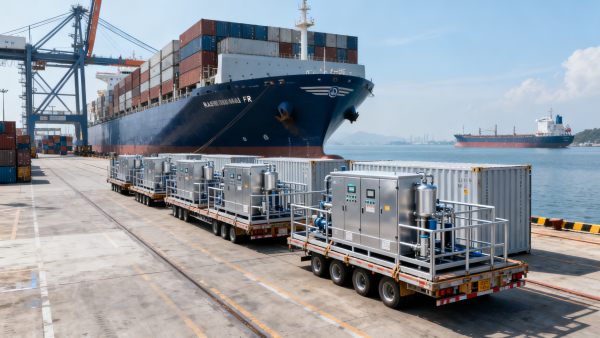
On April 26, 2026, the three major global shipping alliances — THE Alliance, Ocean Alliance, and 2M — jointly announced an 18% freight rate increase effective May 1, 2026, for specialized heavy cargo containers (OT/FR) carrying Aeration & Water Tech equipment — including RAS systems, aquaculture aerators, and water treatment control cabinets — on the Asia–Middle East trade lane. This development directly affects exporters from China to key Middle Eastern markets such as Saudi Arabia, the UAE, and Egypt, with implications for landed cost calculations, quotation frameworks, and supply chain planning across multiple industrial segments.
Event Overview
On April 26, 2026, THE Alliance, Ocean Alliance, and 2M issued a joint notice confirming that, starting May 1, 2026, a uniform 18% surcharge will apply to Ocean Transport (OT) and Flat Rack (FR) containers designated for Aeration & Water Tech equipment on the Asia–Middle East route. The notice explicitly references cargo categories such as recirculating aquaculture systems (RAS), aquatic oxygenation machinery, and water treatment control cabinets. No further implementation details — including base rate references, exemption criteria, or duration — were disclosed in the public announcement.
Which Subsectors Are Affected
Direct Exporting Enterprises
Companies exporting Aeration & Water Tech equipment from Asia — particularly China — to the Middle East face immediate cost pressure. Since the surcharge applies specifically to OT/FR containers used for oversized or heavy technical units, standard dry container shipments are not impacted. Affected firms must reassess landed cost models, revise export quotations, and potentially renegotiate Incoterms (e.g., shifting from FOB to CIF where freight is borne by the seller).
Manufacturers of Aquaculture & Water Treatment Equipment
Producers of RAS systems, aerators, and integrated water control cabinets may see margin compression if unable to pass through the full 18% increase. Given the project-based nature of many such exports — often involving site-specific engineering and commissioning — pricing cycles tend to be longer, limiting short-term flexibility in adjusting bids or contracts already under negotiation.
Supply Chain & Logistics Service Providers
Freight forwarders, NVOCCs, and container handling agents serving this niche segment must update rate cards, verify container type eligibility (OT/FR only), and clarify documentation requirements with carriers. Misclassification risks — e.g., declaring RAS components as general cargo — could trigger re-billing or detention charges at origin or destination ports.
Distributors & Channel Partners in the Middle East
Regional importers and distributors relying on just-in-time replenishment may face delayed order fulfillment or revised minimum order quantities (MOQs) from Asian suppliers seeking to absorb part of the added freight cost. Inventory planning and working capital allocation may require adjustment ahead of the May 1 effective date.
What Relevant Enterprises or Practitioners Should Monitor and Do Now
Track official carrier communications for implementation clarity
While the alliance notice confirms the rate hike, individual carrier members (e.g., Hapag-Lloyd, COSCO, Maersk) have yet to publish detailed tariff bulletins. Current more relevant than broad speculation is monitoring each carrier’s official service advisories — especially regarding whether the surcharge applies per TEU, per shipment, or based on declared gross weight or volume.
Verify container type and cargo classification for affected shipments
The surcharge applies exclusively to OT and FR containers carrying specified Aeration & Water Tech equipment. Firms should cross-check current booking practices against the notice’s scope: e.g., whether modular RAS skids shipped disassembled in flat racks qualify, or whether control cabinets alone — without integrated aeration hardware — fall within the definition. Clarification from carriers remains pending.
Review near-term contracts and Incoterms exposure
Exporters with open orders scheduled for loading between May 1–15, 2026, should assess contractual terms. Under FOB terms, buyers bear freight risk — but delays in carrier rate confirmation may complicate pre-shipment cost validation. Under CIF or DAP, sellers absorb the cost increase unless contract language allows for price revision upon verified carrier surcharges.
Prepare contingency options for high-value, low-frequency shipments
Given the specialized nature of the cargo, rerouting via alternative lanes (e.g., Asia–Europe–Middle East transshipment) is unlikely to be cost-effective. Instead, shippers may consider consolidating smaller RAS component consignments into fewer, higher-utilization OT/FR moves — provided equipment integrity and delivery timelines permit.
Editor Perspective / Industry Observation
From industry perspective, this coordinated action signals growing carrier focus on rate discipline for niche, high-value technical cargo — rather than a response to acute capacity shortage or port congestion. Analysis来看, the alignment among all three major alliances suggests deliberate calibration of pricing for equipment categories with stable demand profiles and limited substitution alternatives. Observation来看, it is currently more a policy signal than an operational outcome: actual implementation depends on individual carrier tariff filings, which remain unconfirmed as of April 26. The absence of a defined end date or volume threshold also means the measure may serve as a structural adjustment rather than a temporary surcharge.
Current more relevant than forecasting long-term trends is recognizing that this marks the first publicly coordinated rate action targeting Aeration & Water Tech logistics — a segment previously treated as generic heavy-lift or project cargo. It reflects tightening carrier scrutiny of cargo-specific value chains, especially where equipment integration and regulatory compliance raise handling complexity.
Conclusion: This announcement does not represent a market-wide freight shock, but rather a targeted recalibration affecting a defined set of technical exports. It is better understood as an early indicator of how carriers are beginning to segment pricing by equipment function and logistics profile — not just by geography or container type. For affected stakeholders, proactive classification verification and contractual review remain the highest-leverage actions before May 1.
Information Source: Joint notice issued by THE Alliance, Ocean Alliance, and 2M on April 26, 2026. No additional official documentation or tariff bulletins have been published as of the announcement date. Implementation details — including carrier-level application rules and exceptions — remain subject to ongoing observation.
Related Intelligence
- Aeration & Water TechGlobal Shipping Alliances Hike Aeration & Water Tech Freight Rates on Asia–Middle East RoutesAeration & Water Tech freight rates surge 18% on Asia–Middle East routes as THE, Ocean & 2M Alliances align. Critical for RAS, aerators & water control exporters—act before May 1, 2026.
- Aeration & Water TechFDA Updates Cybersecurity Guidance for Aeration & Water Tech ExportsFDA's 2026 cybersecurity guidance for aeration & water tech exports mandates IEC 62443-4-2 and firmware logging—key for U.S.-bound RAS devices. Act now to ensure compliance.
- Aeration & Water Tech2M+Hapag-Lloyd to Raise Aeration & Water Tech Special Container Rates from May 2026Aeration & water tech exporters: 2M+Hapag-Lloyd raises OT/FR container rates 18.5% from May 2026 on Asia–Middle East routes — act now to lock in pre-increase freight.
The Morning Broadsheet
Daily chemical briefings, market shifts, and peer-reviewed summaries delivered to your terminal.
