
ANVISA Extends Traceability for Botanical Extract Imports to Tier-2 Suppliers
On April 26, 2026, Brazil’s National Health Surveillance Agency (ANVISA) issued Instruction No. 112/2026, mandating two-tier traceability documentation for all imported botanical extracts — from cultivation site to finished product. This requirement directly impacts Chinese exporters of plant extracts and takes effect on July 1, 2026. Companies involved in international trade of herbal ingredients, dietary supplement raw materials, and cosmetic actives should monitor implementation closely, as it introduces new upstream verification obligations with operational and compliance implications.
Event Overview
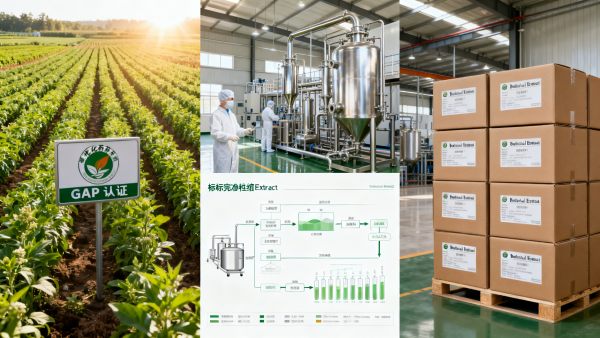
On April 26, 2026, ANVISA published Instruction No. 112/2026. The instruction requires that all imported botanical extracts must be accompanied by traceability documentation covering two tiers of the supply chain: (1) primary cultivation — including Good Agricultural Practices (GAP) certification and harvest batch records; and (2) intermediate processing — including purification process parameters used during extraction or standardization. The rule applies to all Chinese botanical extract exporters and becomes mandatory on July 1, 2026.
Industries Affected by Segment
Direct Export Trading Companies
These companies are directly responsible for customs clearance and regulatory submission in Brazil. They will now need to collect, verify, and submit tier-2 supplier documentation — not just from their immediate contract manufacturer, but also from the original grower or primary processor. Impact includes increased documentation burden, potential delays in shipment approval, and higher due diligence costs for supplier qualification.
Raw Material Sourcing & Procurement Firms
Firms that source unprocessed herbs or crude extracts from farms or cooperatives must now ensure GAP certification is obtained and maintained at the cultivation level — even if they do not perform final extraction. Their contracts with growers may require revision to include traceability data sharing clauses, and internal recordkeeping systems must accommodate batch-level harvest documentation.
Extraction & Standardization Manufacturers
Manufacturers handling purification (e.g., solvent removal, chromatographic separation, spray-drying) must document and retain process parameters per batch — including temperature, pressure, residence time, solvent ratios, and filtration specifications. These records must be made available upon request and linked explicitly to incoming raw material batches and outgoing finished extract lots.
Supply Chain & Compliance Service Providers
Third-party auditors, certification bodies, and regulatory consultants supporting Chinese exporters will see increased demand for GAP audits at farm level and technical review of purification process dossiers. However, no new accreditation scheme has been announced by ANVISA; current service offerings must align strictly with the scope defined in Instruction No. 112/2026.
What Relevant Enterprises or Practitioners Should Focus On and How to Respond
Monitor official guidance and interpretation notes from ANVISA
Instruction No. 112/2026 does not specify format requirements for traceability documents, nor does it list accepted GAP standards (e.g., WHO-GAP, ISO 22000-based, or national equivalents). Companies should track any forthcoming technical annexes or Q&A publications issued by ANVISA to clarify acceptable evidence types and validation methods.
Map current supply chains against the two-tier requirement
Exporters should identify which products involve multi-step sourcing (e.g., raw herb → crude extract → standardized powder) and determine where gaps exist in existing documentation — particularly at the cultivation tier. Priority should be given to high-volume or high-risk categories such as Paullinia cupana (guarana), Ilex paraguariensis (yerba mate), and Uncaria tomentosa (cat’s claw), which are commonly exported from China to Brazil.
Distinguish between policy signal and enforceable obligation
The instruction establishes a legal requirement, but enforcement mechanisms — such as document verification frequency, penalties for incomplete submissions, or acceptance of third-party verification — have not yet been detailed. Until further notice, companies should treat this as an operational readiness milestone rather than an immediate audit trigger.
Prepare documentation workflows and supplier engagement plans
Start drafting internal SOPs for collecting, reviewing, and archiving tier-2 records. Initiate conversations with upstream suppliers — especially farms and primary processors — to confirm GAP status, assess documentation capacity, and agree on data exchange protocols ahead of the July 1, 2026 deadline.
Editorial Perspective / Industry Observation
From an industry perspective, this instruction signals ANVISA’s shift toward upstream risk control in botanical ingredient regulation — moving beyond end-product testing to systemic supply chain accountability. It does not introduce new safety limits or reclassify substances, but rather strengthens evidentiary expectations for provenance and process consistency. Analysis来看, this is less a sudden regulatory shock and more a formalization of expectations already emerging in EU and US botanical markets — suggesting convergence in global traceability norms. Current observation indicates that the rule functions primarily as a procedural gatekeeper, not a market access barrier — provided documentation systems are aligned in time.
However, its significance lies in precedent: if enforced consistently, it may encourage similar requirements in other Mercosur countries or prompt downstream Brazilian formulators to extend these expectations to domestic suppliers. That makes sustained monitoring essential — not just for compliance, but for strategic supply chain positioning.
Conclusion
This instruction marks a procedural tightening in Brazil’s import controls for botanical extracts — emphasizing verifiable origin and process transparency over new safety assessments. It reflects a broader regulatory trend prioritizing supply chain integrity, particularly for natural ingredients with variable composition. For affected enterprises, the priority is not reinterpretation of product safety, but systematic alignment of documentation practices across two tiers of sourcing. It is best understood not as a market restriction, but as a structured escalation in evidentiary standards for market access.
Source Attribution
Main source: ANVISA Instruction No. 112/2026, published April 26, 2026.
Points requiring ongoing observation: ANVISA’s forthcoming technical guidance on acceptable GAP standards, document formats, and enforcement procedures — none of which have been released as of the instruction’s publication date.
Related Intelligence
- Botanical ExtractsANVISA Extends Traceability for Botanical Extract Imports to Tier-2 SuppliersANVISA extends botanical extract traceability to tier-2 suppliers—key for Chinese exporters of herbal ingredients, supplements & cosmetics. Act now for July 2026 compliance.
- Botanical ExtractsANVISA Extends Traceability for Botanical Extracts to Tier-2 SuppliersANVISA extends botanical extract traceability to tier-2 suppliers—solvents, filter aids, adsorption media—effective Sept 1, 2026. Essential for exporters & supplement brands.
- Botanical ExtractsEU CBAM Carbon Tariff First Applies to Botanical ExtractsEU CBAM Carbon Tariff now covers Botanical Extracts—key for exporters, importers & LCA providers. Act now to ensure compliance by 24 April 2026.
The Morning Broadsheet
Daily chemical briefings, market shifts, and peer-reviewed summaries delivered to your terminal.
