
Vietnam Tightens Energy Efficiency Rules for Smart Greenhouse Controls
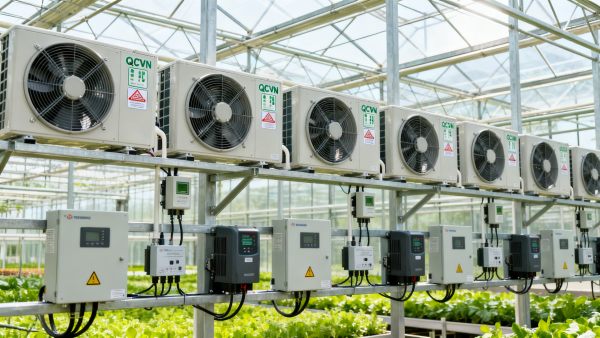
Vietnam’s Ministry of Agriculture and Rural Development (MARD) issued an urgent notice on April 26, 2026, mandating stricter energy efficiency requirements for temperature-control components used in smart greenhouses—effective May 1, 2026. This update directly impacts manufacturers, exporters, and supply chain actors involved in climate-control hardware for controlled-environment agriculture, particularly those serving the Vietnamese market from China’s Guangdong and Guangxi regions.
Event Overview
On April 26, 2026, Vietnam’s Ministry of Agriculture and Rural Development (MARD) announced that, starting May 1, 2026, all imported smart greenhouse temperature actuators, variable-frequency fans, and environmental controllers must comply with QCVN 159:2026 Energy Efficiency Level 2—representing a 35% improvement over the previous standard. Compliance requires submission of test reports issued exclusively by Vietnam’s VILAS-accredited laboratories.
Which Subsectors Are Affected
Export-oriented manufacturing enterprises (especially in South China)
Over 80 supporting manufacturers in South China are reported to face urgent adaptation pressure. These firms supply core thermal control components to greenhouse system integrators and agricultural technology exporters targeting Vietnam. The new rule affects them because their current product certifications—often based on older national or IEC standards—no longer satisfy the updated QCVN 159:2026 Level 2 requirement.
Trade and distribution companies handling agricultural hardware imports
Importers and distributors of smart greenhouse equipment in Vietnam must now verify compliance prior to customs clearance. Non-compliant units risk rejection at port or mandatory retesting—causing delays, added costs, and potential contract penalties. The requirement for VILAS-issued reports specifically limits options for pre-shipment verification.
Supply chain service providers (certification consultants, testing coordinators)
Third-party certification support providers face increased demand for localized test coordination and documentation translation. However, since only VILAS-accredited labs may issue valid reports, their role shifts toward logistics facilitation rather than technical certification issuance—reducing flexibility and extending lead times.
What Relevant Enterprises or Practitioners Should Focus On—and How to Respond
Monitor official MARD guidance and VILAS lab capacity updates
MARD has not yet published full implementation guidelines (e.g., transition periods for existing stock, exemptions for small-batch shipments). Enterprises should track MARD’s official portal and VILAS announcements for lab scheduling availability—given high anticipated demand post-May 1.
Prioritize verification for high-volume or high-value components
Given limited lab throughput and tight timelines, firms should first submit samples of best-selling items—e.g., 220V/50Hz variable-frequency fans and PID-based temperature actuators—rather than attempting blanket re-certification across entire portfolios.
Distinguish between regulatory signal and enforceable requirement
The notice is binding as of May 1, 2026—but enforcement rigor (e.g., random inspections vs. 100% document review) remains unconfirmed. Companies should treat the rule as operational from day one while preparing contingency plans for phased rollout scenarios.
Initiate lab coordination and sample dispatch immediately
VILAS testing cycles—including sample preparation, transport, measurement, and report issuance—typically require 12–18 working days. Firms still without test-ready units should dispatch samples by mid-April 2026 to avoid post-deadline bottlenecks.
Editorial Perspective / Industry Observation
From industry perspective, this update is less a sudden policy shift and more a formalized acceleration of Vietnam’s broader push toward energy-efficient agricultural infrastructure. Analysis来看, the 35% efficiency uplift reflects alignment with ASEAN-wide energy labeling trends—notably Thailand’s TISI 2558 and Malaysia’s SIRIM MS 2724—but with stricter local validation. Observation来看, the mandate signals growing regulatory maturity in Vietnam’s agri-tech import regime, where technical compliance is increasingly decoupled from general product safety standards. Current more appropriate understanding is that this is both a near-term compliance checkpoint and a structural indicator: future revisions to QCVN 159 are likely to extend to lighting, irrigation, and data-layer components.
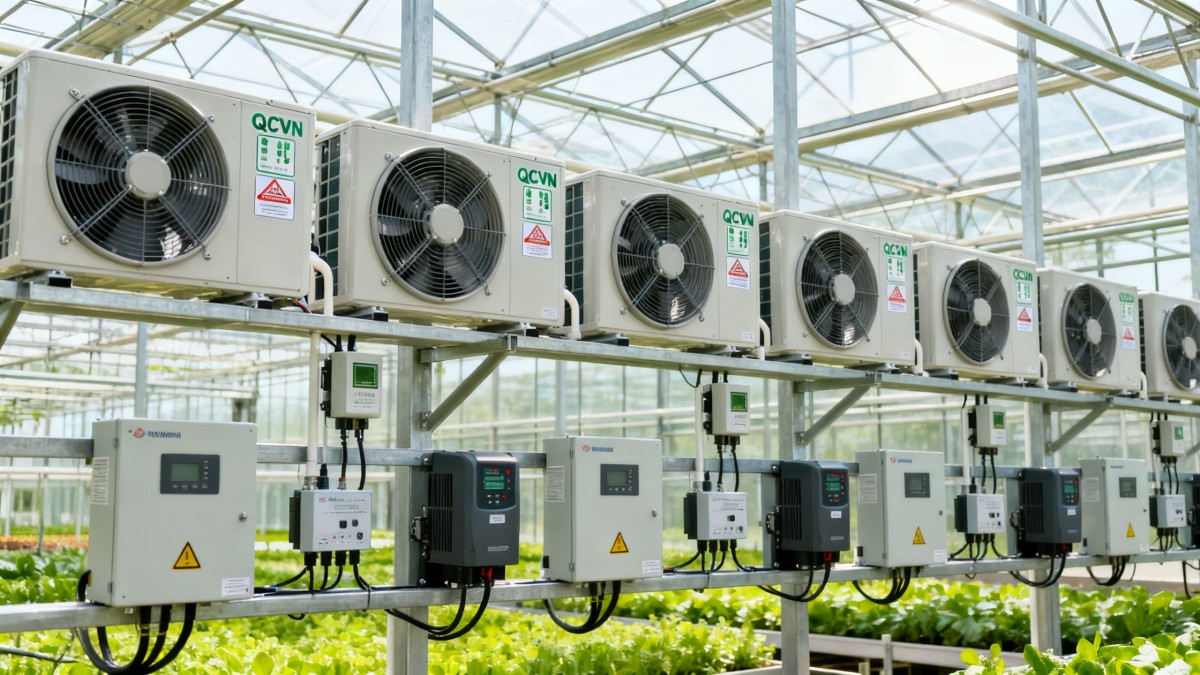
Conclusion: This regulation marks a material tightening of market access conditions—not just for component suppliers, but for any entity embedding thermal control hardware into greenhouse solutions sold in Vietnam. It does not represent a broad sectoral disruption, but rather a targeted calibration of technical entry barriers. For stakeholders, it is best understood not as an isolated compliance event, but as an early marker of Vietnam’s evolving agri-tech regulatory trajectory—where energy performance is becoming a non-negotiable baseline, not an optional differentiator.
Source: Official notice issued by Vietnam’s Ministry of Agriculture and Rural Development (MARD), dated April 26, 2026. Note: Implementation details—including lab accreditation scope, transitional provisions, and enforcement protocols—remain subject to further official clarification and are under active observation.
Related Intelligence
- Smart GreenhouseVietnam Tightens Energy Efficiency Rules for Smart Greenhouse ControlsVietnam tightens energy efficiency rules for smart greenhouse controls—QCVN 159:2026 Level 2 now mandatory from May 1, 2026. Act now to ensure compliance and market access.
- Smart GreenhouseVietnam Tightens Energy Certification for Smart Greenhouse Climate ControlsVietnam ENERGY LABEL 2.0 now mandates Level 3 energy certification for smart greenhouse climate controls—act now to avoid shipment delays and ensure market access.
- Smart GreenhouseVAST Enforces Smart Greenhouse Climate Testing in Vietnam from Apr 2026VAST-2026 climate testing now mandatory for Smart Greenhouse imports to Vietnam — 72-hour high-temp/humidity/UV validation required from Apr 2026. Act now to avoid 4–6 week delays.
The Morning Broadsheet
Daily chemical briefings, market shifts, and peer-reviewed summaries delivered to your terminal.
