
VAST Enforces Smart Greenhouse Climate Testing in Vietnam from Apr 2026
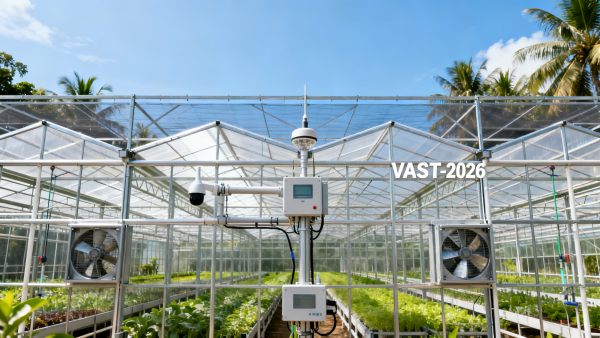
Vietnam’s Vietnam Academy of Science and Technology (VAST) implemented mandatory climate simulation testing for imported Smart Greenhouse systems on April 25, 2026. The new VAST-2026 regulation requires 72-hour continuous high-temperature, high-humidity, and UV aging dual-mode testing. This development directly affects importers, greenhouse engineering contractors, and farm operators across Southeast Asia — particularly those sourcing from China — and signals a tightening of technical compliance gateways for controlled-environment agriculture equipment.
Event Overview
Effective April 25, 2026, the Vietnam Academy of Science and Technology (VAST) enforced the VAST-2026 climate simulation testing requirement for all imported Smart Greenhouse systems. Under this rule, each system must undergo a 72-hour continuous test combining high temperature, high humidity, and ultraviolet (UV) aging conditions. Only systems tested at laboratories pre-authorized by VAST are exempt from on-site retesting upon import. Chinese suppliers without such pre-authorization face extended delivery timelines of 4–6 weeks.
Industries Affected
Importers and Export Trading Firms
Importers of Smart Greenhouse systems into Vietnam must now verify VAST laboratory authorization status before shipment. Non-compliant shipments risk delays at customs or mandatory retesting, increasing landed cost and timeline uncertainty. The requirement adds a new layer of pre-shipment validation beyond standard CE or ISO certifications.
Greenhouse Engineering Contractors (EPC)
South and Southeast Asian EPC firms integrating Smart Greenhouse systems into turnkey farm projects face revised procurement schedules. Since lead times for certified systems have increased, project Gantt charts — especially for Q3–Q4 2026 farm deployments — require adjustment. Delayed deliveries may trigger contractual penalties or force substitution with locally adapted (but less automated) alternatives.
Farm Operators and Agri-Tech Adopters
Commercial greenhouse operators planning facility upgrades or expansions in Vietnam must now factor in extended commissioning windows. Procurement cycles for climate-controlled growing infrastructure can no longer assume standard 8–12 week delivery; instead, a 12–16 week horizon is more realistic if relying on non-VAST-prequalified suppliers.
Chinese Smart Greenhouse Manufacturers
Manufacturers based in China — especially those serving export markets via OEM or white-label channels — face heightened time-to-market pressure in Vietnam. Without access to a VAST-authorized lab, their ability to meet tender deadlines or respond to RFPs diminishes. The regulation effectively shifts part of the compliance burden upstream to product-level validation, not just documentation.
What Stakeholders Should Monitor and Do Now
Track official VAST lab authorization updates
VAST has not published a public list of pre-authorized laboratories as of the April 25, 2026 enforcement date. Importers and manufacturers should monitor VAST’s official website and technical bulletins for updated accreditation status — especially for labs operating in China, Singapore, or Vietnam itself.
Confirm testing scope alignment before contract signing
Contracts for Smart Greenhouse supply into Vietnam should explicitly reference VAST-2026 test parameters (72-hour duration, temperature/humidity setpoints, UV intensity, and pass/fail criteria). Avoid generic clauses like “compliance with local standards” — specificity reduces post-award disputes.
Assess lead-time buffers in procurement and project planning
Procurement teams and EPC planners should revise internal lead-time assumptions: add minimum +4 weeks to current supplier quotes unless written confirmation of VAST lab pre-authorization is provided. For critical-path projects, consider parallel engagement with two suppliers — one VAST-prequalified, one not — to mitigate schedule risk.
Initiate dialogue with VAST-accredited labs now
Chinese manufacturers without existing lab partnerships should begin due diligence on labs with VAST recognition. Note that lab capacity, reporting turnaround, and sample submission logistics (e.g., whether full-system vs. component-level testing is accepted) vary — early engagement avoids bottlenecks during peak certification demand.
Editorial Perspective / Industry Observation
From an industry perspective, the VAST-2026 testing mandate is best understood not as an isolated technical update, but as a structural signal: Vietnam is formalizing performance-based verification for climate-critical agri-tech infrastructure. Analysis来看, this reflects broader regional trends where agricultural modernization policies increasingly emphasize operational resilience over nominal specification compliance. Observation来看, the 4–6 week delay is not merely logistical — it represents a de facto market entry barrier that favors incumbents with established VAST engagement over new entrants. Current更值得关注的是 how quickly VAST scales its authorized lab network, and whether similar requirements emerge in neighboring markets like Thailand or Indonesia under ASEAN harmonization initiatives.
This is not yet a fully matured regulatory regime — the absence of a published lab list and standardized test report format indicates an evolving implementation phase. However, the April 25, 2026 start date confirms enforcement intent, making proactive alignment operationally urgent rather than merely strategic.
Conclusion
While narrowly focused on Smart Greenhouse imports, the VAST-2026 climate simulation rule marks a measurable shift toward outcome-oriented technical regulation in Vietnam’s agritech import ecosystem. It does not ban non-compliant products, but raises the cost and complexity of market access. For stakeholders, the most rational interpretation is that this is an enforceable compliance checkpoint — not a temporary pilot — and that preparation, not postponement, remains the highest-leverage response.
Information Sources
Main source: Official announcement issued by Vietnam Academy of Science and Technology (VAST), effective April 25, 2026.
Note: VAST’s publicly available list of authorized laboratories remains pending as of publication date; ongoing monitoring is advised.
Related Intelligence
- Smart GreenhouseVAST Enforces Smart Greenhouse Climate Testing in Vietnam from Apr 2026VAST-2026 climate testing now mandatory for Smart Greenhouse imports to Vietnam — 72-hour high-temp/humidity/UV validation required from Apr 2026. Act now to avoid 4–6 week delays.
- Smart GreenhouseVAST-2026 Climate Testing Mandatory for Smart Greenhouse Imports to VietnamVAST-2026 climate testing is now mandatory for smart greenhouse imports to Vietnam — learn how this 28-day requirement impacts delivery, compliance & market access.
- Smart GreenhouseVAST-2026 Climate Test Enforced for Smart Greenhouses in VietnamVAST-2026 Climate Test is now mandatory for smart greenhouses in Vietnam — learn how this new VAST-2026 requirement impacts exporters, distributors & certifiers.
The Morning Broadsheet
Daily chemical briefings, market shifts, and peer-reviewed summaries delivered to your terminal.
