
VAST-2026 Climate Test Enforced for Smart Greenhouses in Vietnam
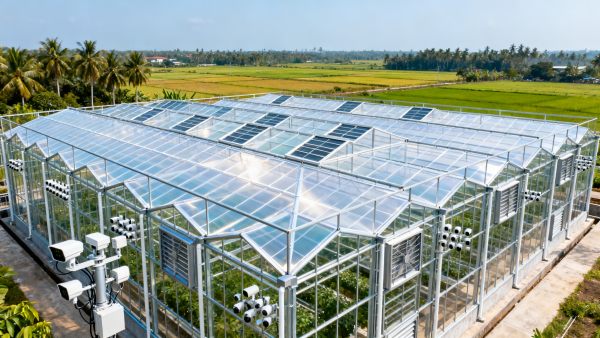
Starting April 20, 2026, Vietnam’s Vietnam Academy of Science and Technology (VAST) has mandated the VAST-2026 climate adaptability test for all imported smart greenhouse systems — a development directly affecting exporters, certification service providers, and regional distributors in the agricultural technology and controlled-environment agriculture sectors.
Event Overview
Effective April 20, 2026, VAST requires all imported smart greenhouse systems to pass the VAST-2026 greenhouse climate adaptability test. The test comprises a 72-hour dual-mode stress cycle: first, exposure to high temperature and high humidity (45°C / 95% RH), followed by abrupt cooling to low temperature and low humidity (20°C / 30% RH). Products without an official VAST type-test report are ineligible for import licensing in Vietnam. As a result, average export delivery timelines from China have extended by 4–6 weeks, compounded by tight scheduling at third-party testing laboratories.
Industries Affected
Direct Exporters (e.g., Chinese Smart Greenhouse Manufacturers)
Exporters face mandatory pre-market conformity assessment before shipment. Non-compliance blocks import clearance entirely — meaning products cannot enter Vietnamese customs regardless of contractual delivery terms. The 4–6 week extension reflects added time for test execution, reporting, and documentation alignment with VAST requirements.
Regional Distributors & Channel Partners (Southeast Asia)
Distributors handling end-to-end delivery — including installation, commissioning, and after-sales support — now confront longer lead times and reduced inventory predictability. Since VAST certification is product-specific (not model-family-based), each variant or configuration may require individual validation, increasing complexity in order planning and customer commitments.
Testing & Certification Service Providers
Third-party labs accredited for VAST-2026 testing report capacity constraints. The sudden enforcement has intensified demand for lab slots, particularly those offering combined environmental stress testing under both high- and low-humidity regimes. Lead times for test scheduling — previously 1–2 weeks — now exceed 3–4 weeks in some cases.
Supply Chain & Logistics Operators
Forwarders and customs brokers supporting agricultural tech imports must now verify VAST-type report submission as part of pre-clearance documentation checks. Absence of this document triggers automatic hold at Ho Chi Minh City or Hai Phong ports, adding unplanned storage and demurrage costs if not anticipated during shipment planning.
What Enterprises and Practitioners Should Monitor and Do Now
Confirm product-level VAST-2026 readiness ahead of order placement
Manufacturers and exporters should verify whether their specific greenhouse model — including controller firmware version, sensor calibration, and enclosure material specifications — has already undergone and passed the full 72-hour dual-mode test. Relying on generic “climate-resilient” claims or prior VAST-2022 reports is insufficient under the new mandate.
Reserve lab capacity and allocate buffer time in Q2–Q3 2026 delivery schedules
Given current laboratory backlogs, channel partners should book test slots at least 6–8 weeks prior to planned shipment dates. This includes time for potential retesting due to minor non-conformities (e.g., condensation-induced sensor drift during transition phase).
Review import documentation workflows with Vietnamese customs agents
Ensure that VAST-type reports are submitted in Vietnamese or officially notarized English translation, and that report numbers are cross-referenced in commercial invoices and packing lists. Discrepancies in naming conventions (e.g., product code vs. report ID) have caused delays in preliminary review stages.
Track VAST’s official updates on scope exemptions or phased implementation
Although the regulation is effective April 20, 2026, VAST has not yet published a formal list of exempted components (e.g., standalone control units without structural enclosure) or transitional allowances for contracts signed before the enforcement date. Monitoring VAST’s public notices remains critical for near-term risk mitigation.
Editorial Observation / Industry Perspective
From an industry perspective, the VAST-2026 enforcement is better understood as a structural tightening of market access — not merely a technical update. It signals Vietnam’s intent to align agri-tech import standards with domestic climate resilience goals, especially for high-value horticultural infrastructure. Analysis来看, this move elevates certification from a procedural checkpoint to a de facto product differentiation factor: only vendors with verified thermal-hygric stability will qualify for public tenders or subsidy-linked projects. Observation来看, the 4–6 week delay is likely to persist through mid-2026, as lab accreditation and inspector training scale up gradually. Current more appropriate interpretation is that VAST-2026 functions less as a one-time compliance hurdle and more as an ongoing operational requirement embedded in Vietnam’s import governance framework.
Overall, this regulation marks a step toward formalized technical sovereignty in Vietnam’s agricultural infrastructure procurement — shifting competitive advantage toward exporters with integrated testing capabilities and localized regulatory engagement, rather than those relying solely on cost or speed-to-market.
This development does not indicate broader ASEAN harmonization at present; it remains a nationally administered standard. Its significance lies in its enforceability and specificity — making it a concrete benchmark for evaluating supply chain maturity in tropical controlled-environment agriculture markets.
Information Source: Vietnam Academy of Science and Technology (VAST), official notice dated April 20, 2026. Ongoing monitoring is recommended for any supplementary guidance on test methodology revisions, scope clarifications, or recognition of equivalent international standards (e.g., IEC 60068-2 series).
Related Intelligence
- Smart GreenhouseVAST-2026 Climate Test Enforced for Smart Greenhouses in VietnamVAST-2026 Climate Test is now mandatory for smart greenhouses in Vietnam — learn how this new VAST-2026 requirement impacts exporters, distributors & certifiers.
- Smart GreenhouseVAST-2026 Climate Test for Smart Greenhouses Effective Jul 2026VAST-2026 Climate Test for Smart Greenhouses launches July 2026—mandatory for all imports to Vietnam. Ensure compliance now to avoid delays & secure market access.
- Smart GreenhouseVietnam Enforces Smart Greenhouse Energy Efficiency Rules for Chinese ExportsVietnam Enforces Smart Greenhouse Energy Efficiency Rules for Chinese Exports: VAST-2026 mandates tropical climate testing—act now to avoid customs delays and secure market access.
The Morning Broadsheet
Daily chemical briefings, market shifts, and peer-reviewed summaries delivered to your terminal.
