
SASO Opens Fast VOC Channel for RAS Systems in Saudi Arabia

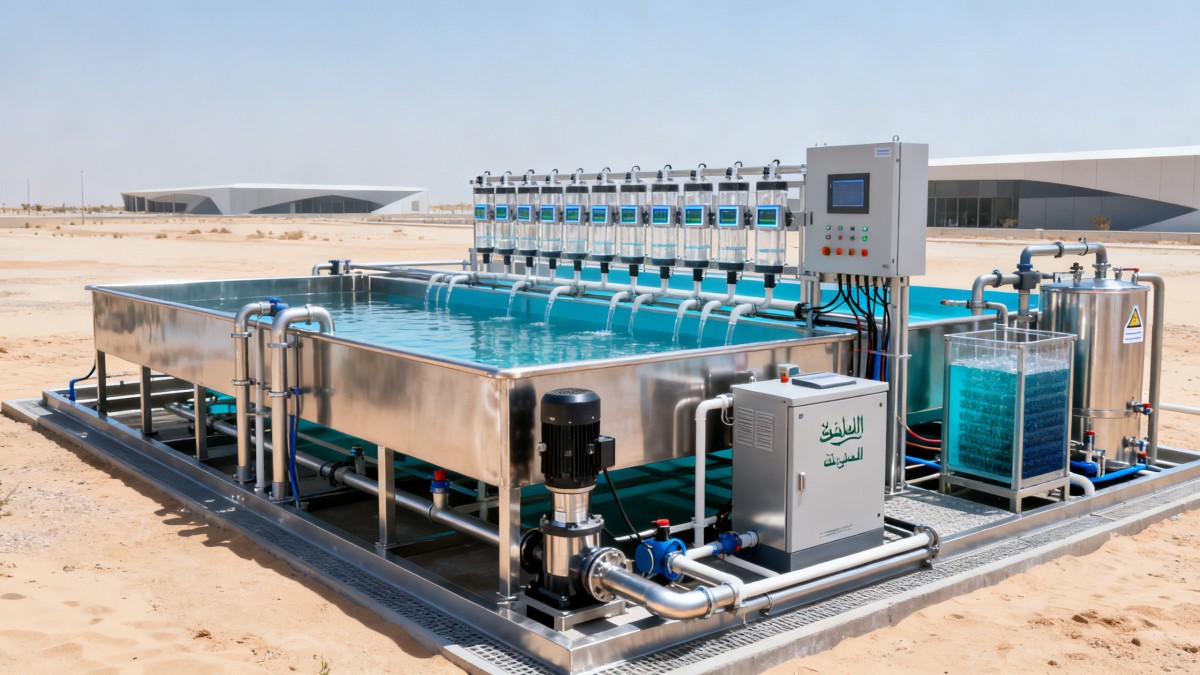
Saudi Arabia’s Standards, Metrology and Quality Organization (SASO) launched a streamlined VOC (Verification of Conformity) fast-track pathway for Recirculating Aquaculture Systems (RAS) on April 22, 2026. The new mechanism accepts CNAS-accredited laboratory test reports and ISO 22000 certification to issue VOC certificates within 10 working days — directly impacting exporters of integrated RAS equipment with modules such as water quality monitoring, smart feeding, and biological filtration. This development is particularly relevant for Middle Eastern aquaculture project buyers, EPC contractors, and regional distributors.
Event Overview
On April 22, 2026, SASO officially opened a direct VOC certification channel for RAS equipment requiring conformity verification for import into Saudi Arabia. Eligible submissions must include: (1) test reports issued by laboratories accredited by China National Accreditation Service for Conformity Assessment (CNAS), and (2) valid ISO 22000 food safety management system certification. The process targets complete RAS systems — not individual components — incorporating core functional modules including water quality monitoring, intelligent feeding, and biological filtration. Certification turnaround time is now capped at 10 working days.
Industries Affected by This Change
Direct Exporters and Trading Companies
These entities face immediate implications because VOC certification is mandatory for customs clearance of RAS equipment entering Saudi Arabia. Previously, VOC timelines varied widely and often exceeded 4–6 weeks; the new 10-day window reduces shipment scheduling uncertainty and improves order-to-delivery predictability. However, eligibility is strictly limited to full-system submissions — component-level or partial-system exports remain subject to standard assessment procedures.
EPC Contractors and Project Integrators
EPC firms delivering turnkey aquaculture infrastructure in Saudi Arabia rely on timely equipment compliance to meet project milestones. Faster VOC issuance lowers the risk of delays tied to regulatory bottlenecks during commissioning phases. That said, the requirement for integrated system-level documentation means EPCs must coordinate closely with equipment suppliers early in procurement — especially to ensure alignment between CNAS lab scope and actual tested configurations.
Distributors and Regional Channel Partners
Distributors serving the Gulf Cooperation Council (GCC) market may see increased demand for pre-verified RAS packages. Yet they cannot assume automatic eligibility: each shipment still requires submission of valid, matching CNAS reports and ISO 22000 certificates. Inventory planning must now account for documentation readiness — not just physical stock — to avoid port-side holds.
What Stakeholders Should Monitor and Do Now
Track official SASO guidance updates on scope and exclusions
The current announcement confirms eligibility criteria but does not publish a formal list of excluded subsystems or clarifications on firmware/software validation requirements. Stakeholders should monitor SASO’s official portal and authorized conformity assessment body notices for any refinements to acceptable test parameters or documentation formats.
Verify CNAS lab accreditation scope before testing
CNAS accreditation is mandatory, but not all CNAS-accredited labs hold approval for RAS-specific performance or safety tests. Exporters must confirm that their chosen lab’s accreditation scope explicitly covers the applicable SASO technical requirements (e.g., electrical safety, material contact with water, control system reliability) — not just general environmental or EMC testing.
Align ISO 22000 certification with RAS operational context
ISO 22000 applies to food safety management systems. For RAS equipment manufacturers, this implies documented control of hazards linked to waterborne pathogen risks, feed contamination pathways, and system sanitation protocols. Certification bodies must verify that the scope statement reflects actual RAS system operation — generic food processing certifications may not suffice.
Prepare documentation packages in advance for first shipments
While processing time is shortened, administrative completeness remains critical. Submitting incomplete or mismatched documents (e.g., outdated ISO 22000 certificate, CNAS report referencing non-final product version) will trigger rejection — resetting the 10-day clock. Teams should conduct internal pre-submission checks using SASO’s published VOC application checklist.
Editorial Observation / Industry Perspective
From an industry perspective, this initiative signals SASO’s prioritization of sustainable aquaculture infrastructure as part of Saudi Vision 2030’s food security goals — rather than a broad regulatory easing. It is better understood as a targeted facilitation measure for verified, system-integrated solutions, not a general simplification of import controls. Observation suggests it reflects growing demand from local mega-projects (e.g., NEOM-linked aquaculture developments), where delivery certainty outweighs cost sensitivity. Current relevance lies less in immediate cost reduction and more in de-risking project execution timelines — making it a procedural enabler, not a market access breakthrough.
That said, the channel’s narrow scope — requiring both CNAS reports *and* ISO 22000 — means it does not lower technical barriers. Instead, it compresses administrative latency for those already meeting high baseline standards. As such, it functions more as a signal of maturity in Saudi’s aquaculture regulatory framework than as a near-term expansion lever for new entrants without existing food safety or accredited testing infrastructure.
This change is best interpreted as a calibration step: aligning conformity assessment speed with the strategic pace of national aquaculture deployment — not as a permanent shift in regulatory stringency.
Conclusion: The SASO RAS VOC fast track marks a meaningful improvement in certification predictability for compliant, integrated systems — but its benefits are conditional, procedural, and limited to a defined subset of exporters and projects. It does not represent a broad deregulation nor a shortcut for non-compliant offerings. Stakeholders should treat it as an operational efficiency tool — valuable when aligned with existing quality and testing capabilities — rather than a market-entry catalyst.
Information Sources:
– Official SASO public notice dated April 22, 2026
– SASO VOC Program Guidelines (v4.2, effective March 2026)
– CNAS Accreditation Scope Database (accessed May 2026)
Note: SASO has not yet published detailed technical annexes specifying RAS-specific test parameters or ISO 22000 interpretation notes — these remain under observation.
Related Intelligence
- RAS SystemsSASO Opens Fast VOC Channel for RAS Systems in Saudi ArabiaSASO RAS VOC fast track now live: Get Saudi VOC certification in 10 days with CNAS reports & ISO 22000 — accelerate exports of integrated aquaculture systems.
- RAS SystemsSASO Accelerates RAS Systems Local Certification for Chinese FirmsSASO accelerates RAS systems local certification for Chinese firms—leverage CNAS & ISO 22000 to skip retesting and get VOC in 7 days!
- RAS SystemsSASO Streamlines RAS Systems VOC for Chinese ExportersSASO Streamlines RAS Systems VOC for Chinese exporters: Get mandatory Saudi VOC in just 12 days with CNAS testing & ISO 22000 — faster clearance, smarter compliance.
The Morning Broadsheet
Daily chemical briefings, market shifts, and peer-reviewed summaries delivered to your terminal.
