
Indonesia BPOM Tightens Botanical Extracts Import Rules
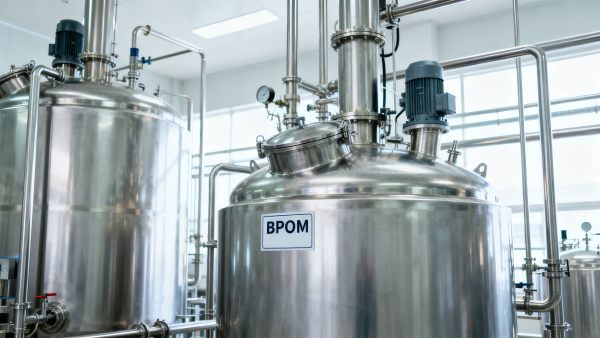
Indonesia’s National Agency of Drug and Food Control (BPOM) updated its Technical Guidelines for Import of Botanical Extracts on April 22, 2026 — effective July 1, 2026. This change introduces mandatory dual certification for all botanical extracts used in food and dietary supplements entering Indonesia, directly impacting exporters, ingredient suppliers, and contract manufacturers serving the Indonesian market.
Event Overview
On April 22, 2026, BPOM issued an updated version of its Technical Guidelines for Import of Botanical Extracts. As of July 1, 2026, all botanical extracts intended for use in food or dietary supplement products imported into Indonesia must be accompanied by: (1) an AOAC-validated method testing report issued by a BPOM-recognized laboratory; and (2) a GMP certificate for the manufacturing facility, issued by a BPOM-registered certification body. A transition period of 79 days remains before enforcement begins.
Industries Affected
Direct Exporters (e.g., Chinese ingredient manufacturers)
Exporters supplying botanical extracts to Indonesian importers face immediate compliance pressure. Without both certifications, shipments risk customs rejection upon arrival — halting supply continuity and triggering contractual penalties. The requirement applies regardless of shipment volume or product category, as long as the extract is classified under BPOM’s scope for food/dietary supplement use.
Ingredient Procurement & Trading Firms
Firms sourcing botanical extracts from third-party producers must now verify upstream certification status — not just product specifications. Dual-certification documentation becomes a prerequisite for purchase orders and supplier qualification audits. Failure to confirm valid GMP and AOAC reporting capacity may delay procurement cycles or invalidate existing supply agreements.
Contract Manufacturers & Brand Owners
Manufacturers producing private-label or co-manufactured dietary supplements for the Indonesian market must ensure raw material compliance flows through their entire BOM. Ingredient non-compliance triggers requalification requirements, potentially delaying product registration with BPOM and postponing market launch timelines.
Supply Chain & Compliance Service Providers
Logistics partners, customs brokers, and regulatory consultants must update internal checklists and pre-clearance protocols. Documentation verification now includes cross-checking GMP certificate issuance authority against BPOM’s official registry and confirming AOAC method alignment per BPOM’s published list — adding procedural complexity to standard import workflows.
What Relevant Enterprises or Practitioners Should Focus On — And How to Respond Now
Verify BPOM’s official list of recognized certification bodies and laboratories
Not all internationally accredited GMP certifiers or AOAC labs are accepted by BPOM. Enterprises should consult BPOM’s publicly maintained registry (updated as of April 2026) to confirm whether their current certification provider qualifies — and initiate switching if needed, given the 79-day window.
Assess certification readiness per production site and extract type
GMP certification is facility-specific; AOAC testing is product- and batch-specific. Companies must map which extraction lines or facilities supply Indonesia-bound goods, then prioritize certification activities accordingly — rather than applying blanket upgrades across all operations.
Confirm documentation format and submission requirements with Indonesian import partners
BPOM does not specify standardized templates for AOAC reports or GMP certificates. Importers may impose additional formatting or translation requirements. Proactive alignment with local partners helps avoid last-minute document rejections during customs clearance.
Track upcoming BPOM implementation notices and FAQs
While the April 22, 2026 guideline is published, BPOM has indicated it will release supplementary implementation guidance — including acceptable AOAC methods per botanical matrix and transitional arrangements for pending registrations. Monitoring BPOM’s official portal and notifications is essential for accurate planning.
Editorial Perspective / Industry Observation
From industry perspective, this policy shift signals BPOM’s move toward harmonizing import controls with international standards — particularly AOAC’s method validation rigor and ISO-based GMP frameworks. However, it is not yet a full alignment: BPOM retains exclusive authority over lab and certifier recognition, limiting mutual recognition with other jurisdictions. Analysis来看, the dual-certification mandate functions less as a technical upgrade and more as a gatekeeping mechanism — raising barriers for smaller suppliers while consolidating compliance responsibility upstream. Current more appropriate understanding is that this is an enforcement signal, not merely procedural refinement: BPOM has demonstrated increasing scrutiny of botanical ingredient safety since 2024, and this update formalizes expectations previously communicated via ad hoc inspections and registration delays.
Conclusion
This regulatory update marks a structural tightening of Indonesia’s botanical ingredient import regime — shifting compliance burden decisively onto foreign suppliers and their certifiers. It reflects neither a temporary adjustment nor a broad-sector reform, but a targeted escalation in oversight for high-risk input categories. For affected enterprises, the most rational interpretation is that this is now a fixed operational requirement — not a negotiable condition — and preparation must focus on verifiable, BPOM-aligned documentation rather than general quality assurance improvements.
Source Attribution
Main source: BPOM Technical Guidelines for Import of Botanical Extracts (Revised Edition), issued April 22, 2026.
Points requiring ongoing observation: BPOM’s forthcoming implementation FAQ document, list of approved AOAC methods per botanical matrix, and any transitional provisions for registrations submitted before July 1, 2026.
Related Intelligence
- Botanical ExtractsIndonesia BPOM Tightens Botanical Extracts Import RulesIndonesia BPOM tightens botanical extracts import rules: dual certification (AOAC testing + GMP) required from July 1, 2026. Act now to avoid shipment delays!
- Botanical ExtractsIndonesia BPOM Tightens Botanical Extracts Import RulesBotanical extracts import to Indonesia now requires BPOM-compliant GMP + AOAC validation—act before the 1 June 2026 deadline!
- Botanical ExtractsChinese PLM Systems Accelerate Green Transition in Coatings IndustryChinese PLM systems drive green innovation in coatings—enabling botanical extracts like menthol & rosmarinic acid to meet EU EcoLabel and GREENGUARD Gold standards.
The Morning Broadsheet
Daily chemical briefings, market shifts, and peer-reviewed summaries delivered to your terminal.
