
APVMA Launches Food Grade Enzymes Fast-Track 2.0 for China-Australia Data Sharing
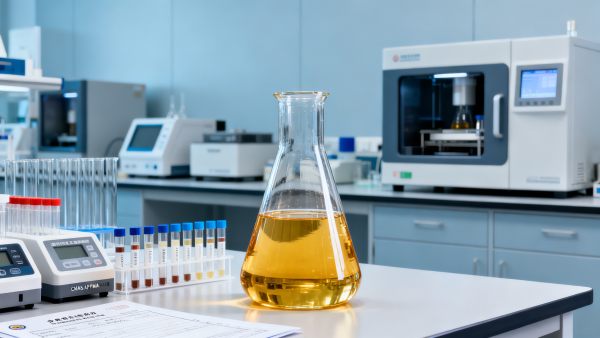
Australia’s Australian Pesticides and Veterinary Medicines Authority (APVMA) activated the Food Grade Enzymes Registration Fast-Track 2.0 on 22 April 2026 — a regulatory update with direct implications for food enzyme manufacturers, food processing equipment integrators, and formulation service providers operating across China and Australia.
Event Overview
On 22 April 2026, the APVMA officially launched the Food Grade Enzymes Registration Fast-Track 2.0. Under this mechanism, analytical data generated jointly by CMA/CNAS-accredited laboratories in China and APVMA-designated Australian laboratories — including ChemCentre WA — are now accepted for registration submissions. Shared parameters include enzyme activity, impurity profiling, and thermal stability. The registration timeline has been reduced to 21 working days. The fast-track applies specifically to food-grade industrial enzymes used in winemaking, baking, and dairy processing.
Industries Affected
Food Enzyme Manufacturers (China-based)
Manufacturers supplying food-grade enzymes to the Australian market face reduced technical barriers to registration. Because joint testing data is now accepted, they no longer need to fully retest samples in Australia for core physicochemical parameters — potentially lowering compliance costs and accelerating market entry.
Food Processing Equipment Integrators
Integrators embedding enzyme-based solutions into production lines (e.g., automated dough conditioning systems or fermentation control units) may see increased demand from Australian food processors seeking compliant, pre-validated enzyme modules. Their value proposition now includes faster regulatory alignment — but only if their enzyme suppliers participate in the fast-track.
Formulation Service Providers (B2B)
Providers developing custom enzyme blends for bakery or dairy applications must ensure their ingredient sourcing and documentation align with the joint-labelling requirement. Their role shifts toward coordinating cross-border lab workflows — not just blending — to maintain eligibility under Fast-Track 2.0.
Australian Food Processors (End Users)
While not directly submitting registrations, Australian processors sourcing enzymes from Chinese suppliers may experience shorter lead times for new product launches or process upgrades — provided their suppliers use the fast-track pathway. However, they retain responsibility for verifying that supplier documentation meets APVMA’s evidentiary standards.
What Enterprises and Practitioners Should Watch & Do Now
Monitor official guidance on lab pairing protocols
The APVMA has not yet published detailed criteria for how Chinese CMA/CNAS labs pair with designated Australian labs (e.g., ChemCentre WA). Companies should track APVMA’s technical notices and confirm whether pre-approval of lab partnerships is required before data submission.
Verify eligibility of current enzyme portfolios
Only enzymes used in winemaking, baking, and dairy processing qualify. Enzymes for juice clarification, plant-based dairy alternatives, or meat processing are excluded — even if technically similar. Companies should audit existing SKUs against this scope before initiating fast-track applications.
Distinguish between policy launch and operational readiness
The fast-track went live on 22 April 2026, but acceptance of shared reports depends on whether both labs have aligned methodologies and reporting formats. Early applicants may encounter validation requests — meaning actual cycle time reduction will depend on lab coordination maturity, not just the policy date.
Prepare joint documentation workflows now
Eligible companies should initiate bilateral discussions with partner labs to standardize test protocols (e.g., ISO 20170 for enzyme activity), reporting templates, and data traceability requirements — ahead of formal application submission.
Editorial Perspective / Industry Observation
From an industry perspective, this update is best understood as a procedural enabler — not a de facto approval pathway. It lowers administrative friction but does not relax scientific or safety thresholds. Analysis来看, its significance lies less in immediate registration volume and more in institutional recognition of China’s laboratory capacity within a high-regulation jurisdiction. Observation来看, it reflects a broader trend: selective mutual recognition in niche technical domains, rather than broad harmonisation. Current more appropriate interpretation is that this is a signal of evolving bilateral regulatory trust — one requiring active coordination to convert into tangible efficiency gains.
Conclusion
The APVMA’s Fast-Track 2.0 introduces a targeted, evidence-based mechanism to streamline registration for specific food-grade enzymes. Its real-world impact hinges on execution — particularly lab interoperability and documentation discipline. It is neither a blanket acceleration nor a regulatory concession, but a calibrated step toward more efficient transnational technical assessment. For stakeholders, the priority remains operational preparedness — not anticipation of automatic benefits.
Information Sources
Main source: Official announcement by the Australian Pesticides and Veterinary Medicines Authority (APVMA), dated 22 April 2026. No supplementary documents, implementation guidelines, or lab pairing lists have been publicly released as of the announcement date. These remain subjects for ongoing observation.
Related Intelligence
- Food Grade EnzymesAPVMA Launches Food Grade Enzymes Fast-Track 2.0 for China-Australia Data SharingAPVMA Fast-Track 2.0 now accepts China-Australia joint lab data for food grade enzymes — cut registration to 21 days. Winemaking, baking & dairy focus.
- Food Grade EnzymesAPVMA Launches Food-Grade Enzymes Fast Track 2.0 for China-Australia Data SharingAPVMA Launches Food-Grade Enzymes Fast Track 2.0 — Chinese exporters can now use Sino-Australian joint lab data to slash registration time to 65 days. Act now!
- Food Grade EnzymesAPVMA Launches Food Grade Enzymes Fast Track 2.0 for China-Australia Lab ReportsAPVMA Launches Food Grade Enzymes Fast Track 2.0—accepts China-Australia lab reports for enzyme activity, thermal stability & allergen residue. Faster 14-day registration for 12 key enzymes.
The Morning Broadsheet
Daily chemical briefings, market shifts, and peer-reviewed summaries delivered to your terminal.
