
Indonesia BPOM Tightens Dual-Certification for Botanical Extracts Imports
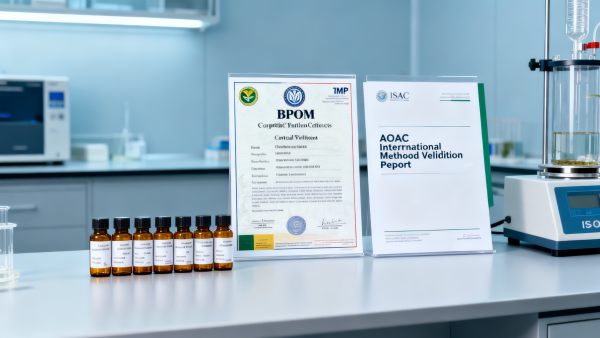
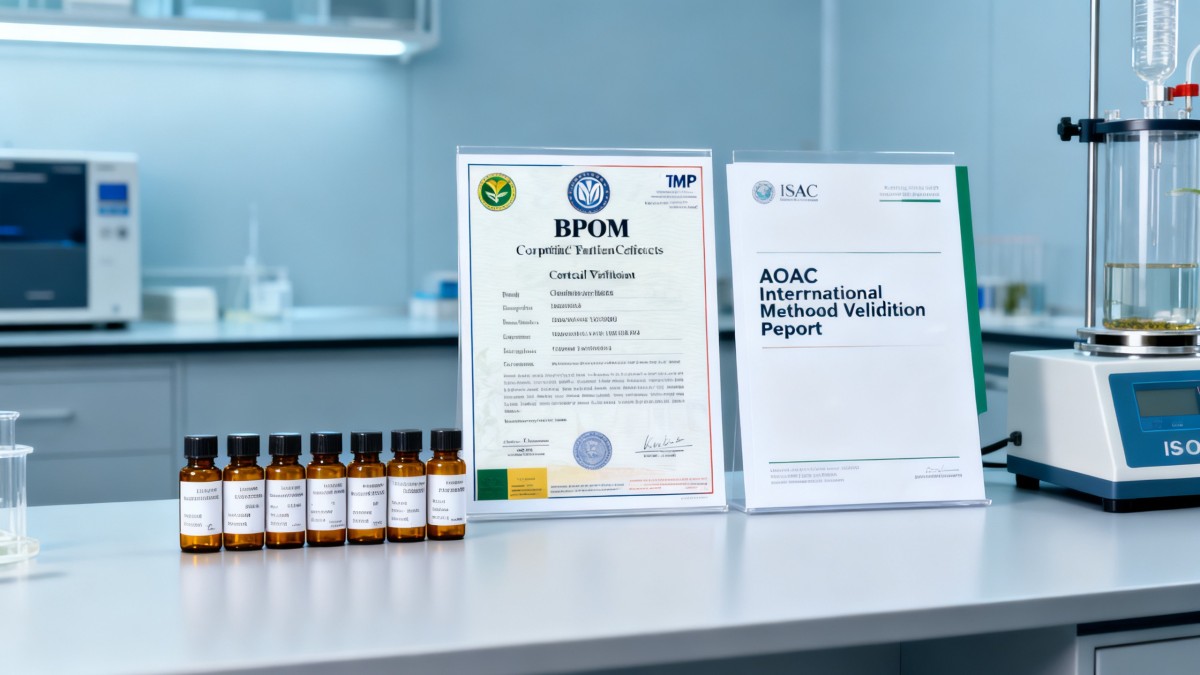
On April 24, 2026, Indonesia’s National Agency of Drug and Food Control (BPOM) updated its import list, mandating dual certification — GMP certification issued by a BPOM-recognized body and AOAC International method validation reports — for all botanical extracts entering the country effective May 1, 2026. This change directly impacts exporters from China, natural ingredient importers across Southeast Asia, and dietary supplement OEM manufacturers reliant on such raw materials.
Event Overview
On April 24, 2026, BPOM published an update to its regulated import list. Starting May 1, 2026, all imported botanical extracts must be accompanied by both: (1) a Good Manufacturing Practice (GMP) certificate issued by a BPOM-recognized third-party certifier, and (2) an AOAC International method validation report. The AOAC report must originate from a laboratory accredited under the AOAC-ILAC Mutual Recognition Arrangement. Chinese exporting enterprises without documented collaboration with such an AOAC-ILAC-accredited lab will be unable to complete customs clearance for these products.
Which Subsectors Are Affected
Direct Exporters (e.g., Chinese Ingredient Suppliers)
These enterprises face immediate compliance barriers if they lack prior engagement with AOAC-ILAC-accredited labs. Since AOAC method validation is product- and matrix-specific, existing test reports cannot be reused across different botanical extracts or formulations. Delays in securing new validation reports may halt shipments scheduled for May onward.
Raw Material Importers (e.g., Southeast Asian Natural Ingredient Distributors)
Importers sourcing botanical extracts from China — especially those without established quality documentation pipelines — may experience extended lead times and increased due diligence overhead. Inventory planning becomes more complex, as unvalidated batches risk rejection at Indonesian ports regardless of prior shipment history.
OEM/ODM Manufacturers (e.g., Dietary Supplement Contract Producers)
Manufacturers relying on just-in-time procurement of botanical actives may face production line disruptions. Switching suppliers mid-cycle now requires verifying not only GMP status but also AOAC validation coverage for each specific extract — a process that typically takes weeks, not days.
Supply Chain & Compliance Service Providers
Third-party verification agencies, lab coordination services, and regulatory consultants must now integrate AOAC-ILAC lab mapping into their pre-clearance workflows. Their capacity to support clients hinges on verified access to AOAC-recognized testing infrastructure — a resource currently concentrated in limited global locations.
What Relevant Enterprises or Practitioners Should Monitor and Do Now
Confirm AOAC-ILAC Lab Engagement Status Immediately
Chinese exporters and their Indonesian import partners should verify whether current testing partners hold active AOAC-ILAC accreditation and whether validation reports cover the exact extract type, solvent system, and analyte(s) declared in BPOM submissions. Reports issued before April 2026 may not satisfy the new requirement if method scope or accreditation status has lapsed.
Review and Prioritize High-Volume or High-Risk SKUs
Not all botanical extracts carry equal risk. Enterprises should identify top five SKUs by import volume or regulatory sensitivity (e.g., standardized extracts, multi-component blends) and initiate AOAC validation for those first — rather than pursuing blanket validation across entire portfolios.
Monitor BPOM’s Official List of Recognized GMP Certifiers and AOAC-Accredited Labs
BPOM has not yet published a consolidated, publicly searchable registry of approved GMP certifiers or AOAC-ILAC labs accepted for this purpose. Stakeholders should track BPOM’s official portal (www.pom.go.id) for updates, as acceptance is not automatic — even AOAC-ILAC accreditation alone does not guarantee BPOM recognition.
Update Internal Documentation Protocols Ahead of May 1
Customs brokers, QA teams, and procurement officers should revise internal checklists to require both documents *before* goods are released from origin warehouses. Relying on post-shipment submission is no longer viable: BPOM’s system now enforces document linkage at the time of import declaration.
Editorial Perspective / Industry Observation
From industry perspective, this policy shift is less a sudden disruption and more a formalization of long-emerging expectations around analytical traceability for natural ingredients. BPOM’s move aligns with broader ASEAN harmonization trends emphasizing method-validated identity and purity — particularly for materials lacking monographs in pharmacopoeias. Analysis来看, the dual-certification model signals BPOM’s intent to shift enforcement upstream: rather than relying solely on end-product testing, it now requires proof of consistent, internationally benchmarked control at the extraction and standardization stage. Current more appropriate understanding is that this is a compliance threshold — not a temporary pilot — given its inclusion in the official import list revision and clear implementation date. Continued attention is warranted because BPOM has indicated future expansions may include additional natural product categories beyond botanical extracts.
In summary, BPOM’s updated requirement represents a structural tightening of import gatekeeping for botanical extracts — one that elevates documentation rigor over procedural convenience. It reflects a maturing regulatory posture focused on analytical accountability, not merely facility oversight. For stakeholders, this is best understood not as an isolated administrative change, but as a marker of evolving regional expectations for evidence-based natural ingredient trade.
Source: Indonesia BPOM Official Import List Update (April 24, 2026); BPOM Regulation No. HK.03.1.23.12.26.0001 (referenced in public notice). Subject to ongoing observation: BPOM’s forthcoming publication of recognized GMP certifiers and AOAC-ILAC lab list.
Related Intelligence
- Botanical ExtractsEU CBAM Carbon Tariff First Applies to Botanical ExtractsEU CBAM Carbon Tariff now covers Botanical Extracts—key for exporters, importers & LCA providers. Act now to ensure compliance by 24 April 2026.
- Botanical ExtractsIndonesia BPOM Tightens Dual-Certification for Botanical Extracts ImportsIndonesia BPOM now requires dual-certification for botanical extracts: GMP + AOAC International method validation. Act before May 1, 2026 — avoid shipment delays & customs rejection.
- Botanical ExtractsIndonesia BPOM Tightens Botanical Extracts Import RulesBotanical extracts import to Indonesia now requires dual certification: China GMP + AOAC validation. Stay compliant before July 1, 2026 — avoid shipment rejection & delays!
The Morning Broadsheet
Daily chemical briefings, market shifts, and peer-reviewed summaries delivered to your terminal.
