
APVMA Launches Food Grade Enzymes Fast-Track 2.0 in Australia
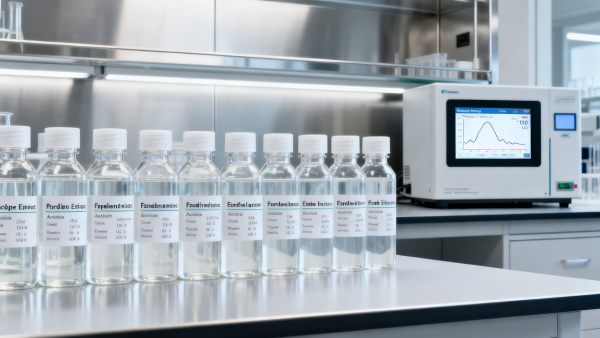
Australia’s Australian Pesticides and Veterinary Medicines Authority (APVMA) activated the Food Grade Enzymes Fast-Track 2.0 pathway on 24 April 2026. This update introduces a streamlined registration process for food-grade enzymes entering the Australian market — particularly relevant for food processors, probiotic formulation companies, and Asia-Pacific distributors relying on enzyme supplies from China.
Event Overview
On 24 April 2026, the APVMA officially launched Food Grade Enzymes Fast-Track 2.0. Under this mechanism, enzyme activity and stability data generated by Sino-Australian joint laboratories can be directly ingested into APVMA’s assessment system. The official processing time for eligible applications is now reduced to nine working days. Participation is restricted to Chinese laboratories that have successfully passed the CNAS-ISO/IEC 17025 re-accreditation.
Industries Affected
Direct Trade Enterprises
Companies exporting food-grade enzymes from China to Australia are directly impacted because the Fast-Track 2.0 pathway applies only to submissions backed by CNAS-accredited lab data. Those without access to qualifying labs cannot benefit from the shortened timeline — potentially widening lead-time disparities between suppliers.
Raw Material Procurement Enterprises
Purchasers at Australian food ingredient firms or contract manufacturers must verify whether their Chinese enzyme suppliers engage CNAS-ISO/IEC 17025–accredited labs for stability testing. Absence of such validation may delay product launch timelines or trigger retesting requirements under standard APVMA review.
Food Processing & Probiotic Formulation Companies
Australian food processors and probiotic formulators relying on imported enzymes face improved supply predictability: faster registrations mean more reliable input availability and reduced risk of production hold-ups due to regulatory uncertainty. However, this benefit is conditional on upstream data compliance — not automatic for all Chinese-sourced enzymes.
Asia-Pacific Distribution & Supply Chain Service Providers
Distributors serving multiple APAC markets may need to differentiate documentation strategies — Fast-Track 2.0 applies solely to APVMA assessments and does not extend to other jurisdictions (e.g., NZFSA, Singapore’s SFA). Supply chain service providers supporting enzyme logistics must ensure traceability of lab accreditation status alongside shipment records.
Key Considerations and Recommended Actions
Monitor Official Updates on Eligible Laboratories
APVMA has not published a public list of approved Sino-Australian joint labs or confirmed whether it will maintain an updated registry. Companies should track APVMA announcements and confirm lab eligibility directly with their testing partners before initiating submissions.
Verify CNAS-ISO/IEC 17025 Re-accreditation Status
The Fast-Track 2.0 pathway explicitly requires current CNAS-ISO/IEC 17025 re-accreditation — not initial accreditation. Enterprises should request valid re-accreditation certificates (including scope of testing) from labs, as expired or non-renewed credentials invalidate Fast-Track eligibility.
Distinguish Between Policy Signal and Operational Readiness
While the nine-working-day timeline is stated, actual implementation depends on data completeness, format compliance, and absence of queries during review. Early adopters should allow buffer time and prepare supplementary technical clarifications in advance — especially for novel enzyme variants or complex stabilization matrices.
Align Procurement Contracts with Data Governance Requirements
Procurement agreements with Chinese enzyme suppliers should specify responsibility for generating, archiving, and transferring APVMA-compliant stability data. Clauses covering data ownership, audit readiness, and retesting liability become operationally critical under Fast-Track 2.0.
Editorial Observation / Industry Perspective
From an industry perspective, Fast-Track 2.0 is best understood as a procedural refinement rather than a broad regulatory liberalization. It does not lower scientific or safety thresholds; instead, it optimizes evaluation efficiency for a narrowly defined subset of applicants — those with verified, standardized data from accredited sources. Analysis来看, its primary value lies in reinforcing traceability and quality assurance discipline across the China–Australia enzyme supply chain. Observation来看, it signals growing alignment in technical expectations between the two jurisdictions — but remains confined to a specific modality (enzyme stability) and a narrow set of qualified labs. Current more appropriate interpretation is that it represents a targeted operational upgrade, not a systemic shift in market access conditions.
In summary, APVMA’s Food Grade Enzymes Fast-Track 2.0 enhances predictability and transparency for a defined segment of the food enzyme supply chain — but only where data provenance and laboratory competence meet strict criteria. Its significance is procedural and conditional, not categorical. At present, it is more accurately viewed as a calibration of existing processes than as a new market-opening measure.
Source: Official announcement by the Australian Pesticides and Veterinary Medicines Authority (APVMA), effective 24 April 2026.
Noted for ongoing observation: APVMA’s future publication of participating laboratory lists, format specifications for direct data ingestion, and frequency of re-accreditation audits required to retain Fast-Track eligibility.
Related Intelligence
- Food Grade EnzymesAPVMA Launches Food Grade Enzymes Fast-Track 2.0 in AustraliaFood Grade Enzymes Fast-Track 2.0 is live! APVMA slashes registration to 9 days for CNAS-accredited enzyme submissions — boost Australia market entry now.
- Food Grade EnzymesAPVMA Launches Food Grade Enzymes Fast Track 2.0APVMA Fast Track 2.0 slashes food-grade enzymes approval to 12 days—key for exporters, suppliers & manufacturers in Australia–China trade.
- Food Grade EnzymesAPVMA Launches Food Grade Enzymes Fast-Track 2.0 for China-Australia Data SharingAPVMA Fast-Track 2.0 now accepts China-Australia joint lab data for food grade enzymes — cut registration to 21 days. Winemaking, baking & dairy focus.
The Morning Broadsheet
Daily chemical briefings, market shifts, and peer-reviewed summaries delivered to your terminal.
