
APVMA Launches Food Grade Enzymes Fast Track 2.0
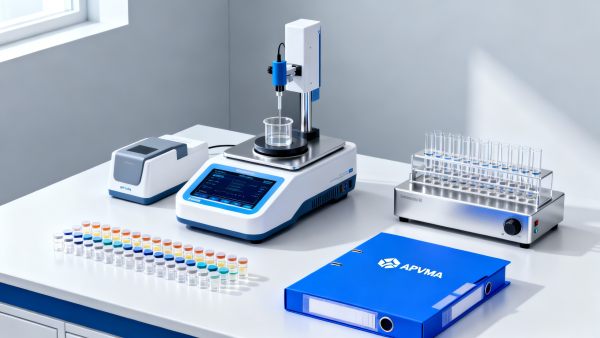
Australia’s Australian Pesticides and Veterinary Medicines Authority (APVMA) upgraded its import assessment pathway for food-grade enzymes on 18 April 2026, introducing the ‘Fast Track 2.0’ mechanism. This update directly affects exporters, ingredient suppliers, and food manufacturers engaged in Australia–China trade—particularly those handling enzyme-based processing aids, dairy starters, baking additives, and plant-based fermentation inputs. The change signals a material reduction in regulatory friction for compliant submissions, warranting close attention from supply chain stakeholders.
Event Overview
On 18 April 2026, the APVMA activated version 2.0 of its Fast Track pathway for food-grade enzymes. Under this updated process, the agency accepts analytical reports—including activity, thermal stability, and residue/metabolism data—issued by joint laboratories operating under a formal Memorandum of Understanding (MOU) between Australian and Chinese institutions. One confirmed example is the Shanghai Jiao Tong University–CSIRO Enzyme Engineering Centre. Approval timelines are now capped at 12 working days, representing a 65% reduction compared to the prior standard assessment period.
Industries Affected
Direct Exporters & Trade Agents
Exporters of food-grade enzymes from China (and other jurisdictions with MOU-aligned labs) face lower entry barriers into the Australian market. The impact centers on reduced time-to-market and more predictable approval scheduling—especially for products requiring batch-specific or formulation-dependent validation.
Raw Material Sourcing & Ingredient Suppliers
Suppliers sourcing enzymes for downstream food manufacturing must verify whether their current testing partners qualify under the MOU framework. If not, product registration timelines may remain unchanged—or even lengthen—if retesting through an approved lab becomes necessary. This introduces a new layer of vendor due diligence.
Food Processing & Manufacturing Firms
Manufacturers using food-grade enzymes as processing aids (e.g., in cheese ripening, starch hydrolysis, or meat tenderization) may experience faster qualification of new enzyme suppliers or alternative grades. However, internal compliance teams need to confirm that technical dossiers align with APVMA’s updated acceptance criteria—not just general GLP or ISO standards.
Supply Chain & Regulatory Support Providers
Consultancies, testing coordinators, and regulatory affairs firms supporting enzyme clients must update service offerings to reflect the new evidentiary requirements. Specifically, they need to map which joint labs are currently recognized—and whether their reporting templates meet APVMA’s format expectations for submission.
What Stakeholders Should Monitor & Do Now
Track official APVMA guidance updates
The APVMA has not yet published a public list of all MOU-recognized joint laboratories beyond the Shanghai Jiao Tong University–CSIRO centre. Stakeholders should monitor the APVMA website and official notices for expansions to the accepted lab network or clarifications on report scope (e.g., whether microbiological safety or allergenicity data fall under Fast Track 2.0).
Verify lab accreditation status before submission
Not all China–Australia joint research centres are automatically eligible. Companies must confirm—directly with the APVMA or via registered agents—that their chosen lab holds active MOU status *and* that the specific test parameters (e.g., residual solvent analysis, kinetic profiling) are covered under the agreement.
Distinguish policy signal from operational readiness
The launch date (18 April 2026) marks the start of eligibility—but does not guarantee immediate processing capacity. Early applicants should anticipate possible queue effects or initial administrative refinements. Submission timing in Q2 2026 may yield different turnaround outcomes than later in the year.
Prepare documentation for seamless transition
Companies planning submissions under Fast Track 2.0 should ensure their technical files include full traceability: instrument calibration records, raw chromatograms or spectrometry outputs, and clear linkage between test batches and commercial product specifications. APVMA’s 12-day timeline applies only to complete, technically valid dossiers.
Editorial Perspective / Industry Observation
From an industry perspective, Fast Track 2.0 is best understood not as a broad deregulatory shift, but as a targeted procedural refinement enabled by bilateral scientific infrastructure. Analysis来看, its significance lies less in lowering safety thresholds and more in institutionalizing trusted data pathways between two major food enzyme markets. Observation来看, this reflects growing alignment in how Australia and China approach evidence-based food additive regulation—yet remains limited in scope to pre-qualified labs and narrowly defined endpoints. Current more relevant interpretation is that it serves as both a near-term efficiency lever *and* a longer-term signal of interoperability potential across other functional food ingredients.
Conclusion
This update represents a concrete, administratively meaningful improvement for select participants in the food-grade enzyme value chain—not a wholesale policy transformation. It lowers time-based risk for qualified submissions but introduces new coordination requirements around lab selection and dossier preparation. For most stakeholders, the current recommendation is not to accelerate applications broadly, but to validate eligibility first, then calibrate timelines and resource allocation accordingly.
Information Sources
Main source: Official announcement issued by the Australian Pesticides and Veterinary Medicines Authority (APVMA), dated 18 April 2026.
Points pending observation: Full list of MOU-recognized laboratories; applicability of Fast Track 2.0 to non-China-originated enzymes tested in joint labs; potential extension to additional analyte categories (e.g., food-grade proteases used in plant-based meat processing).
Related Intelligence
- Food Grade EnzymesAPVMA Launches Food Grade Enzymes Fast Track 2.0APVMA Fast Track 2.0 slashes food-grade enzymes approval to 12 days—key for exporters, suppliers & manufacturers in Australia–China trade.
- Food Grade EnzymesAPVMA Launches Food Grade Enzymes Fast-Track 2.0 for China-Australia Data SharingAPVMA Fast-Track 2.0 now accepts China-Australia joint lab data for food grade enzymes — cut registration to 21 days. Winemaking, baking & dairy focus.
- Food Grade EnzymesAPVMA Launches Food-Grade Enzymes Fast Track 2.0 for China-Australia Data SharingAPVMA Launches Food-Grade Enzymes Fast Track 2.0 — Chinese exporters can now use Sino-Australian joint lab data to slash registration time to 65 days. Act now!
The Morning Broadsheet
Daily chemical briefings, market shifts, and peer-reviewed summaries delivered to your terminal.
