
SASO Opens Direct VOC Path for RAS Systems in Saudi Arabia
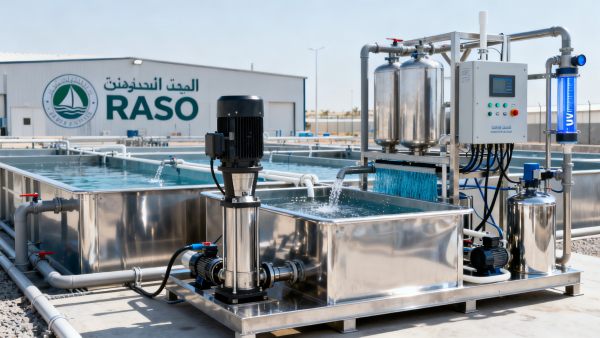
Saudi Standards, Metrology and Quality Organization (SASO) announced on April 15, 2026, a streamlined Verification of Conformity (VOC) pathway for Recirculating Aquaculture Systems (RAS) — specifically for manufacturers holding both CNAS-accredited laboratory reports and ISO 22000 certification. This development directly affects exporters of aquaculture infrastructure, food safety–integrated equipment suppliers, and system integrators targeting the Gulf seafood production and import control markets.
Event Overview
On April 15, 2026, SASO officially opened a direct VOC issuance channel for RAS Systems. Eligible Chinese manufacturers may now obtain VOC certificates within three working days without undergoing local type testing — provided they submit valid test reports from CNAS-accredited laboratories and demonstrate active ISO 22000 Food Safety Management System certification. The first batch of issued certificates covers 17 system integrators headquartered in Guangdong and Shandong provinces.
Industries Affected by This Change
Direct Exporters of RAS Equipment & Integrated Systems
These companies are directly impacted because VOC remains mandatory for customs clearance of RAS hardware into Saudi Arabia. The new pathway eliminates the need for redundant on-site testing in KSA, shortening time-to-market and reducing third-party verification costs. Impact manifests in faster documentation turnaround, lower compliance overhead per shipment, and improved bid competitiveness for public-sector aquaculture tenders in Saudi Arabia.
Manufacturers of Critical RAS Subcomponents with Food-Contact Interfaces
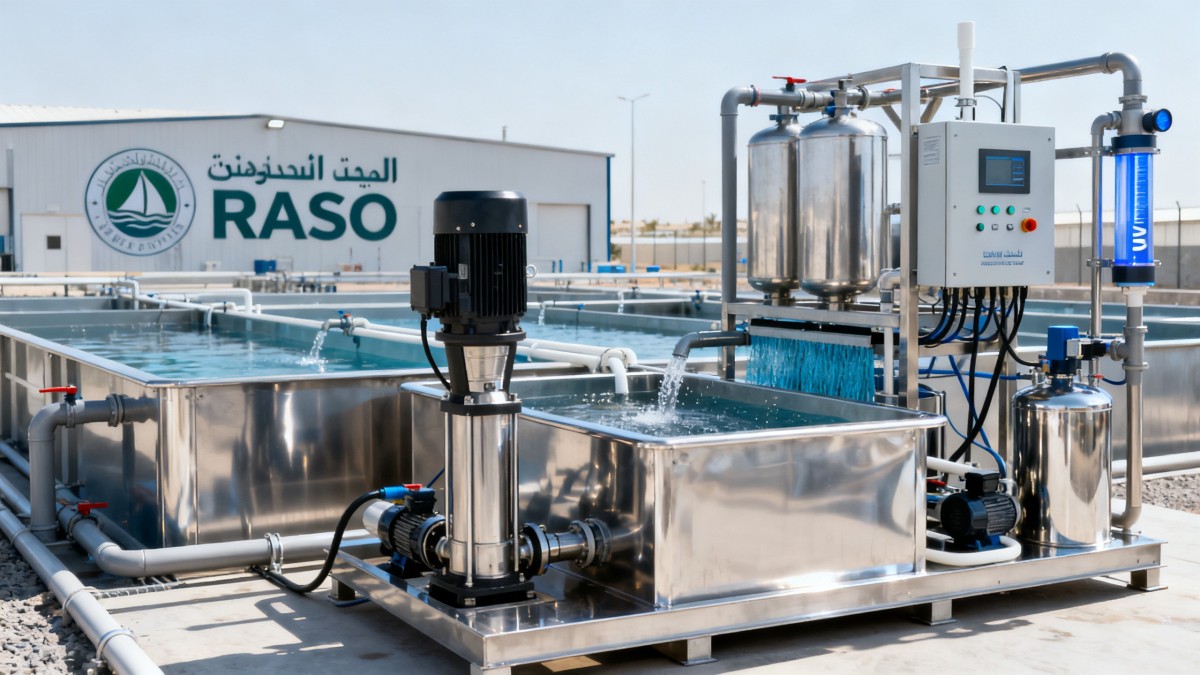
Components such as biofilters, UV sterilizers, oxygenation units, and recirculation pumps that interface with water used for food-grade fish rearing fall under indirect scope. If supplied as part of a certified RAS system, their conformity is now validated via the system-level VOC — but only when traceable to a CNAS+ISO 22000–compliant integrator. This increases demand for documented material safety, NSF/EC1935:2004 alignment, and batch-level traceability from component suppliers.
Food Safety Certification Bodies & CNAS-Accredited Testing Labs
The policy elevates the operational relevance of CNAS accreditation and ISO 22000 implementation depth — not just certification status. Labs and auditors supporting RAS exporters must ensure test scopes explicitly cover RAS-relevant parameters (e.g., heavy metal leaching from tanks, microbiological stability of filtration media, ozone residue limits). Impact includes higher scrutiny on report wording, sampling protocols, and technical validity of claims referenced in VOC applications.
What Stakeholders Should Monitor and Do Now
Track SASO’s official guidance on scope boundaries
The current announcement confirms eligibility for ‘RAS Systems’ but does not define technical boundaries (e.g., minimum tank volume, required subsystems, or exclusion of hybrid land-based/sea-cage configurations). Stakeholders should monitor SASO’s forthcoming technical circulars or FAQ updates — expected before Q3 2026 — to confirm whether modular or partial RAS deployments qualify.
Verify CNAS report applicability — not just accreditation status
CNAS accreditation alone is insufficient. Reports must be issued under a scope that explicitly covers RAS-specific performance or food safety parameters. Exporters should audit existing test reports for alignment with SASO’s implied requirements (e.g., EN 14882:2015 for plastic components in contact with aquaculture water), and retest if gaps exist — especially for materials used in fish-holding zones.
Confirm ISO 22000 scope includes equipment manufacturing and system integration
Many ISO 22000 certifications apply only to processing facilities or feed mills. For RAS integrators, the certificate must explicitly cover ‘design, assembly, and commissioning of recirculating aquaculture systems’ — not just ‘aquaculture operations’. Companies should review their certification scope statement and engage their certification body to extend coverage if needed prior to VOC application.
Prepare documentation bundles aligned with VOC application templates
SASO has not yet published updated VOC application forms for this pathway. However, early adopters report successful submissions using the standard VOC form supplemented by a signed declaration linking CNAS reports and ISO 22000 evidence. Exporters should pre-assemble verified translations of lab reports, scope statements, and management system manuals — ensuring all references to ‘RAS’, ‘recirculation’, and ‘food-grade water contact’ are consistently rendered in English.
Editorial Perspective / Industry Observation
Analysis来看, this initiative is less a standalone regulatory shift and more a targeted efficiency measure — signaling SASO’s intent to accelerate adoption of controlled-environment aquaculture technologies while retaining food safety oversight rigor. It reflects growing recognition that RAS infrastructure itself constitutes part of the food chain control system, not merely industrial equipment. From industry角度看, the move formalizes what was previously an ad hoc, case-by-case negotiation; it does not relax technical requirements, but rather shifts validation upstream to domestic conformity infrastructure. Current更值得关注的是 whether this dual-condition model (CNAS + ISO 22000) will be extended to other agri-tech categories — such as vertical farming hardware or smart livestock monitoring systems — later in 2026.
Conclusion
This VOC pathway represents a procedural optimization — not a reduction in compliance standards — for RAS exporters entering Saudi Arabia. Its primary value lies in predictability and timing, not exemption from food safety accountability. For affected stakeholders, the most pragmatic interpretation is that domestic certification maturity (CNAS + ISO 22000) is now a recognized proxy for KSA market readiness — making investment in those capabilities operationally strategic, not merely audit-driven.
Source Attribution
Main source: Official SASO public notice dated April 15, 2026 (reference number not disclosed in available information).
Points requiring ongoing observation: Exact technical definition of ‘RAS Systems’ under this pathway; potential expansion to adjacent agri-tech sectors; timeline for SASO’s publication of formal application guidelines.
Related Intelligence
- RAS SystemsSASO Opens Direct VOC Path for RAS Systems in Saudi ArabiaSASO opens direct VOC pathway for RAS systems in Saudi Arabia — fast-track certification for CNAS + ISO 22000-compliant exporters. Act now!
- RAS SystemsSASO Opens Fast VOC Channel for RAS Systems in Saudi ArabiaSASO RAS VOC fast track now live: Get Saudi VOC certification in 10 days with CNAS reports & ISO 22000 — accelerate exports of integrated aquaculture systems.
- RAS SystemsSASO Accelerates RAS Systems Local Certification for Chinese FirmsSASO accelerates RAS systems local certification for Chinese firms—leverage CNAS & ISO 22000 to skip retesting and get VOC in 7 days!
The Morning Broadsheet
Daily chemical briefings, market shifts, and peer-reviewed summaries delivered to your terminal.
