
VAST-2026 Climate Testing Mandatory for Smart Greenhouse Imports to Vietnam
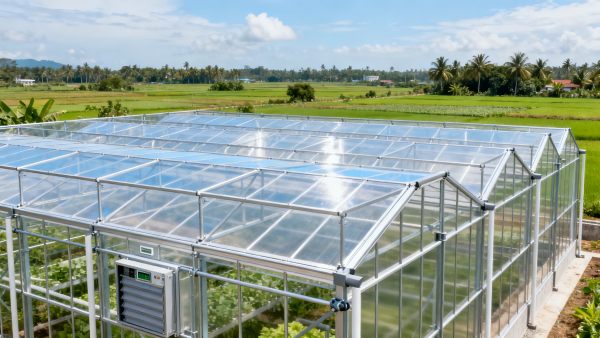
Vietnam’s Vietnam Academy of Science and Technology (VAST) announced on April 10, 2026, that a new mandatory climate simulation testing requirement — VAST-2026 — will take effect for all imported smart greenhouses starting June 1, 2026. This development directly impacts exporters, importers, and supply chain stakeholders serving the Vietnamese agricultural technology and controlled-environment agriculture markets.
Event Overview
On April 10, 2026, the Vietnam Academy of Science and Technology (VAST) issued an official notice stating that, effective June 1, 2026, all smart greenhouse imports into Vietnam must pass the VAST-2026 standard climate simulation test. The test comprises three environmental scenarios: high-temperature/high-humidity conditions, low-temperature/frost conditions, and typhoon-level wind pressure. The full testing cycle requires 28 days. As a result, major Chinese smart greenhouse exporters have informed overseas clients that delivery timelines for Q3 2026 orders will be extended by 4–6 weeks.
Which Subsectors Are Affected
Direct Export Trading Firms
Exporters handling smart greenhouse shipments to Vietnam face immediate scheduling and contractual implications. Because the 28-day test must occur post-shipment but pre-customs clearance, lead time planning is now constrained by external lab capacity and VAST’s testing queue. Delivery windows can no longer be treated as purely logistical — they are now subject to regulatory timing gates.
Manufacturing & Assembly Facilities
Factories producing smart greenhouses for export must align production cycles with the new testing schedule. A 4–6 week extension in delivery implies earlier order intake or revised build-to-order sequencing. Units shipped without pre-approval for VAST-2026 testing risk rejection or mandatory retesting — increasing cost and delay exposure.
Supply Chain & Logistics Providers
Cargo forwarders and customs brokers supporting Vietnam-bound smart greenhouse consignments must now factor in fixed 28-day holding periods at designated VAST-accredited facilities. This affects warehouse allocation, inland transport coordination, and documentation handover protocols — especially where bonded logistics zones lack integrated testing infrastructure.
Import Distributors & Local Integrators
Vietnamese importers and system integrators relying on just-in-time deployment for commercial farms or research stations may face project delays or revised client commitments. Inventory planning must now account for minimum 28-day post-arrival dwell time before installation — reducing flexibility in rollout scheduling.
What Relevant Enterprises or Practitioners Should Focus On Now
Monitor official VAST implementation guidance and accredited lab list
VAST has not yet published the full list of authorized testing laboratories or clarified whether third-party labs outside Vietnam may conduct pre-submission validation. Exporters and importers should track VAST’s official portal for updates before finalizing Q3 2026 shipment plans.
Confirm testing eligibility per greenhouse model and configuration
The VAST-2026 notice does not specify whether modular or site-assembled units qualify for batch testing, or if structural variations (e.g., polycarbonate vs. glass cladding, passive vs. active climate control) trigger separate test requirements. Manufacturers should request written clarification from VAST or local representatives ahead of certification submission.
Distinguish between policy announcement and operational readiness
Although the rule takes effect June 1, 2026, actual enforcement — including customs hold procedures and lab capacity ramp-up — may phase in gradually. Stakeholders should treat early-June shipments as transitional and prioritize test slot reservations over assuming automatic compliance upon arrival.
Adjust procurement, production, and communication timelines proactively
Exporters are advised to shift Q3 order cut-off dates by at least five weeks; importers should revise client delivery commitments and update project Gantt charts accordingly. Internal cross-functional alignment (sales, engineering, logistics) is critical — especially where firmware, sensor calibration, or control software versions must be locked prior to testing.
Editorial Perspective / Industry Observation
From industry perspective, the VAST-2026 mandate is best understood not as a sudden barrier, but as a formalization of existing de facto quality expectations for climate-resilient infrastructure in Vietnam’s tropical and storm-prone regions. Analysis来看, this reflects a broader regional trend toward harmonized technical standards for agri-tech imports — similar to Thailand’s TISI greenhouse safety guidelines or Indonesia’s SNI 8579:2022 for controlled-environment systems. Observation来看, the 28-day fixed-duration test suggests VAST prioritizes repeatability and auditability over real-time field performance — making pre-certification verification more feasible than post-installation audits. Current more relevant interpretation is that VAST-2026 functions primarily as a market access gatekeeper, rather than a technical innovation driver; its near-term impact lies in timeline management and compliance coordination, not product redesign.
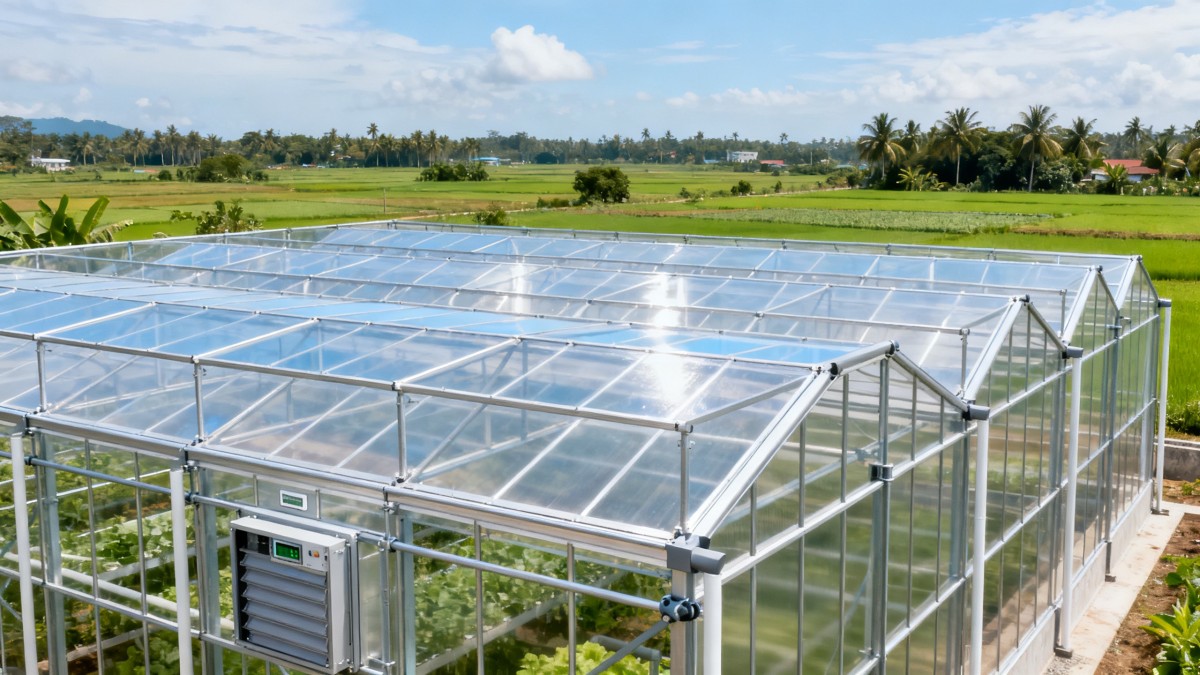
In summary, the VAST-2026 climate testing requirement marks a procedural inflection point for smart greenhouse trade with Vietnam — shifting delivery certainty from logistics execution to regulatory sequencing. It does not signal a change in product specifications or market demand, but it does redefine how lead time is calculated, communicated, and contractually enforced across the value chain. For now, this is less about adaptation to new engineering standards and more about adapting to a new administrative rhythm in cross-border agri-tech commerce.
Source: Official notice issued by the Vietnam Academy of Science and Technology (VAST), dated April 10, 2026. Note: Accredited laboratory list, fee structure, and enforcement protocol details remain pending public release and are under ongoing observation.
Related Intelligence
- Smart GreenhouseVAST-2026 Climate Testing Mandatory for Smart Greenhouse Imports to VietnamVAST-2026 climate testing is now mandatory for smart greenhouse imports to Vietnam — learn how this 28-day requirement impacts delivery, compliance & market access.
- Smart GreenhouseVAST-2026 Climate Test Enforced for Smart Greenhouses in VietnamVAST-2026 Climate Test is now mandatory for smart greenhouses in Vietnam — learn how this new VAST-2026 requirement impacts exporters, distributors & certifiers.
- Smart GreenhouseVAST-2026 Climate Test for Smart Greenhouses Effective Jul 2026VAST-2026 Climate Test for Smart Greenhouses launches July 2026—mandatory for all imports to Vietnam. Ensure compliance now to avoid delays & secure market access.
The Morning Broadsheet
Daily chemical briefings, market shifts, and peer-reviewed summaries delivered to your terminal.
