
Indonesia BPOM Tightens Botanical Extracts Import Rules
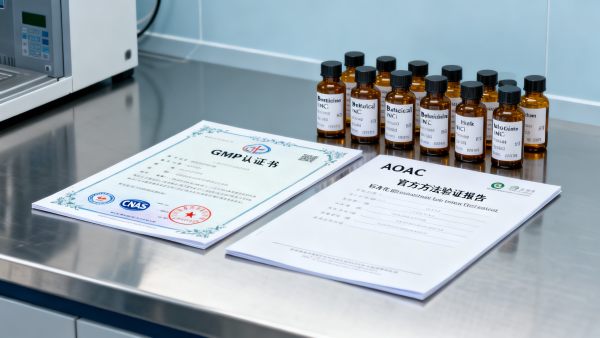
Indonesia’s National Agency of Drug and Food Control (BPOM) has introduced stricter import requirements for botanical extracts, effective July 1, 2026. Announced on April 20, 2026, the new rule mandates dual certification — both a China GMP certificate (issued by NMPA or a CNAS-accredited body) and an AOAC Official Methods validation report — for all botanical extracts imported into Indonesia as food additives, dietary supplements, or traditional herbal preparations. This development directly affects exporters, suppliers, and importers engaged in the Indonesian health and nutrition product supply chain.
Event Overview
On April 20, 2026, BPOM issued a regulatory update requiring that, starting July 1, 2026, all imported botanical extracts intended for use in food additives, dietary supplements, and traditional herbal preparations must be accompanied by two mandatory documents: (1) a Good Manufacturing Practice (GMP) certificate issued by China’s National Medical Products Administration (NMPA) or a CNAS-accredited institution; and (2) an AOAC Official Methods certification report. Failure to provide either document will result in shipment rejection and placement of the importer on BPOM’s import observation list.
Which Subsectors Are Affected
Direct Exporters & Trading Companies
Companies exporting botanical extracts from China to Indonesia must now ensure compliance with both certification pathways before shipment. The requirement adds a layer of pre-shipment verification previously not mandated, potentially delaying order fulfillment and increasing documentation overhead.
Raw Material Sourcing & Procurement Firms
Firms sourcing botanical extracts from Chinese manufacturers face increased due diligence obligations. They must verify whether their suppliers hold valid NMPA/CNAS-recognized GMP certificates *and* have undergone AOAC method validation for the specific extract batch or formulation — not just generic product categories.
Contract Manufacturers & Formulators
Manufacturers producing finished products (e.g., capsules, powders, tinctures) for Indonesian markets using imported botanical extracts are indirectly affected. Their upstream supply chain must now meet dual certification standards; otherwise, finished goods may fail BPOM registration or clearance upon import.
Distribution & Regulatory Affairs Service Providers
Local Indonesian importers, regulatory consultants, and logistics partners handling botanical ingredient imports must update internal checklists and client advisories. The dual-certification requirement introduces new points of failure during customs submission, demanding tighter coordination between foreign suppliers and local registrants.
What Relevant Enterprises or Practitioners Should Focus On and How to Respond
Monitor official BPOM guidance updates closely
While the April 20, 2026 notice establishes the core requirement, BPOM may issue implementation guidelines, acceptable formats for AOAC reports, or transitional arrangements. Current more suitable understanding is that the regulation is confirmed but operational details remain subject to further clarification.
Identify high-priority SKUs and validate certification status now
Enterprises should map their current or planned botanical extract imports into Indonesia by INCI name, CAS number, and intended use category. For each, confirm whether existing GMP and AOAC documentation meets BPOM’s scope — especially whether AOAC validation covers the exact matrix (e.g., aqueous vs. ethanolic extract) and analyte (e.g., marker compound quantification).
Distinguish policy signal from immediate operational impact
The July 1, 2026 enforcement date indicates a defined timeline, but analysis suggests BPOM may apply phased scrutiny during initial months — prioritizing high-volume or high-risk items first. Still, preparing full documentation ahead of the deadline avoids last-minute bottlenecks.
Align procurement, quality assurance, and regulatory teams early
Procurement contracts with Chinese suppliers should explicitly require provision of both certifications prior to shipment. QA departments need to incorporate AOAC report review into incoming material release procedures. Regulatory affairs units must update BPOM dossier templates to include certified copies and traceable validation references.
Editorial Perspective / Industry Observation
From industry perspective, this regulation reflects BPOM’s broader shift toward harmonizing technical standards with international benchmarks — particularly in analytical rigor (via AOAC) and manufacturing reliability (via GMP). It is less a sudden disruption and more a formalization of expectations already emerging in voluntary market segments. Observation来看, it signals growing emphasis on verifiable quality control over self-declared compliance. Analysis来看, while the rule applies narrowly to three product categories today, its dual-certification logic could serve as a template for future expansions to other natural ingredient classes. Current more suitable understanding is that this is an enforceable requirement — not merely advisory — but its real-world impact will depend heavily on BPOM’s inspection capacity and consistency in enforcement.
This marks a structural tightening in Indonesia’s botanical ingredient import regime — one that elevates documentation integrity and analytical traceability as non-negotiable elements. Rather than representing isolated regulatory tightening, it better fits within a longer-term trend of convergence toward globally recognized quality frameworks. Enterprises operating across Asia-Pacific ingredient trade should treat this as a precedent-setting alignment step, not an isolated compliance hurdle.
Source: Indonesia National Agency of Drug and Food Control (BPOM), official announcement dated April 20, 2026.
Note: Implementation details (e.g., accepted AOAC method versions, GMP certificate validity period, transitional provisions) remain under observation and may be updated by BPOM prior to July 1, 2026.
Related Intelligence
- Botanical ExtractsIndonesia BPOM Tightens Botanical Extracts Import RulesBotanical extracts import to Indonesia now requires dual certification: China GMP + AOAC validation. Stay compliant before July 1, 2026 — avoid shipment rejection & delays!
- Botanical ExtractsEU CBAM Enters Enforcement Phase for Botanical ExtractsEU CBAM enforcement starts Jan 2026 for botanical extracts—mandatory quarterly carbon reporting now applies. Act now to avoid delays & ensure EU market access.
- Botanical ExtractsIndonesia BPOM Tightens Botanical Extracts Import RulesIndonesia BPOM tightens botanical extracts import rules: dual certification (AOAC testing + GMP) required from July 1, 2026. Act now to avoid shipment delays!
The Morning Broadsheet
Daily chemical briefings, market shifts, and peer-reviewed summaries delivered to your terminal.
