
FAO Adds 12 Chinese Climate Control Firms to Global List

On April 22, 2026, the Food and Agriculture Organization of the United Nations (FAO) updated its Global List of Qualified Suppliers for Agricultural Climate Control & Ventilation Equipment, adding 12 Chinese manufacturers. This update is relevant to stakeholders in agricultural infrastructure, controlled-environment agriculture (CEA), international development procurement, and agri-export services — as it signals a formalized pathway for certified Chinese climate control equipment into FAO-funded projects and select national import systems.
Event Overview
The FAO published the updated Global List of Qualified Suppliers for Agricultural Climate Control & Ventilation Equipment on April 22, 2026. Twelve Chinese manufacturers of climate control and ventilation equipment were newly included. All 12 passed the FAO-UNIDO Joint Certification Framework’s three-tier evaluation covering energy efficiency, low-noise performance, and biosecurity compliance. Products from listed suppliers gain direct access to FAO-funded project procurement channels and qualify for expedited import registration in certain African and Latin American countries.
Which Subsectors Are Affected
Direct Exporters & Trade Service Providers
These firms engage in cross-border sales of HVAC equipment for agricultural use. The listing creates a formal eligibility signal for tender participation in FAO-backed projects — particularly those implemented by UN agencies or bilateral development partners. Impact manifests as reduced pre-qualification friction and potentially shorter customs clearance timelines in targeted markets.
Manufacturers & OEMs Specializing in Agricultural Ventilation Systems
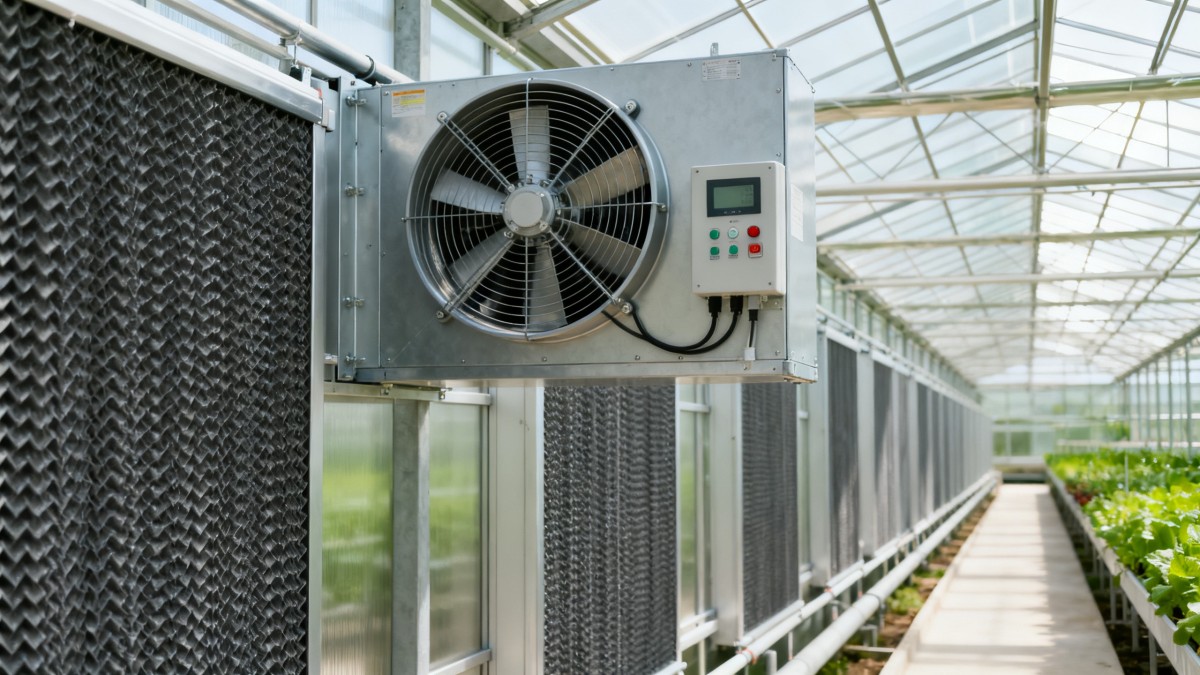
Companies producing fans, cooling pads, environmental controllers, or integrated barn/climate house systems now face heightened visibility in global development supply chains. The certification does not replace national regulatory approvals but serves as a recognized technical benchmark — influencing downstream buyer confidence and regional distributor interest.
Supply Chain & Certification Support Providers
Firms offering testing, documentation support, or conformity assessment services for agricultural climate equipment may see increased demand for FAO-UNIDO framework-aligned verification — especially for clients targeting Africa and Latin America. However, no new accreditation bodies or procedures were announced alongside this update.
What Relevant Enterprises or Practitioners Should Focus On — And How to Respond
Monitor official updates from FAO and UNIDO on framework implementation
The FAO-UNIDO Joint Certification Framework remains operational but not yet codified in binding procurement rules across all FAO field offices. Current inclusion grants eligibility, not automatic award. Stakeholders should track whether future FAO procurement notices explicitly reference this list as a mandatory shortlisting criterion.
Verify country-specific import recognition status before market entry
The notice states that listed products “obtain expedited import registration in some African and Latin American countries.” Analysis来看, this reflects bilateral administrative cooperation rather than automatic harmonization. Firms must confirm with destination-country plant protection or agricultural machinery authorities whether inclusion on the FAO list triggers fast-track review — and under which legal instruments (e.g., mutual recognition agreements, MOUs).
Distinguish between certification status and contractual access
Inclusion on the FAO list does not guarantee contract awards. From industry角度看, it functions as a pre-vetted supplier indicator — similar to inclusion in World Bank’s Supplier Database. Actual procurement still depends on technical specifications, pricing, delivery capacity, and local presence requirements. Companies should assess alignment between their product portfolios and common FAO project scopes (e.g., poultry house ventilation, greenhouse climate units, post-harvest cooling).
Prepare documentation for downstream buyers and distributors
Exporters and OEMs should compile FAO list reference numbers, test reports aligned with the three-tier criteria (energy efficiency, noise, biosecurity), and English-language conformity statements. These materials support faster due diligence by international buyers — especially NGOs and government implementers managing tight project timelines.
Editorial Perspective / Industry Observation
This update is better understood as a procedural milestone than an immediate commercial inflection point. Observation来看, it reflects growing institutional recognition of China’s manufacturing capacity in agricultural climate technology — but also underscores that technical validation is increasingly decoupled from geopolitical trade frameworks. Analysis来看, the FAO-UNIDO framework prioritizes functional performance and risk mitigation (e.g., biosecurity) over origin-based preferences — suggesting a longer-term shift toward outcome-based qualification in development procurement. Current more relevant interpretation is that this list strengthens baseline credibility; sustained market access will depend on localized service capacity, spare parts logistics, and field performance data in tropical and semi-arid climates.
Conclusion
The FAO’s April 2026 update formalizes a technical gateway — not a guaranteed market. Its significance lies in standardizing evaluation criteria and lowering information asymmetry for buyers in resource-constrained settings. For industry actors, it reinforces that compliance with internationally referenced, functionally grounded benchmarks (not just CE or ISO marks) is becoming a prerequisite for engagement in global agricultural infrastructure programs. It is best interpreted as an enabling signal — one that rewards verifiable technical alignment, not broad market access.
Information Sources
Main source: FAO official announcement dated April 22, 2026, titled Update to the Global List of Qualified Suppliers for Agricultural Climate Control & Ventilation Equipment.
Points requiring ongoing observation: (1) Which specific African and Latin American countries have activated expedited import registration for listed suppliers; (2) Whether FAO field offices begin referencing the list in tender documents issued after Q2 2026.
Related Intelligence
- Climate Control & VentilationFAO Adds 12 Chinese Climate Control Firms to Global ListFAO Adds 12 Chinese Climate Control Firms to Global List — gain fast-tracked import access & FAO-funded project eligibility. Discover impact now.
- Climate Control & VentilationFAO Adds 12 Chinese Ventilation Firms to Global Climate Control ListFAO adds 12 Chinese ventilation firms to its global climate control list — boosting export eligibility, tender access & credibility for agri-climate equipment.
- Climate Control & VentilationFAO Adds 12 Chinese Climate Control Firms to Global ListFAO adds 12 Chinese climate control firms to its Global Qualified Supplier List—unlocking FAO South-South Cooperation procurement access for certified agricultural ventilation equipment.
The Morning Broadsheet
Daily chemical briefings, market shifts, and peer-reviewed summaries delivered to your terminal.
