
China to Upgrade Commercial Feed Pellet Standard to Mandatory by 2027
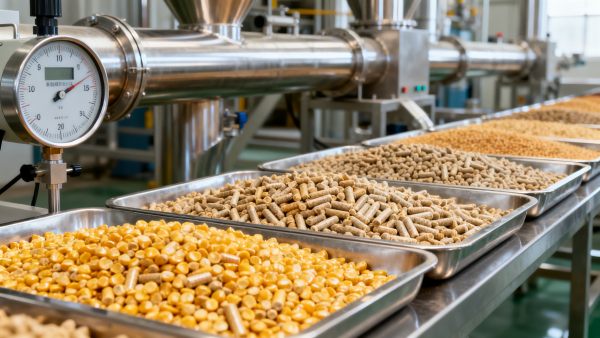
China’s State Administration for Market Regulation (SAMR) has initiated the revision and formulation of over 1,800 national standards, including the upgrade of the Commercial Feed Pellet standard from recommended (GB/T 19541) to mandatory status. Scheduled for completion in 2026—with a draft open for public consultation that year and phased implementation beginning in 2027—the update introduces stricter requirements on mycotoxin limits (e.g., aflatoxin B1, deoxynivalenol) and traceability provisions. Feed manufacturers, compound feed producers, raw material suppliers, and export-oriented trading firms should monitor this closely, as it directly affects compliance obligations, supply chain verification, and market access for domestic and cross-border operations.
Event Overview
In 2026, the State Administration for Market Regulation will advance the revision and formulation of more than 1,800 national standards. Among them, the Commercial Feed Pellet standard—currently issued as a recommended national standard (GB/T 19541)—is slated for conversion into a mandatory national standard. The updated standard is expected to include enhanced safety requirements for key contaminants such as aflatoxin B1 and deoxynivalenol (vomitoxin), as well as formalized traceability and origin-recording clauses. A draft for public consultation is anticipated in 2026, with staged implementation scheduled to begin in 2027.
Industries Affected by This Update
Feed Manufacturing Enterprises: As direct producers of commercial feed pellets, these companies will face new mandatory compliance thresholds. The shift from voluntary to compulsory status means non-conforming products may no longer be legally sold or distributed in mainland China. Impact centers on reformulation, raw material screening protocols, in-house testing capacity, and documentation systems supporting full batch traceability.
Compound Feed Producers & Blenders: Entities that formulate or blend feed using pelleted base materials must verify upstream compliance. New traceability requirements extend liability across tiers—blenders may need to retain supplier declarations, test reports, and lot-level records for audits. Failure to maintain verifiable sourcing data could disrupt production continuity or trigger regulatory scrutiny.
Raw Material Suppliers (e.g., soybean meal, corn, wheat bran providers): These suppliers are indirectly but significantly affected. Since mycotoxin limits apply at the final pellet stage—and contamination often originates in raw grains—their quality control, harvest-time sampling, and storage practices will come under greater downstream review. Buyers may impose tighter contractual specifications ahead of the 2027 rollout.
Export-Oriented Trading Firms & Importers: Companies engaged in cross-border trade of feed pellets must assess alignment between the upcoming Chinese mandatory standard and destination-market requirements (e.g., EU Regulation (EC) No 183/2005, FDA FSMA). Divergences may necessitate dual-certification pathways or product segmentation. Additionally, customs clearance for domestic shipments may soon require certified test reports referencing the new mandatory parameters.
What Enterprises and Practitioners Should Monitor and Do Now
Track official SAMR announcements and draft timelines
The exact scope of the revised standard—including permitted detection methods, acceptable limits for each mycotoxin, and minimum traceability data fields—remains undefined. Stakeholders should subscribe to SAMR’s official notices and participate in upcoming public consultation windows to shape practical implementation terms.
Assess current testing infrastructure and supplier verification processes
Enterprises should audit whether existing lab capabilities cover required analytes (e.g., aflatoxin B1, deoxynivalenol) using accredited methods. Simultaneously, they should map supplier documentation practices—especially for high-risk commodities like corn and peanut meal—to identify gaps in lot-level traceability readiness.
Distinguish policy signals from enforceable requirements
Although the upgrade is confirmed, the 2026–2027 timeline reflects planning—not immediate enforcement. Current GB/T 19541 remains in effect until the new mandatory version is formally published and transitional arrangements announced. Businesses should avoid premature operational changes not yet mandated.
Prepare procurement and communication contingencies
Given likely tightening of raw material acceptance criteria, enterprises should engage key suppliers early to align on testing frequency, reporting formats, and responsibility for rework or rejection. Internal cross-functional coordination (QA, procurement, logistics) should be strengthened to manage documentation flow and audit readiness.
Editorial Perspective / Industry Observation
From an industry perspective, this initiative is best understood as a structural signal—not an isolated regulatory change. It reflects a broader policy direction toward tightening food-and-feed safety governance through enforceable technical baselines, rather than relying on voluntary guidance. Analysis来看, the move aligns with China’s recent emphasis on agricultural product traceability (e.g., the National Agricultural Product Quality and Safety Traceability Platform) and its integration into broader food system oversight. Observation来看, the 2026–2027 schedule suggests a deliberate, phased approach: sufficient lead time is provided for capability building, yet the mandatory designation implies diminishing tolerance for noncompliance post-implementation. Current more appropriate understanding is that this is a preparatory inflection point—not an emergency—but one requiring systematic, evidence-based readiness planning across the feed value chain.
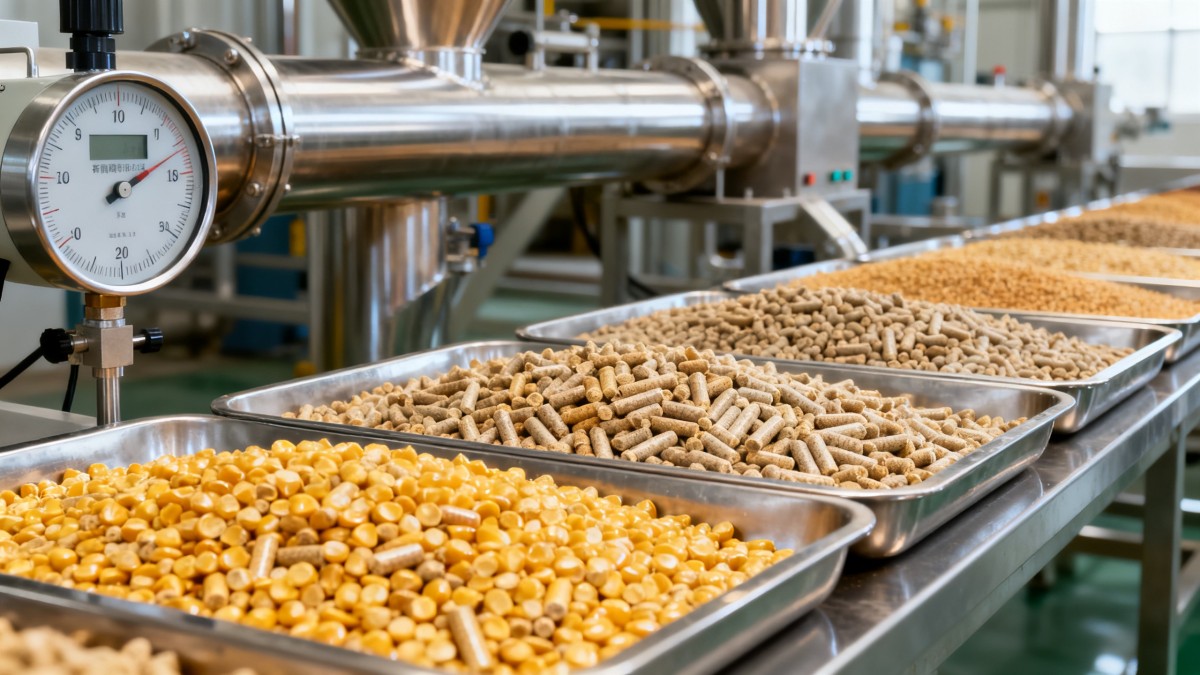
This update carries significant implications for feed safety governance in China. Its core significance lies not only in stricter toxin limits, but in the formal elevation of feed pellet specifications to legally binding status—shifting accountability from reputational to regulatory. For stakeholders, the most rational interpretation is that this represents a calibrated step toward harmonizing domestic feed standards with international safety expectations, while reinforcing traceability as a foundational requirement. Current better understanding is that the timeline affords preparation space, but the mandatory nature leaves little room for post-implementation flexibility.
Source: State Administration for Market Regulation (SAMR) official announcement (2026 standard revision plan); GB/T 19541-2018 “Commercial Feed Pellet” specification; publicly disclosed timeline for mandatory conversion and implementation phases.
Note: Specific limit values, testing methodologies, and traceability data format requirements remain pending official draft release and are subject to ongoing observation.
Related Intelligence
- Commercial Feed PelletChina to Upgrade Commercial Feed Pellet Standard to Mandatory by 2027China’s Commercial Feed Pellet standard (GB/T 19541) becomes mandatory by 2027—stricter mycotoxin limits, full traceability & urgent compliance prep for feed producers, suppliers & exporters.
- Commercial Feed PelletChina Upgrades 12 Feed Pellet Standards to Mandatory GBChina upgrades 12 feed pellet standards to mandatory GB—new mycotoxin testing, heavy metal limits & carbon footprint rules. Act now for EU, Saudi, Vietnam compliance!
- Commercial Feed PelletChina to Upgrade Mandatory Standard for Commercial Feed Pellets in 2026China's 2026 Commercial Feed Pellets mandatory standard upgrade introduces mycotoxin controls, microplastic limits & durability grading—key for exporters, manufacturers & QA teams. Act now to align.
The Morning Broadsheet
Daily chemical briefings, market shifts, and peer-reviewed summaries delivered to your terminal.
