
China Upgrades 12 Feed Pellet Standards to Mandatory GB
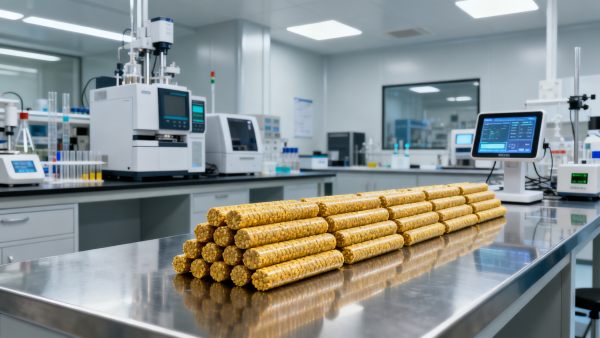
On April 22, 2026, China’s State Administration for Market Regulation (SAMR) released the 2026 National Standard Development and Revision Plan, announcing the upgrade of 12 commercial feed pellet-related standards—including GB/T 19541—2018 Soybean Meal for Feed Use—to mandatory national standards (designated GB 19541—2026). The revised standards introduce new requirements for multi-target rapid detection of mycotoxins, migration limits for heavy metals, and carbon footprint declaration. Effective January 1, 2027, these changes will directly affect feed producers, exporters, and upstream suppliers serving key markets including the EU, Saudi Arabia, and Vietnam.
Event Overview
On April 22, 2026, SAMR published the 2026 National Standard Development and Revision Plan. It confirms that 12 existing recommended national standards related to commercial feed pellets—including GB/T 19541—2018—will be converted into mandatory standards under the new designation GB 19541—2026. The updated standards mandate three new technical provisions: (1) multi-target rapid testing methods for mycotoxins; (2) maximum permissible migration limits for heavy metals; and (3) mandatory carbon footprint declaration on product documentation. Implementation begins on January 1, 2027. Exporters must update test reports and product labels accordingly to maintain market access in the EU, Saudi Arabia, and Vietnam.
Which Subsectors Are Affected
Direct Export Trading Enterprises
These enterprises are directly impacted because compliance with the new mandatory standard becomes a prerequisite for customs clearance and regulatory acceptance in destination markets. Non-compliant labeling or outdated test reports may trigger rejection at import points—particularly where EU Regulation (EC) No 183/2005, Saudi SASO feed regulations, or Vietnam’s Decree 13/2023/ND-CP reference Chinese GB standards as conformity benchmarks.
Feed Ingredient Procurement Enterprises
Suppliers of soybean meal and other base ingredients must now meet stricter incoming quality specifications—not only for conventional parameters (e.g., protein content, urease activity), but also for trace heavy metal profiles and mycotoxin co-contamination patterns. Their supplier qualification protocols and incoming inspection checklists require revision to align with the new mandatory limits and testing methodology.
Feed Pellet Manufacturing Enterprises
Manufacturers face dual obligations: first, ensuring finished pellets comply with upgraded physical, chemical, and environmental reporting requirements; second, integrating new analytical capabilities—such as validated multi-mycotoxin immunoassay or LC-MS/MS workflows—into routine QC. Equipment calibration, staff training, and method validation timelines must be aligned with the January 2027 enforcement date.
Supply Chain & Certification Service Providers
Laboratories offering feed testing, certification bodies issuing GB-compliance statements, and logistics firms managing label verification all need to adjust service scopes. For example, accredited labs must expand their scope of accreditation to cover the newly required multi-target mycotoxin assays and heavy metal migration tests—processes that typically require 3–6 months for method validation and CNAS assessment.
What Relevant Enterprises or Practitioners Should Focus On and How to Respond Now
Monitor official SAMR and SAC announcements for transitional guidance
The current plan confirms the upgrade but does not yet publish full draft texts of GB 19541—2026 or implementation guidelines. Enterprises should track updates from the Standardization Administration of China (SAC) and SAMR’s official channels for draft-for-comment releases, which will clarify test method references, sampling rules, and grace period provisions—if any.
Prioritize verification of export-bound batches against the three new requirements
For shipments scheduled between Q4 2026 and Q1 2027, verify whether current test reports include multi-target mycotoxin screening (e.g., aflatoxin B1, deoxynivalenol, zearalenone, ochratoxin A), heavy metal migration results (especially Pb, Cd, As from packaging contact), and carbon footprint data per ton of pellet. Gaps here signal urgent process adjustments.
Distinguish between policy signal and operational readiness
This is a formal regulatory signal—not yet an enforced requirement. However, lead times for lab accreditation, equipment procurement, and label redesign are long. Treating the April 2026 announcement as a trigger for internal readiness planning—rather than waiting for final texts—is operationally prudent.
Initiate cross-departmental alignment on procurement, testing, and labeling workflows
Procurement teams must update vendor agreements to include clauses on heavy metal migration and mycotoxin profiling; QA/QC must map new test methods to existing SOPs; marketing and regulatory affairs must jointly revise label templates to accommodate carbon footprint declarations. Starting this coordination now avoids bottlenecks ahead of the January 2027 deadline.
Editorial Perspective / Industry Observation
From an industry perspective, this upgrade signals a structural shift—not just a technical update. Making feed pellet standards mandatory reflects SAMR’s broader push to consolidate regulatory oversight across agricultural inputs and align domestic quality infrastructure with international sustainability and food safety expectations. Analysis来看, the inclusion of carbon footprint declaration suggests early integration of green trade criteria into compulsory standards—a trend likely to expand to other agri-input categories. Observation来看, the timing (2026 announcement, 2027 enforcement) implies a deliberate 9-month transition window, indicating policymakers expect industry capacity to adapt without disruption. It is better understood as a coordinated regulatory milestone rather than an isolated compliance event.
In summary, the elevation of 12 feed pellet standards to mandatory status marks a concrete step toward harmonizing China’s domestic feed regulation with global market access conditions—particularly for exporters serving regions with stringent feed safety and environmental disclosure regimes. It is neither a sudden shock nor a distant possibility, but a defined, time-bound inflection point requiring targeted, function-specific preparation.
Source: State Administration for Market Regulation (SAMR), 2026 National Standard Development and Revision Plan, issued April 22, 2026. Note: Full text of GB 19541—2026 and associated implementation guidance remain pending publication and are subject to ongoing observation.
Related Intelligence
- Commercial Feed PelletChina Upgrades 12 Feed Pellet Standards to Mandatory GBChina upgrades 12 feed pellet standards to mandatory GB—new mycotoxin testing, heavy metal limits & carbon footprint rules. Act now for EU, Saudi, Vietnam compliance!
- Commercial Feed PelletChina to Upgrade Mandatory Standard for Commercial Feed Pellets in 2026China's 2026 Commercial Feed Pellets mandatory standard upgrade introduces mycotoxin controls, microplastic limits & durability grading—key for exporters, manufacturers & QA teams. Act now to align.
- Commercial Feed PelletU.S.-Iran Strait of Hormuz Tensions Push Feed Pellet Freight Rates Up 8.3%U.S.-Iran Strait of Hormuz tensions spike feed pellet freight rates by 8.3%. Discover how exporters, importers & logistics providers can mitigate risk and adapt fast.
The Morning Broadsheet
Daily chemical briefings, market shifts, and peer-reviewed summaries delivered to your terminal.
