
ANVISA Extends Custom Synthesis API Traceability to 3-Tier Upstream Suppliers
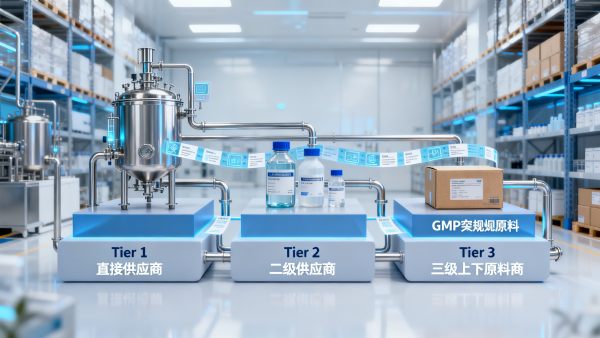
On April 22, 2026, Brazil’s National Health Surveillance Agency (ANVISA) updated its Guidance for Import Review of Custom Synthesis Active Pharmaceutical Ingredients, mandating full traceability documentation for starting materials (SM) extending to the third-tier upstream supplier. This development directly affects pharmaceutical importers, contract manufacturing organizations (CMOs), and API supply chain stakeholders serving the Brazilian and broader South American markets.
Event Overview
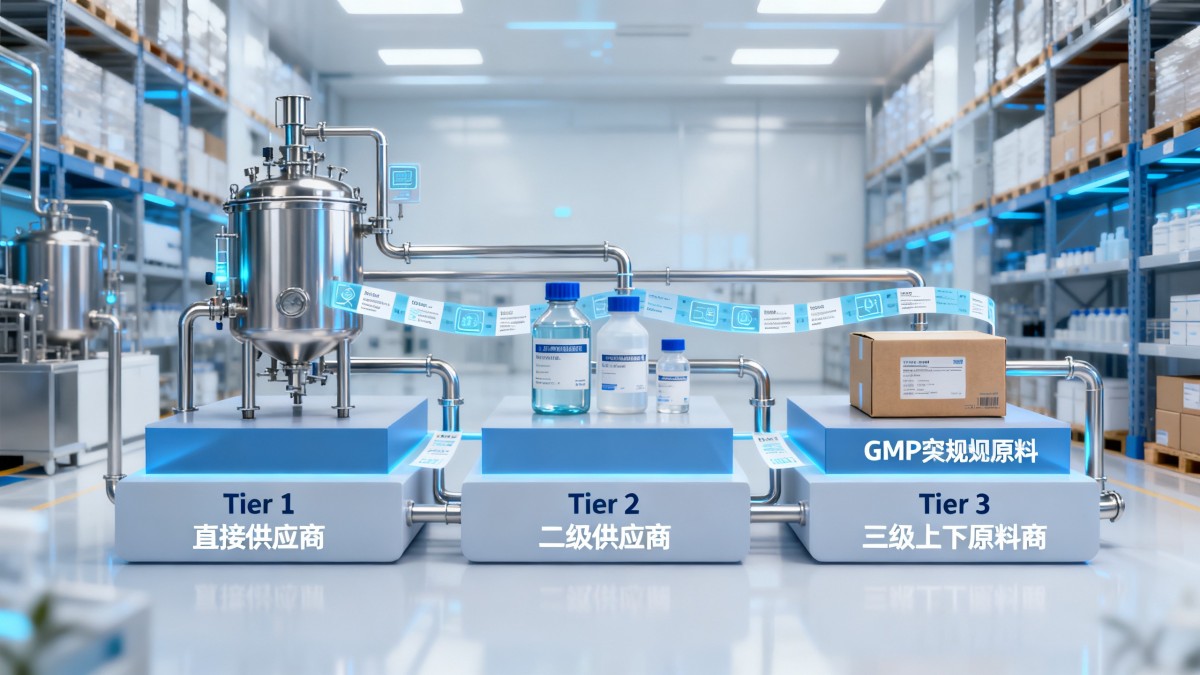
On April 22, 2026, ANVISA published an update to its Custom Synthesis API Import Review Guidance. The revision requires all import applications for custom-synthesized APIs to include complete溯源 documentation — including contracts, commercial invoices, analytical reports, and GMP statements — covering starting materials back to the third-level upstream supplier. The requirement becomes mandatory on October 1, 2026. As of the announcement date, three Chinese CMOs have had their import registrations suspended due to incomplete traceability submissions.
Impact on Specific Industry Segments
Direct Trade Enterprises (API Importers into Brazil)
These entities are now responsible for validating and submitting multi-tier upstream documentation as part of regulatory filing. Impact manifests in extended pre-submission review cycles, increased internal compliance workload, and higher risk of registration delays or rejections if documentation gaps exist beyond Tier 1.
Raw Material Procurement Units (within CMOs and API Manufacturers)
Procurement teams must now collect, verify, and archive traceability evidence not only from direct suppliers but also from those suppliers’ vendors (Tier 2) and sub-vendors (Tier 3). This increases sourcing lead time, necessitates new vendor qualification protocols, and introduces contractual dependencies previously outside scope.
Contract Manufacturing Organizations (CMOs)
CMOs exporting custom-synthesized APIs to Brazil face immediate operational impact: three Chinese CMOs have already been suspended. The requirement raises the bar for quality system maturity — particularly in document control, supplier management, and change control — as ANVISA now assesses upstream accountability as part of API registration eligibility.
Supply Chain Service Providers (Regulatory Consultants, Logistics & Documentation Agents)
These providers are seeing rising demand for tiered traceability audits, cross-border documentation harmonization, and GMP statement validation support. However, service offerings must now explicitly address third-tier verification — a capability not routinely embedded in standard regulatory support packages.
What Relevant Companies or Practitioners Should Focus On — And How to Respond
Monitor official implementation clarifications from ANVISA
While the October 1, 2026 enforcement date is confirmed, ANVISA has not yet published detailed definitions of “third-tier upstream supplier” (e.g., whether toll manufacturers or repackagers count toward tiers) or acceptable formats for GMP statements from non-GMP-certified intermediaries. Current guidance remains high-level; practitioners should track upcoming Q&A documents or public consultations.
Map current API supply chains against the 3-tier requirement
Companies should conduct a rapid internal assessment of all APIs destined for Brazil — identifying which starting materials originate from multi-tier structures and flagging those where Tier 2 or Tier 3 suppliers lack auditable documentation (e.g., missing invoices, unverified GMP declarations). Prioritize remediation for products with active or pending registrations.
Distinguish between policy signal and operational readiness
This update reflects ANVISA’s tightening of supply chain due diligence — not merely a procedural tweak. It signals growing alignment with EMA and FDA expectations on material provenance. However, enforcement rigor (e.g., sampling depth, audit frequency) remains unconfirmed; companies should prepare for compliance while avoiding over-investment in systems not yet validated by practice.
Initiate upstream engagement and documentation collection now
Given the six-month lead time before enforcement, procurement and QA teams should begin requesting traceability packages from Tier 2 and Tier 3 suppliers immediately — especially for materials sourced via distributors or trading companies where ownership history is opaque. Contractual amendments may be needed to secure rights to share such data with regulators.
Editorial Perspective / Industry Observation
From an industry perspective, this update is best understood not as an isolated regulatory adjustment but as a structural shift in how ANVISA evaluates API supply integrity. Analysis来看, it elevates upstream transparency from a quality assurance expectation to a formal registration prerequisite — effectively converting traceability into a licensable attribute. Observation来看, the suspension of three CMOs indicates ANVISA is prepared to enforce early, suggesting that documentation gaps will be treated as systemic rather than administrative failures. Current more relevant interpretation is that this represents both a signal of converging global standards and an operational threshold — one that separates market-ready suppliers from those still operating under legacy traceability assumptions.
Conclusion
This ANVISA update marks a measurable increase in supply chain scrutiny for API exporters targeting Brazil. Its significance lies less in novelty and more in enforceability: the linkage between documentation completeness and market access is now explicit and actively applied. For stakeholders, it is more accurate to interpret this not as a temporary compliance hurdle, but as a durable recalibration of baseline expectations for South American API trade — one that rewards proactive upstream governance and penalizes reactive documentation.
Information Sources
Main source: ANVISA’s updated Guidance for Import Review of Custom Synthesis Active Pharmaceutical Ingredients, issued April 22, 2026.
Note: Definitions of ‘third-tier upstream supplier’, acceptance criteria for GMP statements from non-certified entities, and post-October enforcement methodology remain subject to further clarification and are under ongoing observation.
Related Intelligence
- Custom SynthesisANVISA Extends Custom Synthesis API Traceability to 3-Tier Upstream SuppliersANVISA extends Custom Synthesis API traceability to 3-tier upstream suppliers—key for pharma importers, CMOs & supply chain teams. Act now to avoid suspensions.
- Custom SynthesisANVISA Expands Custom Synthesis Review to 3-Tier Starting Material TraceabilityANVISA's new 3-tier traceability rule for custom synthesis imports demands full upstream documentation—act now to avoid delays, rejections, and compliance risks in Brazil.
- Custom SynthesisANVISA Extends Custom Synthesis Oversight to Tier-3 SuppliersANVISA Extends Custom Synthesis Oversight to Tier-3 Suppliers: New July 2026 rule mandates full traceability & English GMP docs for Chinese CMOs exporting to Brazil—act now to avoid delays.
The Morning Broadsheet
Daily chemical briefings, market shifts, and peer-reviewed summaries delivered to your terminal.
