
India Launches Anti-Dumping Review on Chinese Tractors
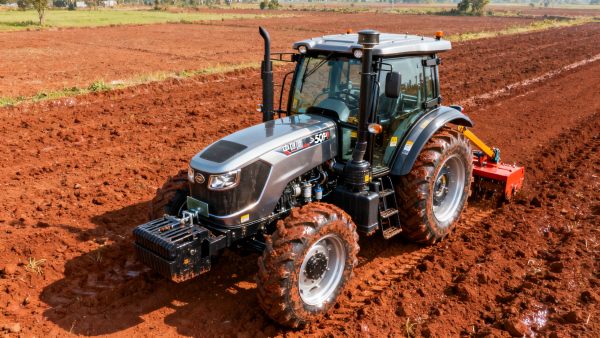
On April 22, 2026, India’s Department for Promotion of Industry and Internal Trade (DPIIT) initiated a sunset review of anti-dumping duties on imported tractors and related components from China. The move signals potential tariff increases for high-power, technologically equipped agricultural machinery — particularly units with ≥50HP and smart hydraulic suspension systems — and warrants close attention from agricultural equipment exporters, component suppliers, CKD/SKD assemblers, and India-focused supply chain stakeholders.
Event Overview
The DPIIT officially announced the anti-dumping duty review on April 22, 2026. The review targets Chinese-origin tractors and associated parts currently subject to anti-dumping duties ranging from 18.2% to 24.7%. The proposed revised rate range is 22.5%–28.5%. The investigation specifically focuses on tractors with engine power of 50 horsepower or higher and integrated smart hydraulic suspension systems. A preliminary determination is expected in August 2026.
Industries Affected
Direct Exporters of Tractors and Components
Chinese manufacturers exporting complete tractors or key subassemblies (e.g., hydraulic control units, transmission modules) to India face direct exposure to higher landed costs. If the revised rates are applied, export competitiveness may erode — especially for mid-to-high-tier models where margin compression could limit pricing flexibility in the Indian market.
Indian CKD/SKD Assembly Units
Local Indian firms assembling tractors from Chinese-sourced kits (CKD/SKD) rely heavily on cost-effective imports of core components. A tariff hike would raise their landed cost of critical parts, potentially affecting assembly economics, minimum order thresholds, and final retail pricing — especially for premium-specification models targeting commercial farms.
Component Sourcing & Procurement Service Providers
Third-party procurement agents, customs brokers, and logistics integrators supporting cross-border agri-machinery trade may see increased documentation complexity and compliance verification demand. Higher duty bands often trigger more rigorous origin verification and classification scrutiny, extending clearance timelines.
Aftermarket & Spare Parts Distributors
While the review explicitly names tractors and ‘associated parts’, the scope of ‘associated’ remains undefined in the public notice. Distributors handling replacement hydraulic valves, sensors, or ECU modules compatible with reviewed models may face classification uncertainty — especially if those parts are functionally integral to smart suspension systems.
What Relevant Enterprises Should Monitor and Do Now
Track official notifications and product scope clarifications
The DPIIT’s preliminary findings — due August 2026 — will specify whether ‘associated parts’ includes discrete aftermarket items or only those supplied under original equipment agreements. Stakeholders should monitor the Directorate General of Trade Remedies (DGTR) portal for updated notices and product descriptions.
Review current HS codes and technical specifications of affected shipments
Exporters and importers should audit whether their products meet the stated criteria: ≥50HP rating and integration with smart hydraulic suspension. Even if a tractor model falls below 50HP, inclusion of such a system may still trigger coverage — analysis should be based on actual technical documentation, not marketing labels.
Distinguish between policy signal and enforceable obligation
The review is ongoing; no duty change is effective until final determination and Gazette notification. Current duties remain at 18.2%–24.7%. Businesses should avoid premature repricing or contract renegotiation but prepare contingency plans — including alternative sourcing routes or local component localization assessments — for scenarios where duties settle above 25%.
Prepare for enhanced customs documentation and classification support
Anticipate increased requests for technical data sheets, OEM certification, and functional descriptions from Indian customs authorities. Assembling pre-verified dossiers for high-risk SKUs (e.g., hydraulic control units, suspension actuators) can reduce clearance delays during the review period.
Editorial Perspective / Industry Observation
From an industry perspective, this review is best understood as a targeted recalibration rather than a broad protectionist shift. It reflects India’s growing emphasis on domestic value addition in precision agriculture equipment — particularly where intelligent hydraulics intersect with farm mechanization policy goals. Analysis来看, the focus on ≥50HP units with smart suspension suggests intent to shield emerging local capabilities in high-horsepower, digitally enabled machinery, rather than low-end mechanical tractors. Observation来看, the timing aligns with India’s ongoing push for farm-level automation under its ‘Krishi Udaan’ and ‘Sub-Mission on Agricultural Mechanization’ initiatives — making this less a standalone trade action and more a signal of deeper industrial policy alignment. Current more appropriate interpretation is that it serves as a forward-looking calibration tool, not yet an implemented barrier.
This development underscores how trade remedies increasingly target functionality — not just physical form — in advanced agri-machinery. For global suppliers, it reinforces the need to decouple technical capability claims from tariff classification risk, and to treat regulatory compliance as a design-phase consideration, not a post-production add-on.
Information Source: Department for Promotion of Industry and Internal Trade (DPIIT), Government of India — Official Notification dated April 22, 2026. Note: Final duty rates, scope clarification, and applicability to specific part numbers remain pending the DGTR’s preliminary and final determinations — these require continued monitoring.
Related Intelligence
- Heavy Agri MachineryIndia Launches Anti-Dumping Review on Chinese TractorsIndia's anti-dumping review on Chinese tractors (≥50HP, smart hydraulic suspension) may raise duties to 22.5–28.5%. Exporters, CKD assemblers & suppliers: act now to assess risk and compliance.
- Heavy Agri MachineryIndia Launches Anti-Dumping Review on Chinese Heavy Agri MachineryIndia's anti-dumping sunset review on Chinese heavy agri machinery — tractors & precision seeders — proposes duty hike to 28.5%. Act now to assess impact & prepare defense.
- Heavy Agri MachineryIndia Launches Anti-Dumping Review on Chinese Agri MachineryIndia's anti-dumping review on Chinese agri machinery (tractors & precision seeders) begins April 2026 — exporters, importers & assemblers must act now to mitigate tariff risks up to 28.5%.
The Morning Broadsheet
Daily chemical briefings, market shifts, and peer-reviewed summaries delivered to your terminal.
