
CIBF2026 Marks Earth Day: Zero-Carbon Factory Policy & Battery Recycling Accelerate
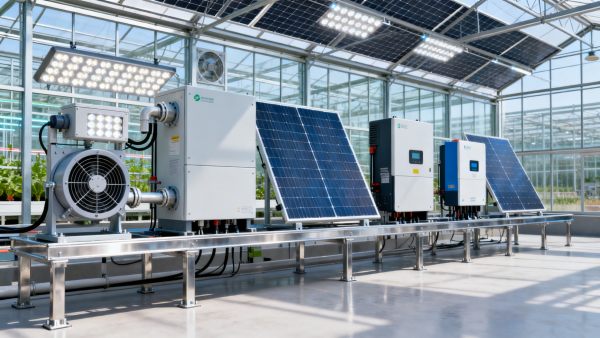
On April 22, 2026 — the 57th World Earth Day — China’s five central departments jointly issued the Guiding Opinions on Advancing Zero-Carbon Factory Construction. The policy explicitly targets export-competitive sectors including lithium batteries, photovoltaic modules, and smart greenhouse environmental control systems. It introduces a reverse logistics subsidy mechanism for battery recycling and signals urgent implications for manufacturers in aeration & water tech, RAS (Recirculating Aquaculture Systems), and smart greenhouse equipment — particularly those supplying to EU and U.S. markets subject to CBAM and IRA compliance requirements.
Event Overview
On April 22, 2026, China’s Ministry of Industry and Information Technology, National Development and Reform Commission, Ministry of Ecology and Environment, Ministry of Commerce, and State Administration for Market Regulation jointly released the Guiding Opinions on Advancing Zero-Carbon Factory Construction. The document identifies lithium batteries, photovoltaic modules, and intelligent greenhouse environmental control equipment as priority sectors for zero-carbon factory development. It also establishes a subsidy mechanism for battery recycling reverse logistics. No implementation timeline, eligibility criteria, or subsidy rates have been publicly disclosed beyond this initial guidance.
Industries Affected
Manufacturers of Aeration & Water Tech Equipment
These producers face direct pressure to decarbonize energy sourcing and track scope 1–2 emissions, as their products fall under the policy’s defined ‘intelligent greenhouse environmental control systems’ category. Impact manifests in rising expectations from international buyers — especially EU-based aquaculture integrators and U.S. climate-resilient agriculture projects — requiring verifiable low-carbon supply chain documentation aligned with CBAM and IRA procurement rules.
Manufacturers of RAS Systems
RAS system integrators and component suppliers are affected due to the high energy intensity of aeration, oxygenation, and water treatment subsystems. The policy’s focus on ‘zero-carbon factories’ implies mandatory green electricity procurement, carbon accounting infrastructure, and third-party verification — all of which increase operational transparency requirements for export-oriented RAS vendors.
Smart Greenhouse Equipment Producers
Producers of automated climate control, irrigation, and lighting systems for protected horticulture are included in the targeted export advantage sectors. Their exposure arises not only from manufacturing emissions but also from downstream use-phase energy consumption data — increasingly demanded by EU Green Deal-aligned importers and sustainability-certified distributors.
Battery-Integrated Equipment Suppliers
Firms embedding lithium batteries into portable aeration units, solar-powered RAS controllers, or mobile greenhouse monitoring stations must now anticipate extended producer responsibility (EPR) obligations. The new battery recycling reverse logistics subsidy mechanism signals forthcoming regulatory alignment with EU Battery Regulation (EU) 2023/1542 — particularly regarding take-back systems and material recovery reporting.
What Relevant Enterprises or Practitioners Should Monitor and Do Now
Track official implementation guidelines and sector-specific criteria
The current Guiding Opinions provide a framework but lack technical thresholds (e.g., renewable energy share, emission intensity benchmarks) or factory certification pathways. Stakeholders should monitor subsequent notices from provincial MIIT bureaus and the China Certification & Accreditation Administration (CNCA) for pilot program rollouts and eligibility checklists.
Map exposure across product lines and export destinations
Enterprises should identify which specific product categories — such as battery-equipped aerators or PV-integrated greenhouse controllers — fall under both the ‘zero-carbon factory’ priority list and key regulated markets (e.g., EU CBAM-covered sectors, U.S. IRA-subsidized clean energy projects). This helps prioritize internal carbon accounting setup and green power procurement efforts.
Distinguish between policy signal and near-term operational impact
This is a cross-departmental guidance document — not an enforceable regulation. Its immediate effect lies in shaping buyer expectations and informing future standardization work. Companies should avoid premature capital expenditure on unvalidated carbon management platforms; instead, begin baseline energy audits and collect 12 months of utility data to support future verification.
Prepare documentation workflows for low-carbon supply chain claims
EU and U.S. procurement teams are already requesting ISO 14067-compliant product carbon footprint reports and RE100-aligned electricity procurement evidence. Firms should align internal data collection (e.g., grid emission factors, transport logistics, battery chemistry composition) with emerging Chinese GHG Protocol translation frameworks and anticipate third-party verification demand.
Editorial Observation / Industry Perspective
From industry perspective, this policy is best understood as a coordinated signal — not yet an operational mandate. Its significance lies in institutionalizing zero-carbon factory development within China’s industrial policy architecture and explicitly linking it to export competitiveness. Analysis来看, the inclusion of smart greenhouse and RAS-related equipment reflects growing recognition of agritech’s role in global decarbonization narratives — and its vulnerability to climate-linked trade barriers. Observation来看, the battery recycling subsidy mechanism suggests that upstream battery producers and downstream equipment integrators will soon face shared accountability for circularity performance. Current more appropriate understanding is that this marks the start of a multi-year alignment process between domestic industrial decarbonization goals and international carbon border mechanisms — rather than an immediate compliance deadline.
Ultimately, this initiative underscores how climate policy is increasingly shaping industrial strategy beyond traditional heavy industries. For exporters in water-tech, aquaculture, and controlled-environment agriculture, the core implication is not just environmental compliance — but sustained market access through verifiable, auditable, and interoperable carbon data infrastructure.
Information Sources:
— Joint notice issued by MIIT, NDRC, MEE, MOFCOM, and SAMR on April 22, 2026: Guiding Opinions on Advancing Zero-Carbon Factory Construction
— CIBF2026 official communications referencing Earth Day alignment
Note: Specific subsidy rates, certification standards, provincial pilot lists, and enforcement timelines remain pending public release and are subject to ongoing observation.
Related Intelligence
- Aeration & Water TechCIBF2026 Marks Earth Day: Zero-Carbon Factory Policy & Battery Recycling AccelerateZero-carbon factory policy & battery recycling take center stage at CIBF2026—key for lithium battery, PV, smart greenhouse, and RAS exporters targeting EU/US markets.
- Aeration & Water Tech2026 Shanghai Fastener Show Highlights Aeration & Water TechAeration & Water Tech takes center stage at the 2026 Shanghai Fastener Show — discover AI-powered aeration systems, DO control solutions, and smart water infrastructure for global aquaculture markets.
- Aeration & Water Tech2026 Shanghai Fastener Show Focuses on Aeration & Water Tech2026 Shanghai Fastener Show highlights corrosion-resistant, IP68-rated fasteners for aeration & water tech—key for aquaculture and offshore infrastructure buyers.
The Morning Broadsheet
Daily chemical briefings, market shifts, and peer-reviewed summaries delivered to your terminal.
