
EU CBAM Enters Enforcement Phase for Botanical Extracts
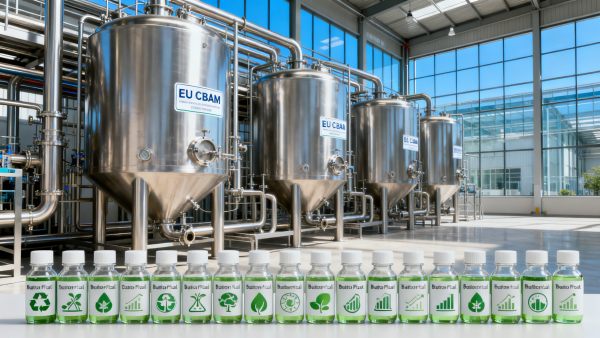
As of 1 January 2026, the EU Carbon Border Adjustment Mechanism (CBAM) has formally entered its enforcement phase, ending the transitional period. Botanical extracts — classified under the ‘organic chemicals’ category — are now subject to mandatory quarterly carbon emissions reporting for exports to the EU. This development directly affects exporters, processors, and supply chain stakeholders engaged in botanical ingredient trade with the European market.
Event Overview
On 1 January 2026, the EU CBAM transition period concluded, and the mechanism moved into full implementation. From Q2 2026, exporters of botanical extracts to the EU must submit verified quarterly declarations of embedded greenhouse gas emissions associated with their goods. Entities without valid EU Emissions Trading System (EU ETS) registration or incomplete CBAM data submissions may face customs delays and additional verification costs.
Industries Affected
Direct Exporters
Companies exporting botanical extracts to the EU are directly obligated to comply with CBAM reporting requirements. Their exposure arises from legal liability for accurate emissions data submission and the operational need to integrate carbon accounting into export documentation workflows.
Processing & Manufacturing Firms
Firms that convert raw botanical materials into standardized extracts — especially those operating under contract manufacturing or toll processing arrangements — may be required to provide upstream emissions data to their export-facing clients. This affects internal record-keeping systems and traceability protocols for energy use and process emissions.
Raw Material Suppliers
Suppliers of dried herbs, plant biomass, or crude extracts may face increased data requests from downstream processors or exporters. While not directly liable for CBAM filings, their ability to document cultivation practices, drying methods, and transport-related emissions may influence compliance readiness further down the chain.
Supply Chain & Compliance Service Providers
Third-party verifiers, customs brokers, and sustainability consultants supporting botanical trade may see rising demand for CBAM-specific verification, data validation, and documentation support — particularly for small- and medium-sized exporters lacking in-house carbon accounting capacity.
Key Focus Areas and Recommended Actions
Monitor Official CBAM Guidance on Organic Chemicals Classification
The EU has listed botanical extracts under ‘organic chemicals’, but precise scope definitions — such as thresholds for purity, solvent residues, or extract concentration — remain subject to interpretation. Exporters should track updates from the European Commission’s CBAM Helpdesk and national competent authorities ahead of Q2 2026 reporting deadlines.
Prepare for Quarterly Reporting Starting Q2 2026
Reporting obligations begin in April–June 2026. Companies should map current production processes, identify relevant emission sources (e.g., steam generation, solvent recovery, drying), and validate measurement methodologies against CBAM Delegated Act Annex II requirements — allowing at least 6–8 weeks for internal verification before submission.
Assess EU ETS Registration Eligibility and Timeline
Only entities registered in the EU ETS system can submit CBAM declarations. Non-EU exporters must appoint an authorized representative established in the EU. Firms should confirm representative capacity and initiate registration well before the Q2 deadline, noting that registration does not guarantee immediate access to CBAM reporting portals.
Review Contracts and Data-Sharing Protocols Across the Supply Chain
Exporters may require emissions data from upstream suppliers or co-manufacturers. Current commercial agreements often lack clauses covering carbon data disclosure or verification rights. Proactive revision of procurement terms and NDAs — with clear roles for data provision and confidentiality — is advisable ahead of first reporting.
Editorial Perspective / Industry Observation
From industry perspective, the 1 January 2026 CBAM enforcement date represents a procedural milestone rather than an immediate financial trigger: no financial penalty applies until 2027, when the transitional ‘declaration-only’ phase ends and importers begin purchasing CBAM certificates. However, analysis来看, this phase shift signals that regulatory scrutiny on embedded carbon is now operationally embedded in EU customs processes — making data readiness a prerequisite for market access, not just a sustainability initiative. Observation来看, early adopters who treat CBAM as a supply chain transparency tool — rather than solely a compliance hurdle — are better positioned to anticipate future expansions (e.g., inclusion of indirect emissions or broader botanical product categories).
Conclusion
This CBAM enforcement phase marks the point at which carbon accountability becomes a structural requirement for botanical extract trade with the EU — not a voluntary or future consideration. It does not yet impose direct fees, but it does introduce binding data obligations with tangible operational consequences. Currently, it is more appropriately understood as a foundational step toward long-term decarbonization alignment, requiring systematic preparation rather than reactive response.
Information Sources
Main source: European Commission official CBAM regulation text (Regulation (EU) 2023/1115) and related Delegated Acts; CBAM Transitional Reporting Guidance (2023/C 319/01). Note: Final scope details for organic chemicals subcategories, including botanical extract eligibility criteria and verification pathways, remain subject to ongoing technical guidance updates from the European Commission and are under continuous observation.
Related Intelligence
- Botanical ExtractsIndonesia BPOM Tightens Botanical Extracts Import RulesBotanical extracts import to Indonesia now requires dual certification: China GMP + AOAC validation. Stay compliant before July 1, 2026 — avoid shipment rejection & delays!
- Botanical ExtractsEU CBAM Enters Enforcement Phase for Botanical ExtractsEU CBAM enforcement starts Jan 2026 for botanical extracts—mandatory quarterly carbon reporting now applies. Act now to avoid delays & ensure EU market access.
- Botanical ExtractsIndonesia BPOM Tightens Botanical Extracts Import RulesIndonesia BPOM tightens botanical extracts import rules: dual certification (AOAC testing + GMP) required from July 1, 2026. Act now to avoid shipment delays!
The Morning Broadsheet
Daily chemical briefings, market shifts, and peer-reviewed summaries delivered to your terminal.
