
Vietnam Tightens Energy Certification for Smart Greenhouse Climate Controls
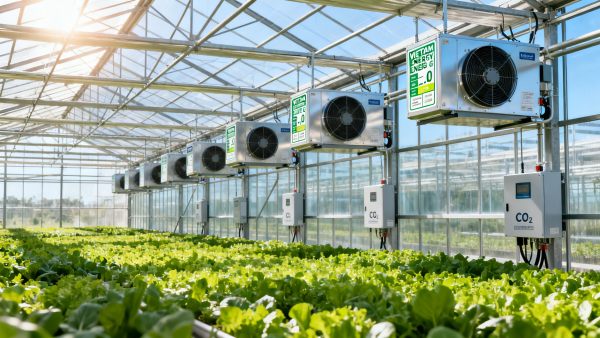
Vietnam’s Ministry of Agriculture and Rural Development (MARD) has mandated stricter energy efficiency requirements for imported smart greenhouse climate control equipment, effective 1 July 2026. This update directly affects exporters and suppliers of variable-frequency fans, CO₂ generators, and heat-pump-based environmental control units—particularly those serving Vietnam’s rapidly expanding protected horticulture sector.
Event Overview
On 25 April 2026, MARD issued Circular No. 88/2026/TT-BNNPTNT, requiring mandatory VIETNAM ENERGY LABEL 2.0 certification for climate control devices used in smart greenhouses. The regulation takes effect on 1 July 2026. Under the new rule, the minimum required energy efficiency level rises from Level 2 to Level 3, and testing must be conducted by designated Vietnamese laboratories under real-load conditions—not simulated or lab-only protocols.
Which Subsectors Are Affected
Direct Exporters (Especially Chinese Manufacturers)
Chinese firms exporting climate control hardware to Vietnam face extended lead times: delivery cycles are projected to increase by 12–18 working days due to mandatory on-site load testing. Those lacking pre-established partnerships with Vietnamese accredited labs may encounter shipment holds or order suspensions until compliance is verified.
Smart Greenhouse System Integrators
Integrators sourcing components from overseas suppliers must now verify that each climate control unit carries a valid Level 3 VIETNAM ENERGY LABEL 2.0 certificate—issued after field-tested verification. Component-level non-compliance could delay full-system commissioning or trigger re-certification requests for assembled units.
Local Distributors & Import Agents
Distributors handling customs clearance and market entry for such equipment must ensure documentation includes certified test reports from MARD-designated labs. Incomplete or outdated labeling (e.g., pre-2026 Level 2 labels) will result in rejection at import stage, increasing administrative overhead and inventory risk.
What Enterprises or Practitioners Should Focus On — And How to Respond
Monitor official implementation guidance from MARD and Vietnam Standards and Quality Institute (STAMEQ)
The circular outlines requirements but does not yet publish the full list of designated laboratories or detailed test protocols for each device category. Stakeholders should track updates from STAMEQ—the national body overseeing ENERGY LABEL 2.0—to confirm eligible labs and submission timelines.
Prioritize verification for high-volume or high-risk product categories
Variable-frequency fans and heat-pump-based environmental control units represent the majority of affected imports. Firms should initiate label application and load testing for these items first—especially models already in active sales pipelines—to avoid mid-year supply disruption.
Distinguish between policy announcement and operational readiness
While the 1 July 2026 enforcement date is fixed, laboratory capacity, reporting turnaround, and customs enforcement consistency remain unconfirmed. Businesses should treat the current phase as preparatory—not assume all processes will be fully operational from day one.
Prepare updated technical dossiers and coordinate early with local testing partners
Manufacturers without existing ties to Vietnamese labs should identify and engage qualified partners now—not after receiving orders. Required documentation includes product specifications, electrical schematics, and operational manuals in Vietnamese or English (with official translation if needed). Early engagement helps secure testing slots ahead of peak demand.
Editorial Observation / Industry Perspective
This regulatory shift is better understood as an enforcement signal than a sudden compliance shock. Analysis来看, MARD is aligning greenhouse climate technology standards with broader national energy efficiency goals—and using smart agriculture infrastructure as a pilot domain for stricter appliance-level accountability. From industry角度看, the move reflects Vietnam’s growing emphasis on verifiable, performance-based certification over paper-based declarations. Observation来看, it also signals increased scrutiny of imported agri-tech hardware, particularly where energy use directly impacts operational cost and sustainability metrics for commercial growers. Current more appropriate interpretation is that this is the start of a phased tightening—not an isolated measure.
It remains to be seen whether similar requirements will extend to other controlled-environment agriculture (CEA) components—such as LED grow lights or automated irrigation controllers—in future MARD updates.
Conclusion
This update marks a concrete step toward performance-driven regulation in Vietnam’s smart agriculture equipment market. It does not represent a broad export barrier, but rather a targeted calibration of certification rigor for climate-critical hardware. For stakeholders, the most rational stance is proactive alignment—not reactive mitigation—with the new Level 3 requirement and its associated verification workflow.
Information Source
Main source: Vietnam Ministry of Agriculture and Rural Development (MARD), Circular No. 88/2026/TT-BNNPTNT, issued 25 April 2026.
Points under ongoing observation: Official list of designated laboratories, detailed test procedures per equipment type, and customs enforcement consistency post-1 July 2026.
Related Intelligence
- Smart GreenhouseVietnam Tightens Energy Certification for Smart Greenhouse Climate ControlsVietnam ENERGY LABEL 2.0 now mandates Level 3 energy certification for smart greenhouse climate controls—act now to avoid shipment delays and ensure market access.
- Smart GreenhouseVAST Enforces Smart Greenhouse Climate Testing in Vietnam from Apr 2026VAST-2026 climate testing now mandatory for Smart Greenhouse imports to Vietnam — 72-hour high-temp/humidity/UV validation required from Apr 2026. Act now to avoid 4–6 week delays.
- Smart GreenhouseVAST-2026 Climate Testing Mandatory for Smart Greenhouse Imports to VietnamVAST-2026 climate testing is now mandatory for smart greenhouse imports to Vietnam — learn how this 28-day requirement impacts delivery, compliance & market access.
The Morning Broadsheet
Daily chemical briefings, market shifts, and peer-reviewed summaries delivered to your terminal.
