
ANVISA Extends Traceability for Botanical Extracts to Tier-2 Suppliers
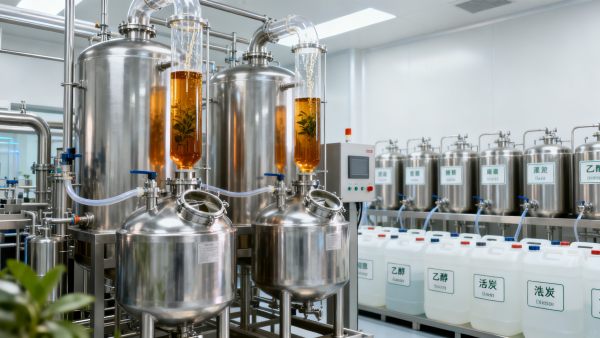
On April 25, 2026, Brazil’s National Health Surveillance Agency (ANVISA) updated Resolution RDC No. 127/2026, mandating full traceability of botanical extracts imported into Brazil down to secondary raw material suppliers—including solvents, filter aids, and adsorption media used in extraction. This regulatory shift directly affects exporters and supply chain actors in dietary supplements, natural cosmetics, phytopharmaceuticals, and functional food ingredients.
Event Overview
On April 25, 2026, ANVISA published an amendment to Resolution RDC No. 127/2026. The update requires all importers of botanical extracts into Brazil to submit complete documentation covering the second-tier supply chain: specifically, GMP certificates and regulatory declarations from the countries of origin for all auxiliary materials used in active ingredient extraction—such as solvents, filter aids, and adsorption media. The regulation enters into force on September 1, 2026. Notably, Chinese exporters must provide compliance test reports for such auxiliary materials issued by laboratories accredited by the China National Accreditation Service for Conformity Assessment (CNAS); failure to do so will result in denial of the Import License.
Industries Affected by Segment
Direct Trading Enterprises
Trading companies acting as importers or authorized representatives in Brazil will bear primary responsibility for dossier submission. They are now required to collect, verify, and validate documentation not only from extract manufacturers but also from upstream auxiliary material suppliers—adding complexity to due diligence and increasing lead time for license processing.
Raw Material Sourcing Enterprises
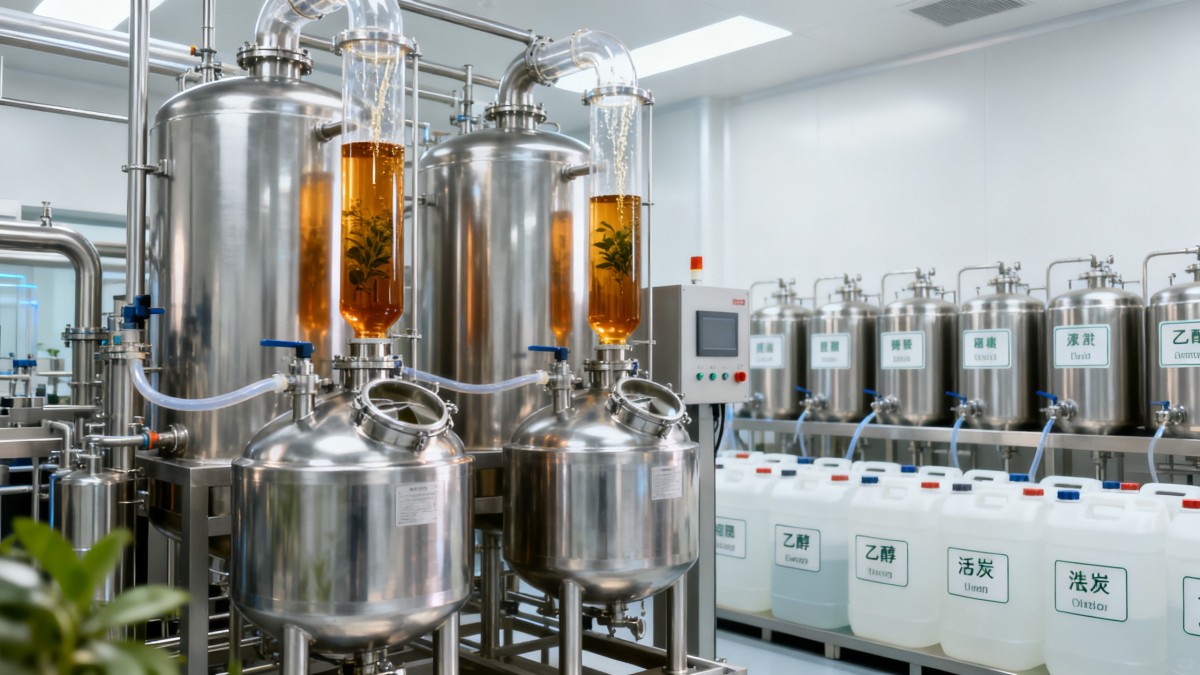
Enterprises sourcing botanical extracts from China or other exporting countries must now map and qualify their auxiliary material suppliers (e.g., ethanol or propylene glycol providers, activated carbon suppliers). Previously non-audited or low-visibility inputs now require formal GMP certification and regulatory statements—potentially exposing gaps in current supplier qualification systems.
Extraction & Manufacturing Facilities
Manufacturers performing solvent-based extraction must maintain auditable records linking each batch of extract to specific lots of solvents, filter aids, and adsorbents—including certificates of analysis, origin declarations, and GMP status. Internal quality systems may need revision to support tier-2 traceability without disrupting production continuity.
Supply Chain Service Providers
Logistics, customs brokerage, and regulatory consulting firms supporting botanical extract imports into Brazil will see increased demand for documentation verification, certificate translation/localization, and CNAS-aligned lab report validation. Their service scope may need explicit expansion to include auxiliary material compliance screening.
Key Focus Areas and Recommended Actions
Monitor official implementation guidance from ANVISA
While Resolution RDC No. 127/2026 is published, ANVISA has not yet released detailed technical instructions on acceptable formats for tier-2 declarations or equivalency criteria for foreign GMP certifications. Stakeholders should track updates via ANVISA’s official portal and registered industry bulletins.
Prioritize high-volume or high-risk botanical categories and auxiliary inputs
Analysis来看, solvents like ethanol, methanol, and food-grade glycerin—and adsorbents such as silica gel or activated charcoal—are most frequently cited in ANVISA inspection alerts. Exporters should first audit documentation readiness for these inputs, especially where sourced from multiple vendors or blended across batches.
Distinguish between regulatory signal and operational enforcement
From industry perspective, this requirement reflects ANVISA’s broader trend toward vertical supply chain accountability—not just a one-off documentation check. However, actual enforcement rigor (e.g., whether every shipment triggers auxiliary material review) remains unconfirmed and may evolve post-September 2026.
Initiate internal traceability mapping and lab engagement now
Chinese exporters should begin inventorying auxiliary material suppliers, verifying CNAS accreditation status of relevant testing labs, and drafting standardized request templates for GMP certificates and origin declarations. Early alignment with suppliers reduces risk of last-minute license delays after September 1, 2026.
Editorial Observation / Industry Perspective
This update is better understood as a structural signal than an isolated compliance change. Observation来看, ANVISA is aligning botanical extract oversight with pharmaceutical-grade supply chain expectations—extending scrutiny beyond active ingredients to process-critical auxiliaries. It signals growing convergence between herbal product regulation and pharmaceutical GMP logic in regulated Latin American markets. Current relevance lies less in immediate disruption and more in its precedent-setting role: similar traceability expectations may emerge in Argentina, Colombia, or Chile in coming years. Continuous monitoring—not reactive compliance—is the more sustainable posture.
In summary, ANVISA’s extension of botanical extract traceability to tier-2 suppliers marks a measurable tightening of import requirements for plant-based ingredients entering Brazil. It does not introduce new safety thresholds, but significantly raises evidentiary and procedural expectations across the supply chain. For stakeholders, this is best interpreted not as a short-term hurdle, but as an early indicator of evolving regulatory maturity in Latin America’s natural product market—where documentation integrity increasingly mirrors manufacturing rigor.
Source: Official text of ANVISA Resolution RDC No. 127/2026, published April 25, 2026; ANVISA public notices on import licensing procedures. Note: Implementation details—including accepted formats for foreign GMP certificates and transitional arrangements—remain pending formal clarification and are subject to ongoing observation.
Related Intelligence
- Botanical ExtractsANVISA Extends Traceability for Botanical Extracts to Tier-2 SuppliersANVISA extends botanical extract traceability to tier-2 suppliers—solvents, filter aids, adsorption media—effective Sept 1, 2026. Essential for exporters & supplement brands.
- Botanical ExtractsEU CBAM Carbon Tariff First Applies to Botanical ExtractsEU CBAM Carbon Tariff now covers Botanical Extracts—key for exporters, importers & LCA providers. Act now to ensure compliance by 24 April 2026.
- Botanical ExtractsIndonesia BPOM Tightens Dual-Certification for Botanical Extracts ImportsIndonesia BPOM now requires dual-certification for botanical extracts: GMP + AOAC International method validation. Act before May 1, 2026 — avoid shipment delays & customs rejection.
The Morning Broadsheet
Daily chemical briefings, market shifts, and peer-reviewed summaries delivered to your terminal.
