
India Launches Mid-Term AD Review on Chinese Commercial Feed Pellets
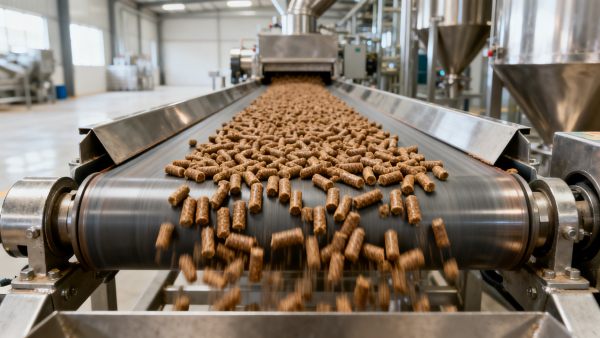
On April 25, 2026, India’s Central Board of Indirect Taxes and Customs (CBIC) initiated a mid-term anti-dumping (AD) review concerning commercial feed pellets imported from China — a development with direct implications for feed exporters, agri-input suppliers, and downstream livestock integrators operating across South Asia and global supply chains.
Event Overview
On April 25, 2026, the CBIC — under India’s Ministry of Finance — issued questionnaires to major Chinese exporters of commercial feed pellets, formally launching the mid-term review of the existing anti-dumping duty of 21.8%. The review focuses specifically on three technical parameters: domestic capacity utilization rates, authenticity of domestic sales pricing in China, and transparency of export price composition. Sample enterprises have 30 days to submit verified financial and logistics documentation. Should the review conclude that dumping continues or has intensified, the duty may be raised to 28.5% — a level aligned with concurrent AD reviews on heavy agricultural machinery, signaling coordinated trade enforcement.
Industries Affected by Segment
Direct Exporters (China-based feed pellet manufacturers)
These firms face immediate procedural and compliance pressure: the questionnaire requires granular, auditable data on production volumes, domestic vs. export pricing, cost allocation, and third-party logistics contracts. Any inconsistency or delay risks adverse inference during review — potentially triggering higher duties or extended investigation timelines.
Raw Material Sourcing Suppliers (e.g., soybean meal, corn gluten, amino acid producers)
Since feed pellet pricing is tightly linked to input costs, changes in export duty levels affect downstream demand elasticity. A potential duty hike to 28.5% could compress margins for Indian compound feed mills — prompting them to renegotiate procurement terms or shift sourcing toward local or ASEAN alternatives, indirectly affecting upstream commodity suppliers’ order visibility.
Feed Mill Operators & Integrated Livestock Producers (India and neighboring markets)
Indian compound feed manufacturers rely significantly on imported commercial pellets as base blends or specialty additives. Higher import duties may raise their raw material costs, pressuring working capital and forcing formulation adjustments — especially where substitution options are limited by nutrient density or regulatory approval status.
Trade Compliance & Logistics Service Providers
Customs brokers, classification consultants, and freight forwarders supporting China–India feed trade must now prioritize documentation readiness: verifying origin declarations, validating INCOTERMS-aligned cost breakdowns, and preparing for possible CBIC verification visits. The linkage with heavy agri machinery reviews suggests broader scrutiny of agricultural inputs classified under HS Chapter 23.
What Enterprises Should Monitor and Do Now
Track official CBIC notifications and questionnaire response deadlines
Responses are due within 30 days of issuance — no extensions are publicly indicated. Firms not yet contacted but exporting under the same HS code (2309.90) should proactively verify whether they fall within the CBIC’s sampling frame and prepare parallel documentation.
Distinguish between policy signal and enforceable outcome
The current review is procedural, not punitive. A duty increase is contingent on findings — not automatic. Companies should avoid premature pricing or contract revisions until the CBIC issues preliminary or final determinations (expected late Q3 2026).
Validate and consolidate domestic sales and export cost records
CBIC’s focus on domestic price authenticity means internal transfer pricing, related-party sales, and promotional discounts must be fully documented and justifiable. Exporters should cross-check consistency between GST filings, customs declarations, and financial statements.
Assess contingency options for key Indian customers
Proactive dialogue with Indian buyers about potential cost pass-through, alternative formulations, or phased adjustment clauses can mitigate commercial friction — especially if the review concludes in Q4 2026 and new duties take effect early 2027.
Editorial Observation / Industry Perspective
From industry perspective, this mid-term review is best understood not as an isolated tariff action, but as part of a broader recalibration of India’s agricultural trade safeguards — particularly for inputs linked to food security and mechanized farming. The synchronicity with the Heavy Agri Machinery AD review suggests institutional coordination across CBIC verticals, possibly reflecting increased inter-departmental alignment on strategic input sectors. Analysis来看, the 21.8% rate has been in place since 2025; its mid-term challenge implies mounting pressure from domestic Indian feed producers citing cost disadvantages. However, the review remains fact-finding — not adjudicative — at this stage. Current more appropriate interpretation is that it signals heightened monitoring, not imminent escalation.
Conclusion
This mid-term anti-dumping review reflects tightening regulatory oversight on agricultural input trade between China and India — but it does not yet represent a finalized policy shift. For stakeholders, the priority is disciplined documentation, calibrated communication, and measured operational response. It is better understood as a procedural checkpoint than a market-disrupting event — one requiring attention, not alarm.
Information Sources
Main source: Official notification issued by India’s Central Board of Indirect Taxes and Customs (CBIC), dated April 25, 2026. Ongoing developments — including preliminary findings, hearing schedules, or final determination dates — remain subject to official CBIC updates and require continued monitoring.
Related Intelligence
- Commercial Feed PelletIndia Launches Mid-Term AD Review on Chinese Commercial Feed PelletsIndia's mid-term AD review on Chinese commercial feed pellets could raise duties to 28.5% — critical for exporters, feed mills & agri-input suppliers. Act now.
- Commercial Feed PelletChina Launches GB 13078-2026 Draft for Commercial Feed PelletsGB 13078-2026 draft mandates mycotoxin monitoring, AMR gene screening & carbon labeling for China’s commercial feed pellets — act now to ensure 2027 compliance.
- Commercial Feed PelletChina to Upgrade Commercial Feed Pellet Standard to Mandatory by 2027China’s Commercial Feed Pellet standard (GB/T 19541) becomes mandatory by 2027—stricter mycotoxin limits, full traceability & urgent compliance prep for feed producers, suppliers & exporters.
The Morning Broadsheet
Daily chemical briefings, market shifts, and peer-reviewed summaries delivered to your terminal.
