
FAO Adds 6 Chinese Grain Silo Makers to Global White List
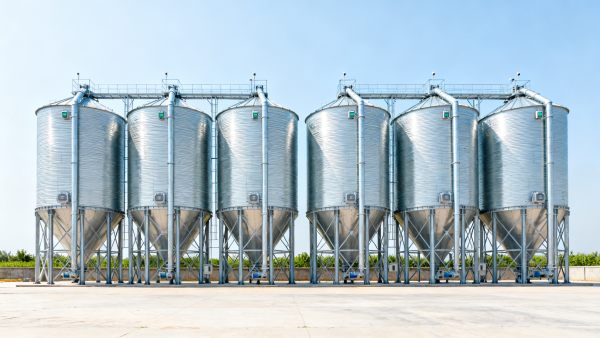
On April 26, 2026, the Food and Agriculture Organization of the United Nations (FAO) updated its Global List of Qualified Suppliers for Grain Silos & Storage Infrastructure, adding six Chinese manufacturers of steel grain silos and intelligent ventilation storage systems. This update is particularly relevant for stakeholders in agricultural infrastructure export, international procurement, and post-harvest technology supply chains — especially those engaged with public-sector buyers in Africa, Latin America, and Southeast Asia.
Event Overview
On April 26, 2026, the FAO published the latest edition of its Global List of Qualified Suppliers for Grain Silos & Storage Infrastructure. The list now includes six newly certified Chinese manufacturers specializing in steel筒仓 (steel silos) and smart ventilation grain storage systems. According to official FAO documentation, this list serves as a reference for government procurement decisions in 27 countries across Africa, Latin America, and Southeast Asia.
Industries Affected by This Update
Direct Exporters and Trade Service Providers
These firms may experience shifts in tender eligibility criteria when bidding for FAO-aligned or nationally funded grain infrastructure projects. Since the FAO list functions as a de facto prequalification benchmark in 27 national agricultural procurement frameworks, inclusion directly affects bid competitiveness — particularly where technical compliance and third-party validation are mandatory.
Domestic Grain Storage Equipment Manufacturers (Non-Certified)
Manufacturers not yet on the list face intensified competitive pressure in international tenders requiring FAO-recognized supplier status. Their ability to participate in upcoming infrastructure programs — especially those co-financed by multilateral development banks referencing FAO standards — may be constrained unless they pursue certification.
International Procurement Agencies and Government Buyers
Procurement entities in the 27 listed countries may increasingly align internal vetting procedures with the FAO white list. This could accelerate standardization of technical specifications (e.g., corrosion resistance, moisture control performance, IoT integration capability), raising baseline expectations for submitted proposals.
Supply Chain Integrators and System Solution Providers
Firms bundling silos with automation, monitoring, or logistics software may find their go-to-market strategy affected if partner hardware suppliers lack FAO recognition. Joint proposals involving non-listed equipment may require additional technical justification or third-party verification to meet procurement thresholds.
What Relevant Enterprises or Practitioners Should Monitor and Do Now
Track Official FAO Documentation Updates and National Adoption Signals
Monitor whether individual countries issue formal notices referencing the April 2026 list revision — for example, through national agricultural ministry circulars or procurement portal announcements. Such signals indicate imminent application in active tenders.
Verify Which Product Categories and Technical Specifications Are Explicitly Cited
The FAO list does not cover all grain storage equipment types uniformly. Focus attention on whether the newly added certifications apply specifically to bolted steel silos, welded silos, modular ventilation units, or integrated control systems — as scope determines applicability to specific project requirements.
Distinguish Between Policy Endorsement and Operational Implementation
While the FAO list carries normative weight, actual procurement practice varies by country. Some governments may treat it as advisory; others may embed it into legal tender documents. Review recent award notices from target markets to assess real-world enforcement patterns.
Prepare Documentation Alignment and Cross-Border Compliance Readiness
For exporters and integrators: confirm whether existing test reports (e.g., ISO 8501 surface prep, ASTM A123 galvanizing standards) and digital system architecture documentation align with FAO’s current technical annexes. Early alignment reduces delays in future certification applications.
Editorial Perspective / Industry Observation
From an industry perspective, this update is best understood as a structural signal — not yet a fully operational shift. It reflects growing institutional recognition of Chinese technical capacity in post-harvest infrastructure, but adoption remains contingent on national-level implementation. Analysis来看, the inclusion of six manufacturers in one cycle suggests both improved application rigor and expanded FAO evaluation bandwidth. However, the list remains voluntary: no binding procurement mandate exists at the UN level. Observation来看, its influence grows incrementally as more recipient countries codify it into domestic procurement guidelines — making sustained tracking of national policy updates more valuable than the headline itself.
Current more appropriate interpretation is that this represents a threshold moment in credibility consolidation — not market access acceleration. It confirms that certain Chinese manufacturers now meet internationally referenced benchmarks, but does not guarantee tender success without complementary localization, service infrastructure, or financing support.
Conclusion
This FAO update marks a measurable step in the international institutional recognition of Chinese grain storage equipment capabilities. Its primary significance lies in enhanced third-party validation — not immediate commercial advantage. For industry participants, it underscores the increasing importance of standardized technical compliance in global agricultural infrastructure markets. Currently, it is more accurately understood as a credentialing milestone than a market-opening event.
Source Attribution
Main source: Food and Agriculture Organization of the United Nations (FAO), Global List of Qualified Suppliers for Grain Silos & Storage Infrastructure, published April 26, 2026.
Points requiring ongoing observation: national-level adoption timelines, scope definitions for newly listed manufacturers, and frequency of future list revisions.
Related Intelligence
- Grain Silos & StorageFAO Adds 6 Chinese Grain Silo Makers to Global White ListFAO adds 6 Chinese grain silo makers to its Global White List — boosting credibility for steel silos & smart ventilation systems in Africa, LATAM & SEA.
- Grain Silos & StorageFAO Adds 6 Chinese Grain Silo Makers to 2026 Global ListFAO adds 6 Chinese grain silo makers to its 2026 Global Recommended List—boosting credibility for exporters, OEMs & contractors in Africa/Latin America.
- Grain Silos & StorageHow to pick a grain pre cleaner machine?Grain pre cleaner machine selection guide for better grain and feed processing. Compare gravity separator grain, grain destoner machine, feed grading sieve, and more to boost efficiency.
The Morning Broadsheet
Daily chemical briefings, market shifts, and peer-reviewed summaries delivered to your terminal.
