
2M+Hapag-Lloyd to Raise Aeration & Water Tech Special Container Rates from May 2026
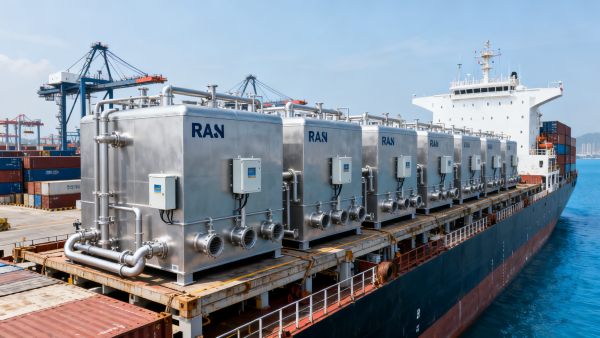
Major global shipping alliance 2M+Hapag-Lloyd — comprising Maersk, MSC, and CMA CGM — announced on April 25, 2026, an 18.5% freight rate increase for Out-of-Gauge (OT) and Flat Rack (FR) containers carrying aeration equipment, RAS water treatment modules, and intelligent ventilation units on the Asia-Pacific–Middle East corridor, effective May 1, 2026. Exporters of high-value aquatic and environmental control systems in China and other APAC markets must reassess logistics costs, lead times, and contract terms.
Event Overview
On April 25, 2026, the 2M+Hapag-Lloyd alliance issued a joint notice confirming that, starting May 1, 2026, ocean freight rates for specialized containers (OT/FR) transporting aeration and water technology equipment — including曝气设备, RAS water treatment modules, and smart ventilation units — will increase by 18.5% on the Asia-Pacific to Middle East trade lane. The alliance cited two primary reasons: continued vessel rerouting around the Red Sea (bypassing the Suez Canal), leading to tighter capacity on alternative routes, and rising maintenance costs for specialized container assets.
Industries Affected
Direct Exporters of Aquaculture & Water Treatment Equipment
Manufacturers and exporters of recirculating aquaculture system (RAS) components, industrial aeration blowers, and modular water purification units are directly impacted. These products typically require OT or FR containers due to oversized dimensions, weight distribution constraints, or sensitivity to vibration and humidity — making them ineligible for standard dry containers. The rate hike directly increases landed cost per unit, compressing margins unless passed on to overseas buyers.
Integrated System Integrators & EPC Contractors
Firms delivering turnkey water infrastructure or aquaculture facility projects often consolidate multiple high-value subsystems into single shipments using OT/FR units. With fixed project budgets and contractual delivery timelines, this tariff adjustment introduces cost uncertainty and may trigger renegotiation of supply chain clauses or delay milestone-based payments if shipment schedules slip due to pre-booking congestion.
Specialized Freight Forwarders & NVOCCs Serving Environmental Tech
Logistics providers focused on niche verticals — particularly those handling engineered environmental equipment — face dual pressure: reduced margin on quoted all-in rates and increased operational complexity in securing scarce OT/FR slots amid heightened demand. Their ability to guarantee space and transit time may decline unless they proactively secure allocations ahead of May.
What Enterprises and Practitioners Should Monitor and Do Now
Confirm booking windows and contractual rate lock-in deadlines with carriers and forwarders
Since the increase takes effect May 1, 2026, shippers should verify whether current contracts include grandfathered rates or automatic escalations. Many forwarders offer pre-May booking guarantees at pre-increase tariffs — but only for confirmed bookings with deposit and documentation submitted before specified cutoff dates (often 7–14 days prior).
Review Incoterms® and revise pricing language for new quotations
Exporters using FOB or EXW terms retain full exposure to ocean freight volatility. Those quoting CIF or C&F to Middle Eastern buyers should explicitly state whether quoted prices assume pre-May or post-May rates — and include contingency clauses referencing “special container surcharge adjustments” to avoid disputes during execution.
Assess alternative routing or packaging options — but treat as secondary to capacity planning
While some may explore transshipment via Europe or air-freight partial consolidation for urgent components, analysis shows these alternatives currently carry higher cost premiums and longer lead times than the scheduled sea route. From industry perspective, prioritizing early slot allocation remains more operationally reliable than speculative mode-switching.
Track official updates from the alliance and individual carriers on potential extension or scope expansion
This announcement applies specifically to the Asia-Pacific–Middle East lane and OT/FR equipment in the stated categories. Observation suggests carriers may extend similar adjustments to other corridors (e.g., Asia–Africa) or add related equipment types (e.g., ozone generators, UV disinfection skids) later in 2026 — but no such plans have been confirmed.
Editorial Perspective / Industry Observation
This adjustment is better understood as a near-term capacity signal rather than a structural cost shift. It reflects acute, route-specific constraints — not broad-based inflation in container asset utilization. Current more relevant interpretation is that it underscores growing fragility in specialty equipment logistics, where infrastructure (e.g., OT/FR fleet size, repair depots in key ports) has not kept pace with demand growth in environmental tech exports. The fact that three major carriers coordinated this move signals consensus on both the severity of the bottleneck and the need for price discipline — suggesting sustained pressure through Q2–Q3 2026 unless Red Sea transit normalizes significantly.
For stakeholders, the priority is not forecasting long-term trends but managing immediate execution risk: securing verified space, documenting rate commitments, and aligning commercial terms with physical logistics realities.
Conclusion
This freight adjustment does not represent a general market-wide escalation, but a targeted recalibration affecting a narrow set of high-precision, logistically complex exports. Its significance lies less in the percentage itself and more in what it reveals about tightening bottlenecks in specialty container availability — especially where geopolitical disruptions compound technical constraints. For now, it is best interpreted as an operational prompt: allocate resources toward early booking, documentation rigor, and contractual clarity — not strategic redirection.
Information Sources
Source: Joint public notice issued by 2M+Hapag-Lloyd alliance on April 25, 2026. No additional data or third-party commentary is included. Ongoing monitoring is recommended for possible follow-up announcements regarding scope, duration, or regional extensions — none of which have been confirmed to date.
Related Intelligence
- Aeration & Water Tech2M+Hapag-Lloyd to Raise Aeration & Water Tech Special Container Rates from May 2026Aeration & water tech exporters: 2M+Hapag-Lloyd raises OT/FR container rates 18.5% from May 2026 on Asia–Middle East routes — act now to lock in pre-increase freight.
- Aeration & Water TechFDA Releases Cybersecurity Guidance for Aeration & Water Tech ExportsFDA's new cybersecurity guidance for aeration & water tech exports mandates OTA updates, cloud APIs, and ISO 27001 — act now to avoid 510(k) delays!
- Aeration & Water Tech2026 Shanghai Fastener Show Adds Aeration & Water Tech ZoneAeration & Water Tech Zone debuts at 2026 Shanghai Fastener Show—featuring corrosion-resistant fasteners for aquaculture & wastewater systems. Discover engineered, smart connection solutions.
The Morning Broadsheet
Daily chemical briefings, market shifts, and peer-reviewed summaries delivered to your terminal.
