
FDA Updates Cybersecurity Guidance for Aeration & Water Tech Exports
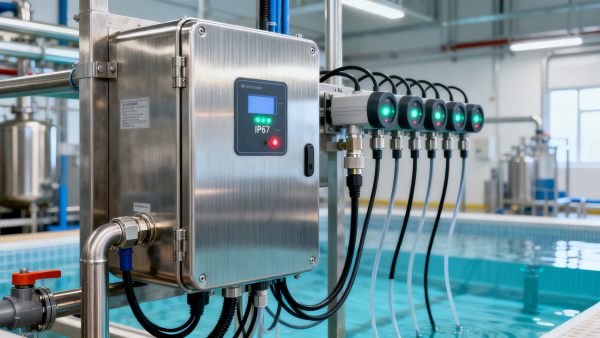
FDA has issued updated cybersecurity requirements for U.S.-bound aeration and water treatment equipment used in aquaculture and recirculating aquaculture systems (RAS), effective October 1, 2026. The revision directly impacts manufacturers and OEMs — especially those based in China — supplying intelligent water technology to the U.S. market.
Event Overview
On April 26, 2026, the U.S. Food and Drug Administration (FDA) published the Additional Guidance for Cybersecurity of Aeration & Water Tech Export Devices (2026 Revision). The guidance mandates that all aquaculture aeration and water treatment devices exported to the United States must comply with IEC 62443-4-2 certification and integrate an auditable firmware logging module. The requirements take effect on October 1, 2026.
Industries Affected
Direct Exporters and OEMs
Companies exporting smart aeration or water treatment hardware to the U.S. — particularly Chinese RAS system component suppliers and water tech OEMs — are subject to immediate compliance obligations. Over 230 such firms face revised pre-market submission and technical documentation requirements under FDA’s new framework.
Contract Manufacturers and System Integrators
Firms assembling or integrating third-party hardware into RAS control platforms must verify upstream firmware auditability and certification status. Failure to confirm IEC 62443-4-2 alignment at the component level may delay final device clearance or trigger rework requests from U.S. importers.
Aftermarket Support and Firmware Developers
Vendors responsible for firmware updates, remote diagnostics, or cloud-connected features must now design logs to meet FDA-defined audit scope and retention criteria. This affects patch management workflows, version control protocols, and vulnerability disclosure practices.
What Enterprises and Practitioners Should Monitor and Do Now
Track official FDA implementation notices and supporting Q&A documents
The guidance is effective October 1, 2026, but FDA may release supplementary FAQs, enforcement discretion statements, or transitional timelines before then. Monitoring FDA’s Device Cybersecurity webpage and Federal Register updates is essential for interpreting timing and scope.
Confirm IEC 62443-4-2 certification readiness for specific product families
Not all variants within a product line may share identical firmware architecture or logging capabilities. Companies should map each export SKU to its certification path — including test reports, development lifecycle documentation, and evidence of secure boot and log integrity — rather than assuming blanket compliance across models.
Distinguish between policy signal and enforceable requirement
This guidance reflects FDA’s formalized expectation, not yet a statutory regulation. Enforcement will likely begin with warning letters and import refusals for non-compliant submissions post-October 2026, rather than retroactive penalties. Current shipments cleared under prior rules remain unaffected unless re-submitted.
Align internal procurement and supplier agreements with new firmware logging obligations
Manufacturers relying on third-party modules (e.g., MCU firmware, communication stacks) should revise sourcing contracts to require auditable logging interfaces and IEC 62443-4-2 conformance evidence — not just vendor self-declarations — ahead of final assembly.
Editorial Perspective / Industry Observation
From an industry perspective, this update signals FDA’s consolidation of cybersecurity expectations for connected aquatic infrastructure — moving beyond general software validation toward standardized industrial control system (ICS) security benchmarks. Analysis来看, it is less a sudden regulatory shift and more a formalization of emerging global norms already reflected in EU MDR Annex I updates and Canada’s Health Canada guidance. Observation来看, the emphasis on firmware-level audit logs suggests FDA is prioritizing traceability of operational anomalies over theoretical threat modeling — a pragmatic focus aligned with real-world incident response needs. Current more appropriate understanding is that this is a targeted compliance milestone, not a broad-based market barrier — provided firms treat certification and logging as integrated engineering deliverables, not add-on compliance tasks.
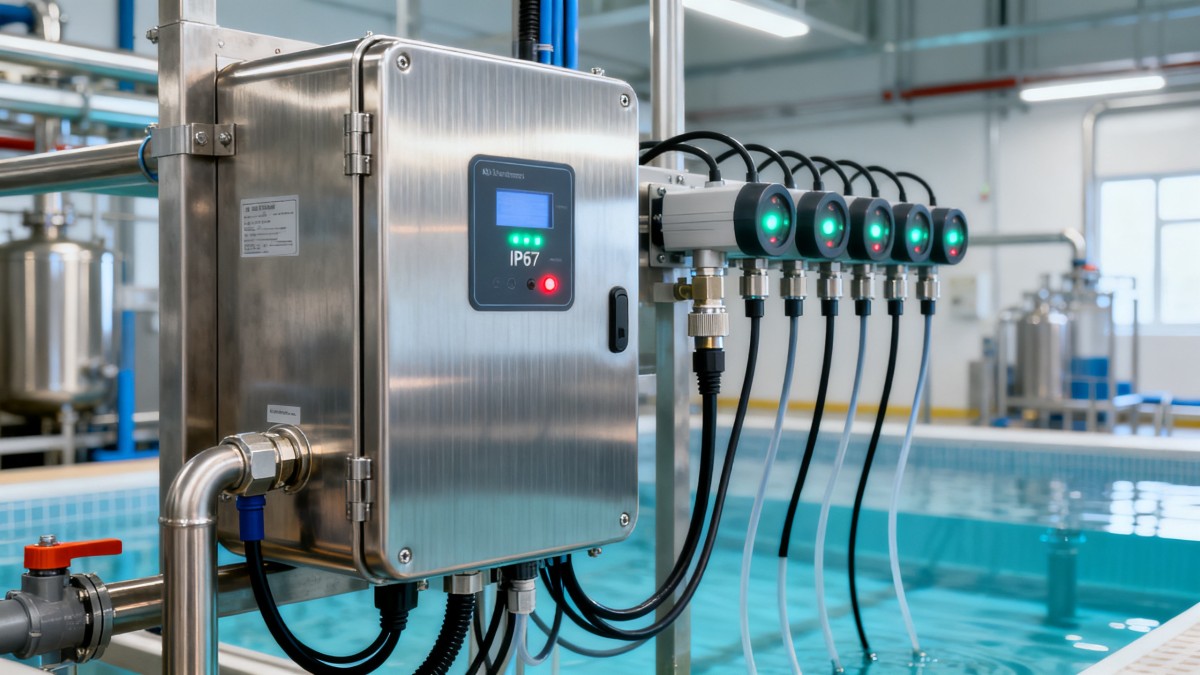
In summary, the FDA’s 2026 guidance establishes a defined, time-bound cybersecurity baseline for U.S.-bound aeration and water treatment devices. Its significance lies not in introducing entirely new concepts, but in codifying enforceable expectations around IEC 62443-4-2 and firmware auditability — making it a concrete checkpoint for supply chain readiness. It is best understood today as a structured compliance inflection point, requiring focused technical preparation rather than strategic redirection.
Source: U.S. Food and Drug Administration (FDA), Additional Guidance for Cybersecurity of Aeration & Water Tech Export Devices (2026 Revision), published April 26, 2026. Pending items for ongoing observation include FDA-issued implementation FAQs, recognized testing lab listings for IEC 62443-4-2, and potential alignment announcements with U.S. CISA or NIST frameworks.
Related Intelligence
- Aeration & Water TechGlobal Shipping Alliances Hike Aeration & Water Tech Freight Rates on Asia–Middle East RoutesAeration & Water Tech freight rates surge 18% on Asia–Middle East routes as THE, Ocean & 2M Alliances align. Critical for RAS, aerators & water control exporters—act before May 1, 2026.
- Aeration & Water TechFDA Updates Cybersecurity Guidance for Aeration & Water Tech ExportsFDA's 2026 cybersecurity guidance for aeration & water tech exports mandates IEC 62443-4-2 and firmware logging—key for U.S.-bound RAS devices. Act now to ensure compliance.
- Aeration & Water Tech2M+Hapag-Lloyd to Raise Aeration & Water Tech Special Container Rates from May 2026Aeration & water tech exporters: 2M+Hapag-Lloyd raises OT/FR container rates 18.5% from May 2026 on Asia–Middle East routes — act now to lock in pre-increase freight.
The Morning Broadsheet
Daily chemical briefings, market shifts, and peer-reviewed summaries delivered to your terminal.
