
Global Alliances Hike Aeration & Water Tech Container Rates on Asia–Middle East Route
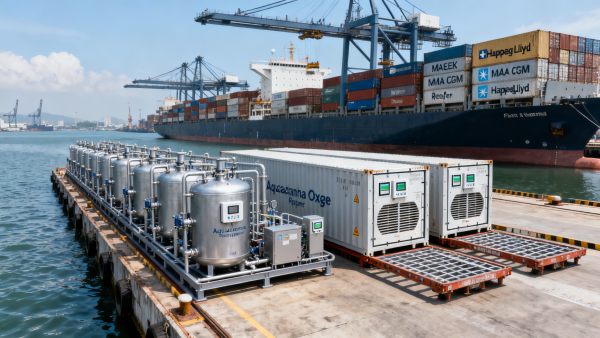
Major ocean carriers Maersk, CMA CGM, and Hapag-Lloyd have jointly announced a freight rate increase of 18.5% for Aeration & Water Tech specialized containers—specifically reefer and flat rack units with humidity control—on the Asia–Middle East trade lane, effective 1 May 2026. The adjustment, confirmed on 27 April 2026, stems from extended voyage durations and tight equipment availability due to Red Sea rerouting. Exporters of water treatment aerators and aquaculture oxygenation systems from China, as well as Middle Eastern importers managing CIF-based procurement, should assess implications for cost structure, delivery timelines, and contract terms.
Event Overview
On 27 April 2026, the global shipping alliance led by Maersk, CMA CGM, and Hapag-Lloyd issued a joint notice confirming an 18.5% freight rate increase for Aeration & Water Tech specialized containers (reefer and flat rack units with humidity control) on the Asia–Middle East route, effective 1 May 2026. The alliance cited Red Sea bypassing as the primary driver, resulting in longer transit times and constrained container availability. No further details regarding duration, exemptions, or regional sub-routes were disclosed in the official notice.
Impact on Specific Industry Segments
Water Treatment Equipment Exporters (China-based)
These manufacturers ship bulky, moisture-sensitive aerators and blower systems requiring humidity-controlled flat racks or reefers. The rate hike directly raises landed costs under FOB or EXW terms and compresses margins if pricing is fixed under existing contracts. Lead time extensions may also delay project commissioning in the Middle East, triggering contractual penalties or renegotiation pressure.
Aquaculture System Suppliers
Exporters of oxygenation systems—including diffusers, air pumps, and control panels—rely on stable, climate-managed transport to preserve electronic components and polymer seals. Increased freight costs compound existing challenges around seasonal demand spikes and just-in-time delivery expectations in Gulf-region fish farms.
Middle Eastern Importers & Project Procurement Teams
Importers operating under CIF terms bear full freight cost exposure. With rates rising mid-quarter, Q2 2026 shipments booked after 1 May will reflect the new tariff—potentially straining budgeted CAPEX for municipal water upgrades or aquaculture infrastructure projects. Delayed vessel slots may also disrupt coordinated multi-supplier deliveries.
Freight Forwarders & NVOCCs Specializing in Industrial Equipment
These service providers face tighter margin control on pre-negotiated rate agreements and increased volatility in quoting lead times. Their ability to secure humidity-controlled equipment—already scarce due to Red Sea constraints—may decline further, raising risk of shipment postponements or surcharge pass-throughs to end clients.
What Relevant Enterprises Should Monitor and Act On
Track official carrier announcements for possible phase-in periods or corridor-specific exceptions
The notice confirms a 1 May 2026 start date but does not specify whether the increase applies uniformly across all Asia–Middle East port pairs (e.g., Shanghai–Jeddah vs. Ningbo–Dammam) or includes transitional allowances. Monitoring updates from Maersk, CMA CGM, and Hapag-Lloyd’s respective tariff portals remains critical before finalizing May bookings.
Prioritize Q2 2026 vessel space booking—especially for June sailings
With capacity already strained, early slot confirmation is essential to avoid delays or premium surcharges. Shippers should target vessel departures no later than mid-May to secure pre-rate-increase space where still available, and confirm equipment type (humidity-controlled flat rack vs. reefer) availability at origin terminals.
Review CIF clause applicability and renegotiate where feasible
For contracts currently under negotiation or renewal, parties should explicitly define freight cost allocation mechanisms—e.g., index-linked adjustments or capped escalation clauses—to mitigate exposure to future tariff changes. Retrospective application of the new rate to open CIF orders requires verification against Incoterms® 2020 interpretation and bill-of-lading issuance dates.
Validate equipment specifications with carriers prior to tender submission
Not all ‘humidity-controlled’ units meet the technical definition used in this tariff adjustment. Shippers must confirm with carriers whether their intended equipment class (e.g., ventilated flat rack with desiccant packs vs. active-humidity reefer) qualifies for the new rate—and whether documentation (e.g., temperature/humidity logs) will be required for audit purposes.
Editorial Perspective / Industry Observation
Observably, this rate adjustment functions less as an isolated tariff action and more as a structural signal: it reflects how sustained Red Sea disruption has shifted cost allocation logic for niche, high-value industrial cargo—not just commodities or general dry containers. Analysis shows that specialized equipment lanes are now absorbing disproportionate cost pressure due to combined scarcity of compliant equipment and inflexible routing. From an industry perspective, this is not yet a long-term regime shift, but rather a near-term stress test for supply chain resilience in environmental technology exports. Continued monitoring is warranted—not only for follow-on adjustments on other routes, but for potential ripple effects on inland haulage, depot handling fees, and insurance premiums tied to extended dwell times.
Conclusion
This freight update signals a tangible cost and scheduling impact for exporters of aeration and water treatment technologies along the Asia–Middle East corridor. It underscores that specialized container logistics are increasingly sensitive to geopolitical routing constraints—and that tariff adjustments targeting narrow equipment categories can carry outsized operational consequences. Rather than treating this as a one-off cost event, stakeholders are better served viewing it as a prompt to reassess contingency planning for equipment-dependent shipments, especially where humidity control, timing precision, and multi-party coordination are mission-critical.
Information Sources
Main source: Joint carrier notice issued by Maersk, CMA CGM, and Hapag-Lloyd on 27 April 2026.
Note: Duration of the rate increase, applicability to transshipment hubs (e.g., Singapore, Colombo), and potential carrier-specific variations remain unconfirmed and require ongoing observation.
Related Intelligence
- Aeration & Water TechFDA Updates Cybersecurity Guidance for Aeration & Water Tech DevicesFDA’s new cybersecurity guidance for aeration & water tech devices mandates immediate compliance—secure firmware, audit logs & password controls required for U.S. market access.
- Aeration & Water TechGlobal Alliances Hike Aeration & Water Tech Container Rates on Asia–Middle East RouteAeration & Water Tech container rates surge 18.5% on Asia–Middle East route—Maersk, CMA CGM & Hapag-Lloyd hike reefer/flat rack fees from 1 May 2026. Act now!
- Aeration & Water TechGlobal Shipping Alliances Hike Aeration & Water Tech Freight Rates on Asia–Middle East RoutesAeration & Water Tech freight rates surge 18% on Asia–Middle East routes as THE, Ocean & 2M Alliances align. Critical for RAS, aerators & water control exporters—act before May 1, 2026.
The Morning Broadsheet
Daily chemical briefings, market shifts, and peer-reviewed summaries delivered to your terminal.
