
Indonesia BPOM Updates Natural Ingredients Labeling Rules
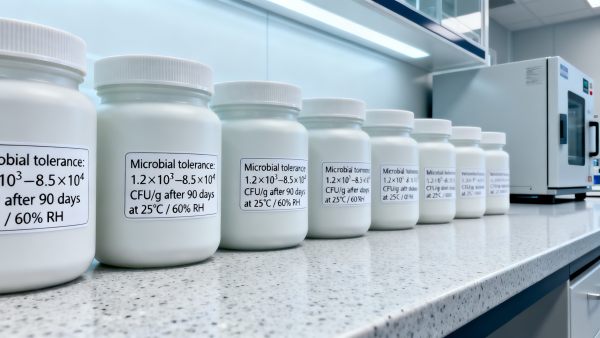
On April 27, 2026, Indonesia’s National Agency of Drug and Food Control (BPOM) revised its Technical Guidelines for Importation of Natural Ingredients, mandating a new ‘Microbial Tolerance Statement’ on all imported natural ingredient labels. This requirement directly affects exporters and distributors of plant powders, fermented extracts, and enzymatic peptides—particularly those from China—and signals heightened regulatory scrutiny across the ASEAN natural-ingredient supply chain.
Event Overview
Indonesia’s BPOM issued an update to its Natural Ingredients Import Technical Guidelines on April 27, 2026. The revision introduces a mandatory labeling requirement: all imported natural ingredients must display a ‘Microbial Tolerance Statement’, specifying the change in total viable count (TVC) over 90 days under standardized storage conditions (25°C / 60% RH). The regulation applies to categories including plant powders, fermented extracts, and enzymatic peptides. Non-compliant labels will result in customs clearance delays. No further implementation timelines, transitional provisions, or enforcement details have been publicly released as of the update date.
Industries Affected
Direct Exporters (e.g., Chinese ingredient suppliers)
These enterprises face immediate label redesign and verification obligations. Since microbial stability data must be generated under defined environmental conditions—and declared with quantified TVC intervals—exporters must now coordinate testing protocols with accredited labs and align packaging templates with BPOM’s formatting expectations. Failure to meet this may lead to shipment rejection at Indonesian ports.
Raw Material Procurement Teams (e.g., ASEAN-based formulators)
Procurement functions must now assess supplier capability to generate and validate microbial tolerance data—not just certificates of analysis. This adds a new layer to vendor qualification, especially for suppliers lacking in-house stability testing infrastructure or documented environmental chamber calibration records.
Distribution & Wholesaling Entities (e.g., Jakarta- or Singapore-based natural-ingredient distributors)
For regional distributors serving end markets in Indonesia, the rule increases pre-listing compliance workload. Each SKU requires label verification against BPOM’s statement format and supporting test report review—raising operational overhead before products clear customs or enter retail channels.
Supply Chain Service Providers (e.g., customs brokers, labeling agencies)
Service providers handling documentation and label compliance must update their checklists and training materials to include microbial tolerance declaration validation. This includes verifying that the stated TVC interval is both numerically plausible and anchored to the required 25°C/60%RH condition—rather than generic or ambient-condition data.
What Enterprises and Practitioners Should Focus On Now
Monitor official BPOM communications for implementation guidance
Analysis shows BPOM has not yet published supplementary documents—such as acceptable test methodologies, minimum reporting granularity, or transitional arrangements. Stakeholders should track BPOM’s official portal and registered notifications for clarifications ahead of anticipated enforcement ramp-up.
Prioritize high-volume, high-risk SKUs for early validation
Observably, plant powders and fermented extracts are most frequently flagged during Indonesian customs inspections due to inherent microbiological variability. Companies should identify top-exported SKUs by volume or value and initiate microbial stability testing under the specified conditions without delay.
Distinguish between regulatory signal and operational readiness
From an industry perspective, this revision reflects tightening harmonization of microbiological labeling standards—not just a one-off administrative update. However, actual enforcement cadence remains unconfirmed; companies should treat the rule as binding but avoid premature assumptions about audit frequency or penalty severity until further notice.
Align internal labeling workflows with BPOM’s technical format
Current practice suggests many exporters use generic ‘shelf-life’ or ‘best before’ statements. To comply, teams should revise label templates to explicitly state: ‘Microbial tolerance: [X]–[Y] CFU/g after 90 days at 25°C / 60% RH’. Internal QA and regulatory affairs units must jointly validate phrasing consistency across languages and packaging formats.
Editorial Perspective / Industry Observation
This update is better understood as a regulatory signal—rather than an immediate operational outcome—indicating BPOM’s shift toward performance-based labeling for natural ingredients. Analysis shows it parallels broader ASEAN trends where microbiological stability is treated as a functional attribute, not merely a safety threshold. Observably, the focus on defined environmental conditions (25°C / 60% RH) implies BPOM intends to standardize real-world shelf-life expectations across importers—potentially paving the way for future alignment with ASEAN Common Technical Dossier (CTD) frameworks. Industry stakeholders should view this as an early marker of increasing technical disclosure expectations, rather than an isolated compliance checkpoint.
Indonesia BPOM’s April 2026 labeling revision marks a step toward more granular, science-grounded requirements for natural ingredient imports. Its significance lies less in immediate penalties and more in its implication for how stability data is generated, communicated, and verified across the supply chain. For now, it is more accurately interpreted as a procedural calibration—prompting structured preparation, not urgent remediation.
Information Source: Indonesia National Agency of Drug and Food Control (BPOM), Technical Guidelines for Importation of Natural Ingredients, Revision dated April 27, 2026. Note: Implementation timeline, enforcement procedures, and test method specifications remain pending official clarification and are subject to ongoing monitoring.
Related Intelligence
- Natural IngredientsIndonesia BPOM Updates Natural Ingredients Labeling RulesIndonesia BPOM updates natural ingredients labeling rules: New 'Microbial Tolerance Statement' required for plant powders, fermented extracts & peptides—act now to avoid customs delays.
- Natural IngredientsIndonesia BPOM Updates Label Rules for Natural Ingredients ImportsIndonesia BPOM updates label rules for natural ingredients imports: New pH ≤4.6 & 60°C/30min tolerance statement required by Aug 1, 2026 — act now to avoid customs rejection.
- Natural IngredientsIndonesia BPOM Updates Natural Ingredients Import LabelingIndonesia BPOM Updates Natural Ingredients Import Labeling: New 'Microbial Resistance Profile' required for cosmetics, supplements & personal care imports—act now to avoid customs delays.
The Morning Broadsheet
Daily chemical briefings, market shifts, and peer-reviewed summaries delivered to your terminal.
