
Indonesia BPOM Updates Natural Ingredients Import Labeling
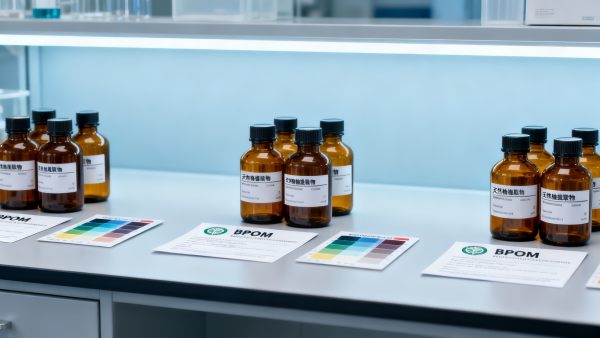
On April 25, 2026, Indonesia’s National Agency of Drug and Food Control (BPOM) issued Regulation No. 22/2026, mandating new labeling requirements for imported natural ingredients—including a mandatory ‘Microbial Resistance Profile’ declaration. This update directly affects exporters, ingredient suppliers, and regulatory compliance teams in the cosmetics, dietary supplement, and natural personal care sectors.
Event Overview
On April 25, 2026, BPOM published Permen BPOM No. 22/2026, requiring all imported natural ingredients to display a ‘Microbial Resistance Profile’ on product labels. The profile must specify inhibitory efficacy data against common challenge microorganisms—including Pseudomonas aeruginosa and Aspergillus niger—and be supported by test reports from BPOM-recognized laboratories. The regulation takes effect on October 1, 2026, and applies to all shipments cleared after that date.
Which Subsectors Are Affected
Direct Exporters (e.g., Chinese ingredient manufacturers & trading companies)
These entities are responsible for label compliance at point of entry. Non-compliant labels will result in customs rejection or rework delays. Impact includes immediate revision of multilingual label templates, technical dossier updates, and coordination with BPOM-accredited labs for new testing.
Raw Material Sourcing & Procurement Firms
Procurement teams sourcing natural ingredients for formulation (e.g., for ASEAN-based cosmetics or nutraceutical brands) must now verify supplier-provided microbial resistance data against BPOM’s accepted strain list and reporting format—adding a new layer to vendor qualification and documentation review.
Contract Manufacturers & Formulators
While not direct importers, contract manufacturers serving Indonesian clients may be asked to supply supporting microbial challenge data for finished products containing natural ingredients. This increases technical documentation burden and may trigger reformulation if baseline preservative systems lack documented efficacy against specified organisms.
Distribution & Regulatory Affairs Service Providers
Local representatives and regulatory consultants handling BPOM registration or import clearance must now validate microbial resistance claims as part of label review. Their scope of due diligence expands to include laboratory accreditation verification and report validity checks—not just linguistic or formatting compliance.
What Relevant Enterprises or Practitioners Should Focus On — And How to Respond Now
Confirm lab accreditation status before initiating testing
BPOM maintains a publicly updated list of recognized laboratories. Exporters should verify whether their current testing partners appear on the latest list (as of Q2 2026), and if not, identify and engage an approved lab early—given potential lead times for method validation and sample turnaround.
Map affected SKUs and prioritize high-volume or high-risk categories
Not all natural ingredients carry equal risk: water-based extracts, low-alcohol botanicals, and non-sterile powders are more likely to require robust microbial resistance data. Companies should triage their export portfolio to identify items most likely to face scrutiny under the new rule—and begin documentation updates for those first.
Align internal labeling workflows with BPOM’s prescribed terminology and structure
The regulation specifies exact phrasing for the ‘Microbial Resistance Profile’ section. Teams must ensure translations (especially into Bahasa Indonesia) match BPOM’s official wording—not generic equivalents—and that data presentation (e.g., log-reduction values, exposure time, test conditions) follows the format outlined in Annex I of Permen BPOM No. 22/2026.
Prepare for parallel documentation updates beyond labels
BPOM may request supporting test reports during post-clearance audits or registration renewals. Companies should retain full digital copies of accredited lab reports, including chain-of-custody records and method references, and integrate them into existing quality management systems ahead of the October 2026 deadline.
Editorial Perspective / Industry Observation
From industry perspective, this regulation signals BPOM’s increasing emphasis on functional preservative performance—not just ingredient origin or processing method—as a core safety criterion for natural ingredients. It reflects a broader regional shift toward outcome-based microbiological controls, especially in markets where ambient storage and variable distribution conditions heighten contamination risks.
Analysis来看, this is less a sudden enforcement pivot and more a formalization of expectations already emerging in BPOM’s pre-market review comments since late 2025. Its timing—six months before implementation—suggests BPOM intends it as a calibration step rather than a punitive measure, giving stakeholders time to adjust without disrupting trade flows.
Current attention should focus on how strictly BPOM enforces report validity (e.g., whether older tests conducted pre-regulation can be grandfathered) and whether exemptions apply for ingredients used at low inclusion levels or in inherently hostile matrices (e.g., high-ethanol tinctures). These details remain unconfirmed and warrant ongoing monitoring.
This regulation underscores that ‘natural’ no longer implies ‘microbiologically passive’ in Indonesia’s regulatory framework. For exporters and formulators, it marks a transition from compositional compliance to performance-based accountability—requiring tighter integration between R&D, QA, and regulatory operations.
Information Source: Official Gazette of BPOM Republic of Indonesia, Permen BPOM No. 22/2026 (issued April 25, 2026). Pending clarification: BPOM’s official list of accepted challenge organisms beyond P. aeruginosa and A. niger, and guidance on acceptable test methodologies (e.g., ISO 11930 vs. USP <51>).
Related Intelligence
- Natural IngredientsIndonesia BPOM Updates Natural Ingredients Import LabelingIndonesia BPOM Updates Natural Ingredients Import Labeling: New 'Microbial Resistance Profile' required for cosmetics, supplements & personal care imports—act now to avoid customs delays.
- Natural IngredientsEU CBAM Carbon Tariff Enters Enforcement Phase for Natural IngredientsEU CBAM Carbon Tariff enforcement starts Jan 2026 for natural ingredients — plant extracts & flavors must report verified carbon footprints to clear EU customs. Act now!
- Natural IngredientsIndonesia BPOM Tightens Import Rules for 3 Mushroom ExtractsIndonesia BPOM tightens import rules for Ganoderma lucidum, Grifola frondosa & Hericium erinaceus extracts — GMP + AOAC validation now mandatory from June 1, 2026. Act now!
The Morning Broadsheet
Daily chemical briefings, market shifts, and peer-reviewed summaries delivered to your terminal.
