
ANVISA’s New Traceability Rule for Botanical Extracts Enters Force in Brazil
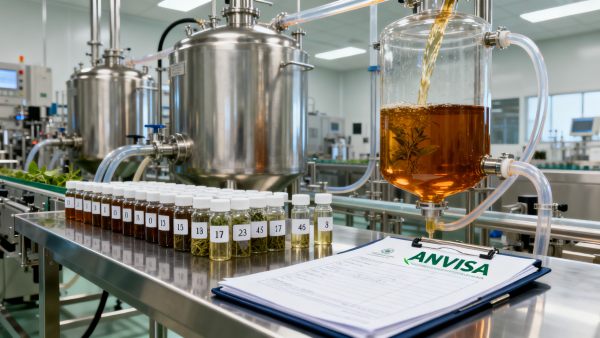
On April 27, 2026, Brazil’s National Health Surveillance Agency (ANVISA) implemented a new regulatory requirement mandating full traceability for imported botanical extracts—from finished product back to secondary raw material suppliers. This development directly affects exporters, importers, and supply chain stakeholders engaged in the trade of plant-based ingredients with the Brazilian market.
Event Overview
Effective April 27, 2026, ANVISA requires all importers of botanical extracts into Brazil to provide documented traceability covering the entire chain from final product to secondary raw material suppliers—including cultivation sites, primary processors, and key extraction process parameters. Non-compliant shipments face rejection at customs or mandatory batch recalls. The rule applies uniformly to all botanical extract imports, regardless of origin.
Industries Affected
Direct Exporters & Trading Companies
Exporters—particularly those based in China—must now align documentation and audit readiness with ANVISA’s two-tier supplier visibility standard. This increases pre-shipment preparation time, raises third-party audit frequency and scope, and adds complexity to registration renewals and product listings.
Raw Material Sourcing & Procurement Firms
Firms sourcing botanical materials for export must verify whether their upstream partners (e.g., farms, dryers, crude extractors) maintain records sufficient to satisfy ANVISA’s definition of ‘secondary supplier’. Gaps in farm-level documentation or lack of processing parameter logs may break the required chain.
Contract Manufacturers & Extract Producers
Manufacturers performing extraction or formulation must retain and be prepared to disclose validated process data—including solvent types, temperature ranges, duration, and yield metrics—for each production lot. These parameters are now part of the auditable traceability record, not just internal quality files.
Supply Chain & Compliance Service Providers
Third-party auditors, regulatory consultants, and logistics documentation specialists will see increased demand for ANVISA-specific traceability verification services. Their role shifts from general GMP/GDP support to targeted validation of tiered supplier mapping and process parameter traceability.
What Stakeholders Should Monitor and Do Now
Track official guidance on ‘secondary supplier’ definition
ANVISA has not yet published formal interpretive guidance clarifying whether ‘secondary supplier’ includes only contract processors or also extends to cooperative aggregators or regional collection centers. Stakeholders should monitor updates from ANVISA’s official portal and registered notifications.
Prioritize traceability readiness for high-volume botanical categories
Analysis shows that extracts derived from Camellia sinensis, Ginkgo biloba, Paullinia cupana (guarana), and Uncaria tomentosa (cat’s claw) represent the largest share of current botanical extract imports into Brazil. These categories warrant immediate documentation review and supplier engagement.
Distinguish between policy issuance and operational enforcement
Observably, initial enforcement may focus on new product registrations and high-risk batches rather than retroactive audits of existing inventories. Companies should avoid assuming blanket compliance deadlines apply equally across all entry points or product histories.
Update supplier questionnaires and audit checklists now
Current more suitable practice is to revise vendor due diligence tools to explicitly request evidence of cultivation location records, primary processing logs, and validated extraction parameters—not just certificates of analysis. Internal SOPs for import documentation should reflect this expanded scope before next shipment cycle.
Editorial Perspective / Industry Observation
This regulation is better understood as an enforcement signal than a one-time compliance milestone. From an industry perspective, it reflects ANVISA’s broader strategic shift toward upstream risk-based oversight—aligning with global trends seen in EU herbal medicine regulations and US FDA botanical guidance. It does not introduce novel scientific requirements, but significantly raises the evidentiary bar for supply chain transparency. Continued monitoring is warranted because: (1) ANVISA may issue sector-specific annexes later this year; (2) interpretation of ‘traceability completeness’ remains subject to port-of-entry discretion; and (3) parallel developments in Mercosur harmonization could extend similar expectations regionally.
Conclusion
ANVISA’s botanical extract traceability rule marks a structural tightening of import controls—not merely an administrative update. Its significance lies less in novelty and more in enforceability: it transforms previously voluntary best practices into mandatory, verifiable obligations. For affected enterprises, the current priority is not broad compliance overhauls, but targeted readiness in documentation lineage, supplier engagement, and process parameter retention. This rule is best interpreted as a calibration point—indicating where regulatory expectations now stand, and where they are likely to move next in South American health product markets.
Information Sources
Main source: Official ANVISA Ordinance No. [not publicly assigned in provided input], effective April 27, 2026.
Note: Definition of ‘secondary supplier’, implementation timelines for legacy products, and potential exemptions remain under observation and are not confirmed in currently available public documents.
Related Intelligence
- Botanical ExtractsANVISA’s New Traceability Rule for Botanical Extracts Enters Force in BrazilANVISA’s new traceability rule for botanical extracts takes effect April 27, 2026—learn how it impacts exporters, importers & suppliers in Brazil.
- Botanical ExtractsANVISA Extends Traceability for Botanical Extract Imports to Tier-2 SuppliersANVISA extends botanical extract traceability to tier-2 suppliers—key for Chinese exporters of herbal ingredients, supplements & cosmetics. Act now for July 2026 compliance.
- Botanical ExtractsANVISA Extends Traceability for Botanical Extracts to Tier-2 SuppliersANVISA extends botanical extract traceability to tier-2 suppliers—solvents, filter aids, adsorption media—effective Sept 1, 2026. Essential for exporters & supplement brands.
The Morning Broadsheet
Daily chemical briefings, market shifts, and peer-reviewed summaries delivered to your terminal.
