
Vietnam Tightens Energy Efficiency Rules for Smart Greenhouse Components
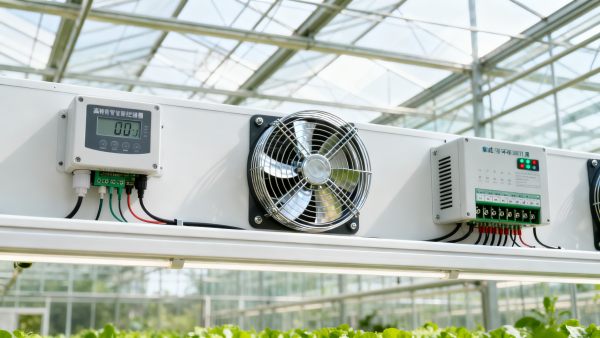
On April 27, 2026, Vietnam’s Ministry of Agriculture and Rural Development (MARD) issued Circular 12/2026/TT-BNNPTNT, raising minimum energy efficiency requirements for key smart greenhouse components—including intelligent thermostats, variable-frequency fans, and environmental controllers—to IE3 level (up from IE2). Effective May 1, 2026, the regulation mandates certified energy efficiency test reports issued by Vietnamese-accredited laboratories. Exporters, especially over 200 Chinese OEMs supplying greenhouse equipment to Vietnam, must now reassess compliance pathways. Importers in Vietnam are required to re-verify supplier qualifications before completing import registration—making this a high-priority update for agricultural technology exporters, component manufacturers, and supply chain service providers serving the Southeast Asian controlled-environment agriculture market.
Event Overview
Vietnam’s Ministry of Agriculture and Rural Development (MARD) published Circular 12/2026/TT-BNNPTNT on April 27, 2026. The circular upgrades mandatory energy efficiency standards for smart greenhouse temperature-control components—including intelligent thermostats, variable-frequency fans, and environmental controllers—from IE2 to IE3. It also requires that all such components be accompanied by energy efficiency test reports issued by laboratories accredited by Vietnam. The regulation enters into force on May 1, 2026. The measure directly affects more than 200 Chinese greenhouse equipment OEMs exporting to Vietnam. Vietnamese importers must re-validate their suppliers’ compliance documentation prior to import registration.
Which Subsectors Are Affected
Direct Export Trading Enterprises
These enterprises—especially those exporting smart greenhouse hardware from China to Vietnam—are directly impacted because their products must now meet IE3-level energy performance. Non-compliant shipments risk rejection at customs or failure to complete import registration. The requirement for Vietnam-issued test reports adds lead time and cost to export clearance.
Manufacturing & OEM Enterprises
OEMs producing temperature-control components for greenhouse systems face redesign or recalibration needs if current models only meet IE2. Since the regulation covers specific functional categories (e.g., variable-frequency fans), not entire greenhouse units, manufacturers must assess individual component-level compliance—not system-level performance.
Supply Chain & Certification Service Providers
Third-party testing labs, certification consultants, and logistics firms supporting cross-border agri-tech trade must adapt to new documentation expectations. Vietnamese-accredited lab reports are non-transferable from other jurisdictions—even if equivalent international tests (e.g., IEC 60034-30-1) were previously accepted. This shifts demand toward local or MARD-recognized conformity assessment pathways.
What Relevant Companies or Practitioners Should Focus On and How to Respond
Verify component-level IE classification against Vietnamese accreditation scope
IE3 is defined under IEC 60034-30-1, but MARD’s implementation depends on whether the testing lab’s accreditation explicitly covers “smart greenhouse environmental control devices” under Circular 12/2026. Exporters should confirm with labs whether test reports will be accepted for import registration—not just technically compliant.
Reassess supplier qualification timelines ahead of May 1, 2026
Vietnamese importers must submit updated supplier documentation—including new test reports—to complete import registration. Given typical lab turnaround times (2–4 weeks), verification should begin immediately—even for products already in transit—as retroactive acceptance is not stipulated in the circular.
Map affected SKUs by functional category, not product name
The regulation applies to “intelligent thermostats, variable-frequency fans, and environmental controllers”—not broad categories like “greenhouse automation systems.” Companies should audit technical specifications (e.g., motor type, control logic, frequency modulation capability) to determine which SKUs fall under scope—not rely on marketing labels.
Monitor MARD’s official guidance on transitional arrangements
The circular does not specify grace periods for existing inventory or pending shipments. Observably, no transitional provisions were included in the published text—meaning full compliance is expected as of May 1, 2026. Stakeholders should track MARD’s website and official notices for any clarifications or administrative flexibility.
Editorial Perspective / Industry Observation
This regulatory update is best understood not as an isolated technical amendment, but as a signal of Vietnam’s broader alignment with ASEAN energy efficiency harmonization efforts—and its growing emphasis on verifiable, locally validated compliance for agricultural infrastructure imports. Analysis shows that MARD is increasingly treating smart greenhouse components as energy-using products (EUPs), subjecting them to frameworks traditionally applied to industrial motors and HVAC equipment. From an industry perspective, this reflects a shift from voluntary sustainability signaling toward enforceable technical market access conditions. It is currently more of a policy signal than a fully implemented enforcement regime—but given the hard deadline and explicit lab accreditation requirement, it has immediate operational weight.
Current more appropriate interpretation is that this marks the beginning of formalized technical barriers for agri-tech hardware entering Vietnam—not merely a procedural update. Continued attention is warranted, particularly regarding how MARD interprets “environmental controller” scope and whether future revisions extend similar requirements to lighting, irrigation controllers, or data acquisition modules.
Conclusion: This regulation establishes a new baseline for market access in Vietnam’s rapidly expanding smart agriculture equipment segment. It does not represent a temporary adjustment but rather institutionalizes energy performance as a non-negotiable entry condition for core climate-control components. For exporters and suppliers, proactive verification—not reactive compliance—is now operationally essential.
Information Source: Official text of Circular 12/2026/TT-BNNPTNT, issued by Vietnam’s Ministry of Agriculture and Rural Development (MARD) on April 27, 2026. No supplementary guidance or implementation notes have been published as of the effective date announcement. Ongoing observation is recommended for any MARD-issued FAQs, accreditation updates, or enforcement notices following May 1, 2026.
Related Intelligence
- Smart GreenhouseVietnam Tightens Energy Efficiency Rules for Smart Greenhouse ComponentsVietnam tightens energy efficiency rules for smart greenhouse components—IE3 compliance now mandatory for thermostats, VFD fans & controllers from May 1, 2026. Act now!
- Smart GreenhouseVietnam Tightens Energy Efficiency Rules for Smart Greenhouse ControlsVietnam tightens energy efficiency rules for smart greenhouse controls—QCVN 159:2026 Level 2 now mandatory from May 1, 2026. Act now to ensure compliance and market access.
- Smart GreenhouseVietnam Tightens Energy Certification for Smart Greenhouse Climate ControlsVietnam ENERGY LABEL 2.0 now mandates Level 3 energy certification for smart greenhouse climate controls—act now to avoid shipment delays and ensure market access.
The Morning Broadsheet
Daily chemical briefings, market shifts, and peer-reviewed summaries delivered to your terminal.
