
FAO Adds 6 Chinese Grain Silo Makers to Global Pre-Qualified List
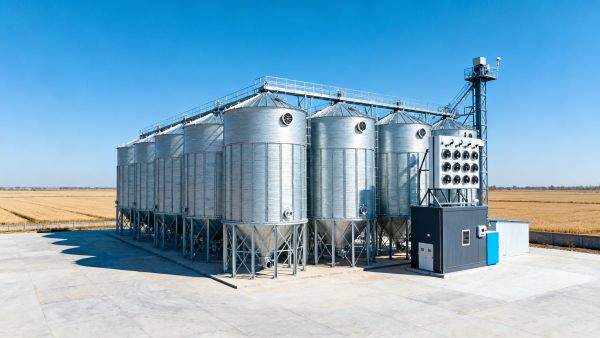
On 27 April 2026, the Food and Agriculture Organization of the United Nations (FAO) updated its Global Grain Storage Equipment Pre-Qualified Supplier List, adding six Chinese manufacturers of steel grain silos, intelligent ventilation systems, and grain condition monitoring equipment. The update directly affects stakeholders in agricultural infrastructure procurement, international development contracting, and grain storage equipment export—particularly those engaged in FAO-supported or World Bank–funded projects across Africa, Latin America, and Southeast Asia.
Event Overview
On 27 April 2026, the FAO published an updated version of its Global Grain Storage Equipment Pre-Qualified Supplier List. Six manufacturers headquartered in Henan, Jiangsu, and Shandong provinces were newly included. All are certified to supply steel silos, smart ventilation units, and grain monitoring devices for FAO-led or World Bank–financed grain storage infrastructure projects without requiring additional technical verification. The list is publicly accessible and serves as a reference for procurement entities in FAO partner countries.
Which Subsectors Are Affected
International Development Contractors & EPC Firms
These firms routinely bid on grain storage infrastructure projects funded by multilateral development banks or UN agencies. With pre-qualified Chinese suppliers now formally listed, contractors gain streamlined access to vetted equipment vendors—reducing technical due diligence time and lowering tender submission risk. Impact manifests in faster proposal preparation, stronger compliance positioning, and improved competitiveness in bids tied to FAO or World Bank financing windows.
Grain Storage Equipment Exporters & Distributors
Exporters sourcing from or representing Chinese manufacturers may see increased demand for FAO-compliant product documentation and traceability records. The listing does not automatically guarantee orders, but it elevates shortlisted vendors’ credibility in public tenders issued by national粮储 agencies in low- and middle-income countries. Impact includes higher scrutiny on conformity with FAO’s technical specifications (e.g., ISO 21872 for silo structural safety, IEC 61508 for monitoring system functional safety), and tighter alignment between commercial offerings and project-level procurement templates.
Domestic Chinese Manufacturing Suppliers
Manufacturers outside the newly listed group face intensified benchmarking pressure—not just on product specs, but on documentation rigor, third-party testing transparency, and responsiveness to international audit requests. The listing confirms that FAO’s pre-qualification now explicitly covers integrated systems (e.g., silo + ventilation + monitoring), not just standalone components. This shifts competitive emphasis toward system interoperability and after-sales service capability in target regions.
What Relevant Enterprises or Practitioners Should Focus On
Monitor official FAO procurement notices and country-level tender pipelines
The listing enables eligibility—but does not trigger automatic awards. Stakeholders should track FAO’s Procurement Notices portal and national tender platforms in priority countries (e.g., Ethiopia, Nigeria, Honduras, Vietnam) for upcoming grain infrastructure calls referencing the pre-qualified list.
Verify alignment with FAO’s current technical annexes and regional adaptation requirements
Pre-qualification is conditional on adherence to FAO’s latest Technical Specifications for Grain Storage Equipment (Revision 2025). These include climate-specific ventilation design parameters, corrosion resistance standards for humid tropics, and data interface protocols for remote grain monitoring. Suppliers must confirm their documented test reports and certifications match these criteria—not just general ISO or CE marks.
Distinguish between policy signal and procurement reality
This update reflects FAO’s formal recognition of technical capacity—not a shift in funding volume or geographic allocation. While it strengthens bidding position, actual contract wins still depend on price competitiveness, local partnership strength, and demonstrated field performance. Avoid overinterpreting the list as a de facto market access guarantee.
Prepare localized technical dossiers and bilingual support materials
Procurement evaluators in recipient countries often require equipment documentation in English and local language (e.g., French for West Africa, Spanish for Central America). Firms should prioritize translating operation manuals, maintenance schedules, and calibration certificates—not only for compliance, but to reduce evaluation friction during tender review.
Editorial Perspective / Industry Observation
Observably, this update functions less as a sudden market opening and more as a formalization of an ongoing trend: the gradual integration of Chinese grain storage technology into multilateral development supply chains. Analysis shows the inclusion focuses on system-level capabilities—not just hardware—indicating FAO’s increasing emphasis on operational reliability and post-installation monitoring. From an industry perspective, the move signals growing institutional confidence in standardized Chinese engineering outputs, but remains contingent on sustained adherence to evolving FAO verification protocols. It is better understood as a procedural milestone than a commercial inflection point—valuable for pipeline visibility, yet requiring parallel investment in localization, service logistics, and technical communication.
Conclusion
FAO’s 27 April 2026 update to its global pre-qualified supplier list marks a procedural advancement in how Chinese grain storage equipment gains institutional recognition for international development projects. Its primary significance lies in reducing technical entry barriers—not in generating immediate revenue. For stakeholders, the event underscores the importance of aligning product documentation, testing evidence, and service frameworks with multilateral procurement expectations. Currently, it is more accurately interpreted as a validation of compliance readiness than as an indicator of near-term market expansion.
Information Sources
Main source: FAO Global Grain Storage Equipment Pre-Qualified Supplier List, Version updated 27 April 2026, publicly released via FAO Procurement Portal.
Note: Ongoing observation is required regarding implementation patterns—e.g., frequency of actual procurements referencing the list, regional uptake rates, and any subsequent revisions to FAO’s qualification criteria.
Related Intelligence
- Grain Silos & StorageFAO Adds 6 Chinese Grain Silo Makers to Global Pre-Qualified ListFAO pre-qualifies 6 Chinese grain silo makers for global projects—boosting export opportunities in Africa, Latin America & SEA. Learn implications now.
- Grain Silos & StorageFAO Adds 6 Chinese Grain Silo Makers to Global White ListFAO adds 6 Chinese grain silo makers to its Global White List — boosting credibility for steel silos & smart ventilation systems in Africa, LATAM & SEA.
- Grain Silos & StorageFAO Adds 6 Chinese Grain Silo Makers to 2026 Global ListFAO adds 6 Chinese grain silo makers to its 2026 Global Recommended List—boosting credibility for exporters, OEMs & contractors in Africa/Latin America.
The Morning Broadsheet
Daily chemical briefings, market shifts, and peer-reviewed summaries delivered to your terminal.
