
Asia–Middle East Aeration & Water Tech Container Freight Up 18%
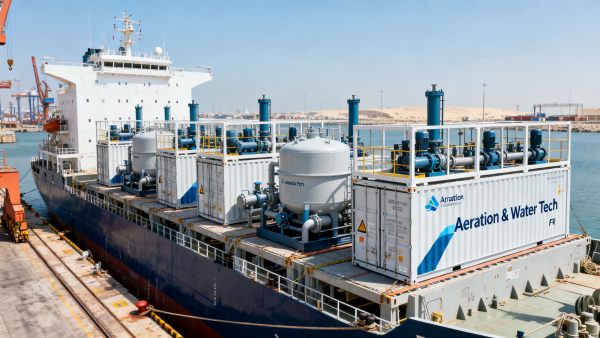
On 28 April 2026, THE Alliance and Ocean Alliance jointly announced an 18% increase in surcharges for Aeration & Water Tech specialized containers (OT/FR) on the Asia–Middle East shipping route, effective 1 May 2026. The adjustment directly affects exporters of large-scale water treatment equipment—including aerators and pump systems—from China to the Middle East, prompting supply chain recalibration among manufacturers, traders, and logistics service providers.
Event Overview
On 28 April 2026, THE Alliance and Ocean Alliance issued a joint notice confirming that, starting 1 May 2026, ocean freight surcharges for Aeration & Water Tech dedicated specialty containers (OT/FR) on the Asia–Middle East trade lane will rise by 18%. The carriers cited extended voyage durations and intensified port congestion—both resulting from ongoing Red Sea rerouting—as the primary justification. No further details regarding duration, scope exceptions, or regional sub-route variations were provided in the official announcement.
Industries Affected by Segment
Direct Exporters (Manufacturers & Trading Companies)
Companies exporting aerators, water treatment pump assemblies, and other oversized water infrastructure equipment from China to the Middle East face immediate cost pressure. Since OT/FR containers are purpose-built for such cargo—and not substitutable with standard dry containers—the surcharge applies directly to shipped units. Impact manifests as higher landed costs, narrower export margins, and potential delays in contract fulfillment if pre-booking capacity is unavailable.
Equipment Manufacturers (OEMs & Tier-1 Suppliers)
Manufacturers integrating third-party logistics into their delivery terms—or quoting DAP/DPU to Middle Eastern buyers—must now revise pricing models. The 18% surcharge is not absorbed by carriers but passed through via freight invoices; therefore, it alters unit-level cost-of-goods-sold calculations for export-bound batches scheduled post-1 May. This may trigger renegotiation of existing purchase orders or require revised Incoterms alignment with overseas partners.
Logistics & Freight Forwarding Providers
Forwarders handling project cargo shipments for water technology clients must adjust rate cards, update client advisories, and prioritize pre-May 2026 booking confirmations. As OT/FR slots are limited and subject to carrier allocation rules, forwarders face heightened operational complexity in slot reservation, documentation compliance (e.g., container-specific stowage plans), and real-time port congestion monitoring—especially at key transshipment hubs like Jebel Ali and Port Said.
Key Considerations and Recommended Actions for Stakeholders
Monitor Official Carrier Communications for Duration and Scope Clarity
The announcement specifies an effective date but does not state whether the surcharge is temporary or subject to review. Stakeholders should track subsequent updates from THE Alliance and Ocean Alliance—particularly any mention of review timelines, conditional extensions, or exemptions for specific ports or shipment windows.
Prioritize Pre-1 May 2026 Booking for Committed Shipments
Given the 18% uplift and constrained availability of OT/FR units, shippers with confirmed deliveries between mid-May and July 2026 should secure verified space allocations before 1 May. Carriers typically allocate OT/FR capacity early; delayed bookings risk rollovers or forced use of alternative (and often non-compliant) container types.
Review Incoterms and Freight Cost Allocation in Ongoing Contracts
Contracts referencing FOB or EXW terms shift freight cost responsibility to the buyer—but only if the agreed price explicitly excludes surcharges beyond base ocean freight. Parties should verify whether recent quotations or open POs include language covering ‘all applicable carrier-imposed surcharges’, especially those tied to geopolitical routing events.
Assess Feasibility of Consolidated or Staggered Shipments
For manufacturers managing multiple small-batch deliveries, consolidating shipments into fewer, fuller OT/FR loads—where technically and logistically viable—may offset per-unit cost increases. However, this requires coordination across production scheduling, warehouse staging, and customs documentation timelines.
Editorial Observation / Industry Perspective
Observably, this surcharge adjustment functions less as an isolated tariff change and more as a signal of sustained structural pressure on Asia–Middle East project cargo lanes. While the stated cause—Red Sea rerouting—is well-documented, the targeted application to Aeration & Water Tech containers suggests carriers are refining surcharge mechanisms to reflect equipment-specific handling complexity, not just distance or fuel. Analysis shows this may presage similar adjustments on other specialized routes (e.g., wind turbine components or HVAC modules) where vessel space and terminal infrastructure constraints converge. From an industry perspective, it underscores that geopolitical disruptions increasingly translate into granular, product-category-specific cost impacts—not just broad freight index movements.
Consequently, this development is better understood as an early indicator of tightening capacity for engineered industrial cargo—not yet a full market inflection, but one requiring active tracking over Q2 2026.
In summary, the 18% surcharge on Aeration & Water Tech specialty containers reflects an operational response to persistent Red Sea-related routing challenges, with tangible implications for exporters, OEMs, and logistics providers engaged in water infrastructure trade between Asia and the Middle East. It is neither a short-term anomaly nor a permanent fixture—at present, it is best interpreted as a time-bound cost adjustment demanding tactical supply chain adaptation, not strategic overhaul.
Source: Joint announcement by THE Alliance and Ocean Alliance, published 28 April 2026. Note: Duration of the surcharge, applicability to intra-Middle East feeder services, and possible revisions remain under observation.
Related Intelligence
- Aeration & Water TechAsia–Middle East Aeration & Water Tech Container Freight Up 18%Aeration & Water Tech container freight surges 18% on Asia–Middle East route—urgent implications for exporters, OEMs & forwarders. Act now.
- Aeration & Water TechFDA Updates Cybersecurity Guidance for Aeration & Water Tech DevicesFDA's new cybersecurity guidance for aeration & water tech devices mandates UL 2900-2-1 and SBOM compliance by Q1 2027 — act now to secure U.S. market access.
- Aeration & Water TechFDA Updates Cybersecurity Guidance for Aeration & Water Tech DevicesFDA’s new cybersecurity guidance for aeration & water tech devices mandates immediate compliance—secure firmware, audit logs & password controls required for U.S. market access.
The Morning Broadsheet
Daily chemical briefings, market shifts, and peer-reviewed summaries delivered to your terminal.
