

The Authority in Global Agricultural Chemistry & Bio-Resources
Commercial LED grow lights wholesale: how to judge real efficiency
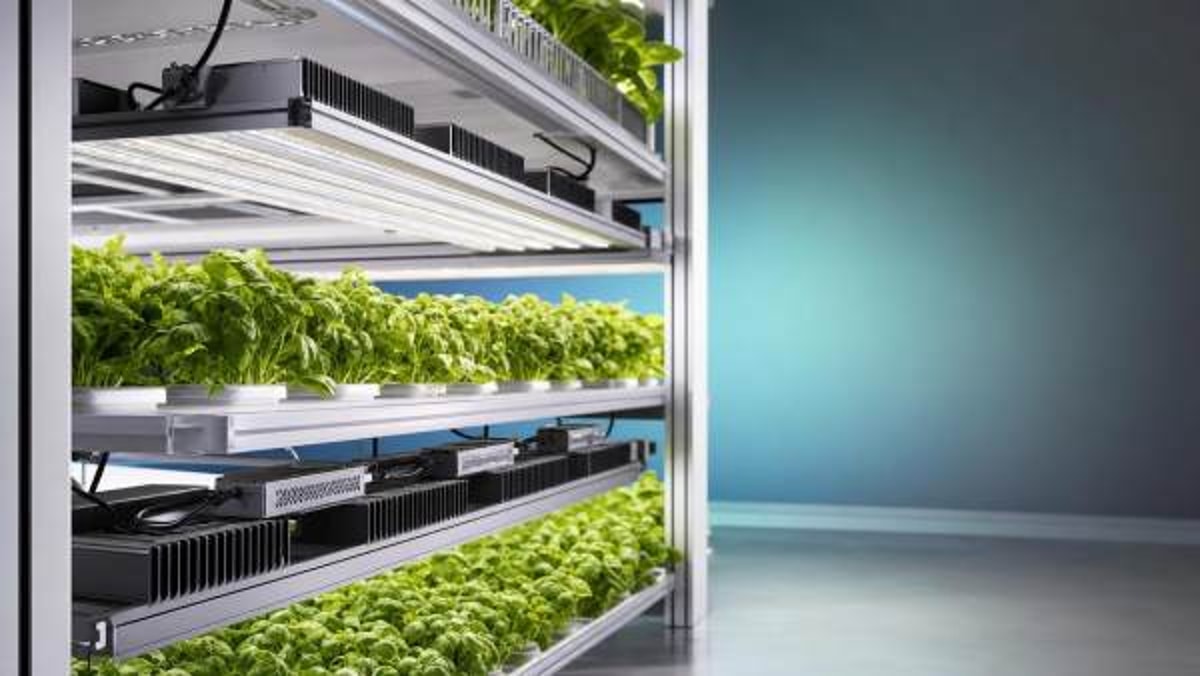
In commercial led grow lights wholesale, headline efficacy figures rarely tell the full story. For enterprise buyers comparing suppliers, real efficiency depends on PPFD uniformity, driver quality, thermal management, spectrum design, and verified testing standards. This article explains how to judge true performance beyond marketing claims, helping decision-makers reduce procurement risk and invest in lighting systems that deliver measurable cultivation returns.
For industrial growers, vertical farming operators, greenhouse developers, and procurement teams serving regulated agricultural supply chains, lighting is no longer a simple fixture purchase. It is a 3- to 7-year infrastructure decision that affects yield consistency, crop cycles, labor planning, HVAC load, and operating cost per square meter. In commercial led grow lights wholesale, the supplier that advertises the highest efficacy number is not always the supplier delivering the best business outcome.
This matters especially in B2B environments where production targets are linked to contract farming, ingredient extraction, seedling propagation, feed crop cultivation, or controlled-environment agriculture tied to downstream processing. A poorly specified lighting system can create 10% to 25% variation in canopy performance, uneven plant morphology, and avoidable maintenance interruptions. Decision-makers need a disciplined framework that goes beyond watts and brochure claims.
Why “efficiency” in wholesale grow lighting is often misunderstood
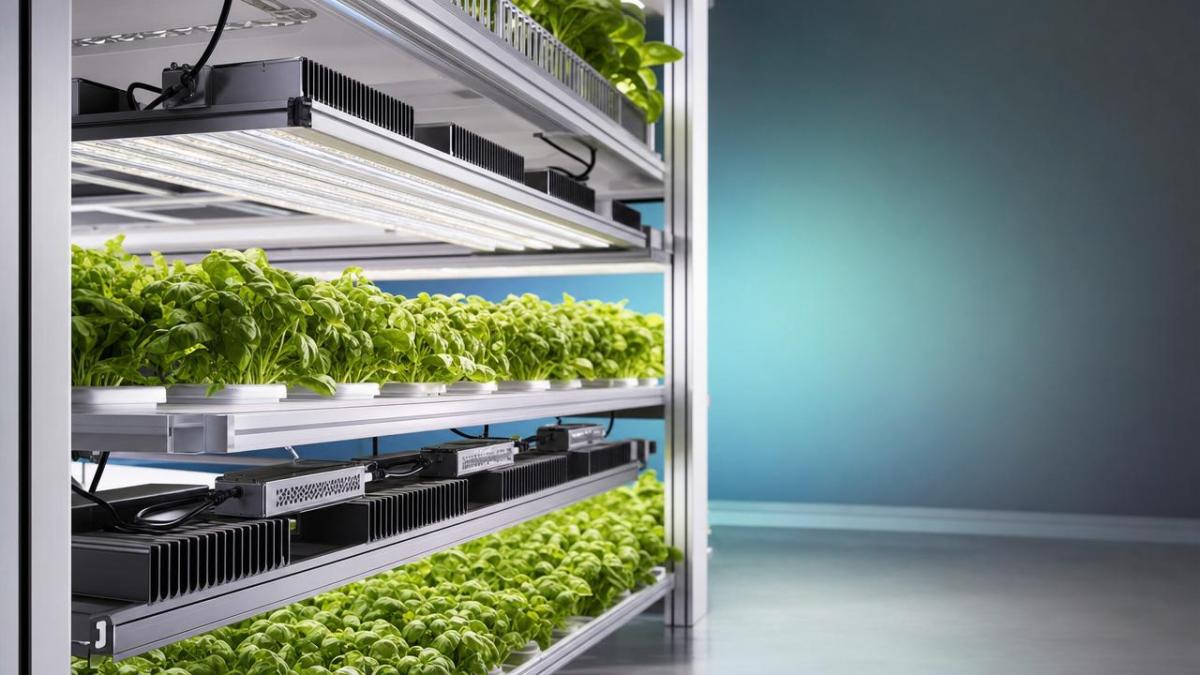
In commercial led grow lights wholesale, the term efficiency is often reduced to one figure: PPE, usually expressed in µmol/J. PPE is important, but on its own it is incomplete. A fixture can post a strong laboratory efficacy result under controlled conditions and still perform poorly in a commercial room if the light distribution is uneven, the driver degrades early, or heat causes output drift over time.
The difference between fixture efficacy and cultivation efficiency
Fixture efficacy describes how efficiently electrical power is converted into photosynthetically useful photons. Cultivation efficiency is broader. It includes photon delivery to the canopy, daily light integral stability, crop-stage suitability, and the operational impact of fixture reliability. For a commercial buyer, the second metric is the more strategic one because it determines production output, not just laboratory performance.
A practical procurement review should separate at least 4 layers: rated PPE, installed PPFD average, PPFD uniformity, and system durability over 20,000 to 50,000 operating hours. If a vendor provides only one number, the proposal is not yet decision-ready.
Why enterprise buyers should distrust isolated headline numbers
A headline efficacy figure may be measured at a specific input voltage, ambient temperature, dimming level, or with a configuration that differs from the version offered in volume orders. In commercial led grow lights wholesale, this creates a frequent mismatch between sample performance and delivered batch performance. Small specification gaps can compound across 500, 2,000, or 10,000 fixtures.
The table below shows why a single top-line number is not enough when comparing wholesale lighting suppliers for commercial agriculture projects.
The key conclusion is simple: in commercial led grow lights wholesale, real efficiency is system-level efficiency. Buyers who evaluate only PPE often underestimate hidden costs such as re-lighting, maintenance labor, crop inconsistency, and higher cooling loads.
A buyer’s first screening checklist
- Request tested PPE and total PPF for the exact production configuration.
- Ask for PPFD simulation maps at the intended mounting height, such as 30 cm, 60 cm, or 90 cm.
- Confirm input voltage range, especially for 120V, 240V, 277V, or 380V installations.
- Review ambient operating temperature limits, ideally across 0°C to 40°C or wider if needed.
- Check lumen maintenance or photon maintenance expectations at 36,000 and 50,000 hours.
The five technical factors that reveal true performance
When evaluating commercial led grow lights wholesale, most technical disputes can be resolved by examining five core factors. Together, they show whether a fixture is suitable for serious production environments or merely optimized for sales literature.
1. PPFD uniformity across the active canopy
Uniformity determines whether all plants receive usable and consistent light. In commercial cultivation rooms, an average PPFD of 900 µmol/m²/s may look attractive, but if edge zones drop to 550 while center zones exceed 1,150, crop response will diverge. This can lead to uneven height, inconsistent flowering, or variable active compound development in specialty crops.
What to request
Ask for a point-by-point PPFD map based on your real room dimensions, racking layout, and mounting height. A useful review includes minimum, maximum, average, and a clear uniformity ratio. Buyers often target a more balanced spread rather than a peak-heavy reading that looks strong on paper.
2. Driver quality and electrical stability
The driver is one of the most overlooked components in commercial led grow lights wholesale. Yet driver failure is a common reason for premature service calls. In large installations, even a 2% to 3% early failure rate becomes operationally expensive when access equipment, technician time, and crop disruption are included.
Enterprise buyers should review power factor, total harmonic distortion, dimming compatibility, surge protection level, and thermal behavior. For multi-zone facilities, stable dimming from 0-10V or controller integration can be more valuable than a small gain in advertised efficacy.
3. Thermal management and long-term output retention
A fixture tested at 25°C ambient may not behave the same way inside a warm greenhouse aisle or sealed grow room. Heat affects diode junction temperature, driver life, and photon maintenance. If thermal design is weak, output can decline faster than procurement teams expect, especially in 16- to 20-hour photoperiod operations.
Ask whether the manufacturer can explain heat sink design, driver placement, and expected output retention under realistic operating conditions. A lower-maintenance system with better thermal stability may outperform a nominally more efficient option over 24 to 36 months.
4. Spectrum design matched to crop and business goals
Not all commercial crops require the same light recipe. Seedling propagation, leafy greens, vine crops, medicinal plants, and mother stock can respond differently to blue, red, far-red, and white-light balance. In commercial led grow lights wholesale, buyers should avoid spectrum decisions based only on generic “full spectrum” claims.
The right question is whether the spectrum fits the crop stage and production objective. A nursery may prioritize compact morphology and rooting. A biomass-focused operation may care more about canopy penetration and cycle speed. This should be discussed before price negotiation, not after purchase.
5. Verified testing and documentation quality
A serious supplier should provide test documentation that is specific, recent, and understandable by a procurement or engineering team. Buyers should look for photometric or horticultural test reports, environmental ratings, electrical safety declarations, and clear batch specifications. If the test report and the offered SKU do not match, the risk increases immediately.
The table below can be used as a technical diligence framework when reviewing suppliers in commercial led grow lights wholesale.
For enterprise procurement teams, these five areas often explain more real-world performance variation than a 0.1 or 0.2 difference in advertised PPE. This is where disciplined supplier comparison creates value.
How to compare wholesale suppliers without increasing procurement risk
In commercial led grow lights wholesale, supplier comparison should follow a staged process. Price comparison is only useful after technical equivalence has been established. Otherwise, lower pricing may simply reflect lower-grade drivers, thinner heat sinks, inconsistent diode bins, or weaker quality control.
Use a 3-stage evaluation model
- Technical screening: confirm PPF, PPE, PPFD map, electrical input, control compatibility, and environmental rating.
- Commercial screening: compare MOQ, lead time, spare parts policy, warranty terms, and packaging for export conditions.
- Validation screening: test pilot units for 2 to 6 weeks in one production zone before committing to full rollout.
This approach is especially relevant for institutional buyers, contract growers, and industrial agriculture groups that must protect continuity of supply. A 500-fixture purchase and a 5,000-fixture purchase should not be managed with the same level of assumption.
Questions that reveal supply chain maturity
Beyond the fixture itself, buyers should examine the supplier’s production discipline. Ask about batch traceability, incoming component control, replacement parts availability, and realistic lead times such as 3 to 5 weeks for standard orders or 6 to 10 weeks for custom configurations. In wholesale projects, a good product with poor delivery control can still become a procurement failure.
Key procurement checks
- Can the supplier maintain diode and driver consistency across repeat orders?
- Is there a defined process for handling transit damage, DOA units, and warranty claims?
- Are replacement drivers or bars available within a 7- to 14-day service window?
- Can documentation support customs, technical review, and internal CAPEX approval?
For large organizations, these checks are not administrative details. They directly affect installation schedules, commissioning windows, and return on invested capital.
Common buying mistakes in commercial LED grow lights wholesale
Even experienced buyers can misjudge lighting systems when purchase pressure is high. The most common errors are not technical ignorance, but incomplete evaluation frameworks.
Mistake 1: Comparing only price per fixture
A lower fixture price can be offset quickly by 12 to 18 months of extra maintenance, higher room temperatures, or lower crop uniformity. Commercial buyers should compare cost per delivered photon, cost per square meter, and expected service burden, not just unit cost.
Mistake 2: Ignoring control and integration requirements
If dimming protocols or facility control systems are not aligned before purchase, retrofitting can become expensive. This is a frequent issue in multi-room operations where different crop stages require separate lighting schedules over 14-, 16-, or 18-hour cycles.
Mistake 3: Accepting generic test reports
A report that does not match the delivered configuration offers limited procurement protection. Buyers should verify whether the diode set, power level, lens or cover option, and driver model are identical to the ordered product. In commercial led grow lights wholesale, small deviations can create measurable operating differences.
Mistake 4: Treating warranty length as proof of reliability
A 5-year warranty may sound reassuring, but its value depends on claim response time, spare stock policy, and responsibility for labor or shipping. Buyers should ask how warranty support works in practice, especially across borders and multiple cultivation sites.
What decision-makers should prioritize before issuing a wholesale order
Before confirming a large lighting order, enterprise buyers should align technical, financial, and operational stakeholders. The best procurement decisions are made when agronomy, engineering, and sourcing teams review the same performance assumptions. This reduces the risk of buying a fixture that satisfies one department but creates downstream issues for another.
A practical approval framework
Use a short approval matrix built around 6 checks: crop target PPFD, room layout fit, thermal impact, electrical compatibility, documentation quality, and support response time. If one of these areas is unresolved, the order should remain conditional until clarified.
For organizations in controlled agriculture, seedling production, and primary industrial cultivation, this discipline supports stronger CAPEX decisions and more reliable production planning. In commercial led grow lights wholesale, the most efficient fixture is the one that maintains stable crop performance, predictable service intervals, and credible documentation from quotation to installation.
AgriChem Chronicle serves decision-makers who need more than promotional product language. When evaluating wholesale grow lighting for commercial agriculture, focus on verified photon delivery, uniformity, component integrity, thermal resilience, and supplier execution. That is how real efficiency is judged in a way that protects yield, operating budgets, and procurement accountability.
If your team is reviewing commercial led grow lights wholesale options and needs a more rigorous comparison framework, consult ACC for deeper technical analysis, supplier evaluation guidance, and sector-focused procurement insight. Contact us to discuss your application, request a tailored assessment approach, or explore more solutions for industrial cultivation systems.
Related Intelligence
- Climate Control & VentilationCommercial LED grow lights wholesale: how to judge real efficiencyCommercial led grow lights wholesale: learn how to judge real efficiency beyond headline PPE by comparing PPFD uniformity, driver quality, thermal design, and verified testing.
- Climate Control & VentilationClimate control systems for greenhouse in humid zones: key tradeoffsClimate control systems for greenhouse operations in humid zones require smart tradeoffs. Explore energy, dehumidification, airflow, and automation factors to choose a more reliable, cost-effective solution.
- Climate Control & VentilationClimate control systems for greenhouse: sizing mistakes to avoidClimate control systems for greenhouse projects fail when loads are guessed. Learn the top sizing mistakes, compare options, and protect crop performance, energy efficiency, and budget.
The Morning Broadsheet
Daily chemical briefings, market shifts, and peer-reviewed summaries delivered to your terminal.
