

The Authority in Global Agricultural Chemistry & Bio-Resources
Climate control systems for greenhouse in humid zones: key tradeoffs
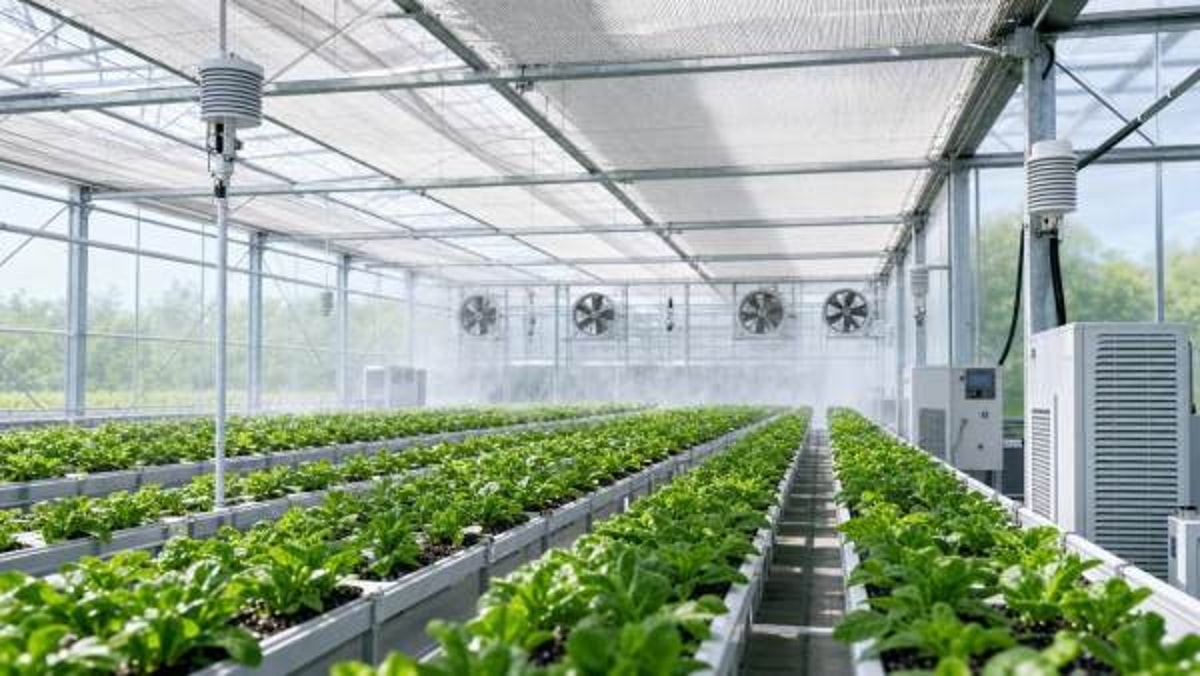
In humid production regions, choosing climate control systems for greenhouse operations demands more than cooling capacity alone. Technical evaluators must balance dehumidification efficiency, disease-pressure reduction, energy consumption, airflow uniformity, and integration with automation platforms. This article examines the key tradeoffs that influence system performance, compliance, and lifecycle cost, helping industrial growers and procurement teams make evidence-based decisions under high-moisture conditions.
What climate control systems for greenhouse operations include
For technical evaluators, climate control systems for greenhouse facilities are not a single machine but an integrated environmental management architecture. In humid zones, that architecture typically includes ventilation fans, evaporative or mechanical cooling, heating loops, circulation fans, dehumidification functions, sensors, shading, control software, and sometimes thermal storage or energy curtains. The purpose is to keep temperature, relative humidity, vapor pressure deficit, CO₂ concentration, and leaf-surface conditions inside a target operating envelope that supports crop quality and biosecurity.
Humidity changes the performance logic of every subsystem. A fan that works well in a dry climate may simply move saturated air in coastal or tropical regions. An evaporative pad may lower temperature yet worsen condensation risk if nighttime moisture removal is weak. A heating system sized for winter comfort may still be inadequate for humidity control because latent moisture management often depends on combining heat with air exchange. That is why climate control systems for greenhouse use in wet regions should be evaluated as coordinated process systems rather than isolated products.
Why humid zones create a different engineering challenge
In humid production belts, greenhouses face a narrow operating window. External air often arrives with high moisture content, so ventilation alone does not always remove enough water vapor. At the same time, crops transpire continuously, irrigation adds more moisture, and dense canopies restrict internal airflow. When the air nears saturation, transpiration slows, plant cooling weakens, and fungal pressure can escalate quickly. Powdery mildew, Botrytis, bacterial leaf disorders, and post-harvest quality defects become more likely under persistent leaf wetness or poor vapor pressure control.
This matters across the broader primary industries landscape covered by technical journals and procurement teams. Whether the crop is high-value vegetables, medicinal plants, seedling material, or controlled-environment inputs for downstream processing, moisture instability can affect consistency, traceability, and compliance. For organizations operating under strict quality frameworks, climate control systems for greenhouse assets must therefore be judged not only by peak cooling output but by their ability to sustain repeatable environmental performance under variable weather and utility conditions.
Core tradeoffs that shape system selection
Cooling versus dehumidification
The first tradeoff is straightforward but often underestimated: the coolest greenhouse is not always the healthiest greenhouse. Ventilation and evaporative cooling can reduce air temperature effectively, but in already humid air they may deliver limited latent moisture removal. Mechanical refrigeration or dedicated dehumidification can reduce absolute humidity more reliably, yet these options generally raise capital cost and electrical demand. Evaluators should model both sensible and latent loads instead of relying on temperature design alone.
Energy efficiency versus crop risk reduction
Lower-energy systems can look attractive on paper, especially where electricity prices are volatile. However, a system that saves power while allowing frequent condensation may increase losses through disease, downgraded yield, and sanitation interventions. In humid regions, lifecycle analysis should assign financial value to avoided crop loss, lower pesticide dependency, and reduced emergency labor. The best climate control systems for greenhouse investment often show their value through operational stability rather than utility savings alone.
Ventilation rate versus airflow uniformity
High air exchange can improve heat removal, but poor internal distribution still creates wet microclimates. Dead zones behind crop rows, corners, or structural members often become the first sites of disease pressure. Horizontal airflow fans, ducted air delivery, and compartmentalized controls can improve uniformity, though they add design complexity and maintenance points. Technical teams should request airflow mapping, not just fan capacity data.
Automation sophistication versus maintainability
Advanced controls can coordinate vents, heating, circulation, and dehumidification based on sensor inputs and predictive models. This is highly valuable in humid climates because system timing is critical. Yet increased automation also requires sensor calibration, communications reliability, and operator training. A sophisticated platform that local staff cannot maintain may underperform a simpler but robust control strategy. For this reason, climate control systems for greenhouse projects should be assessed for serviceability, spare parts access, and software interoperability.
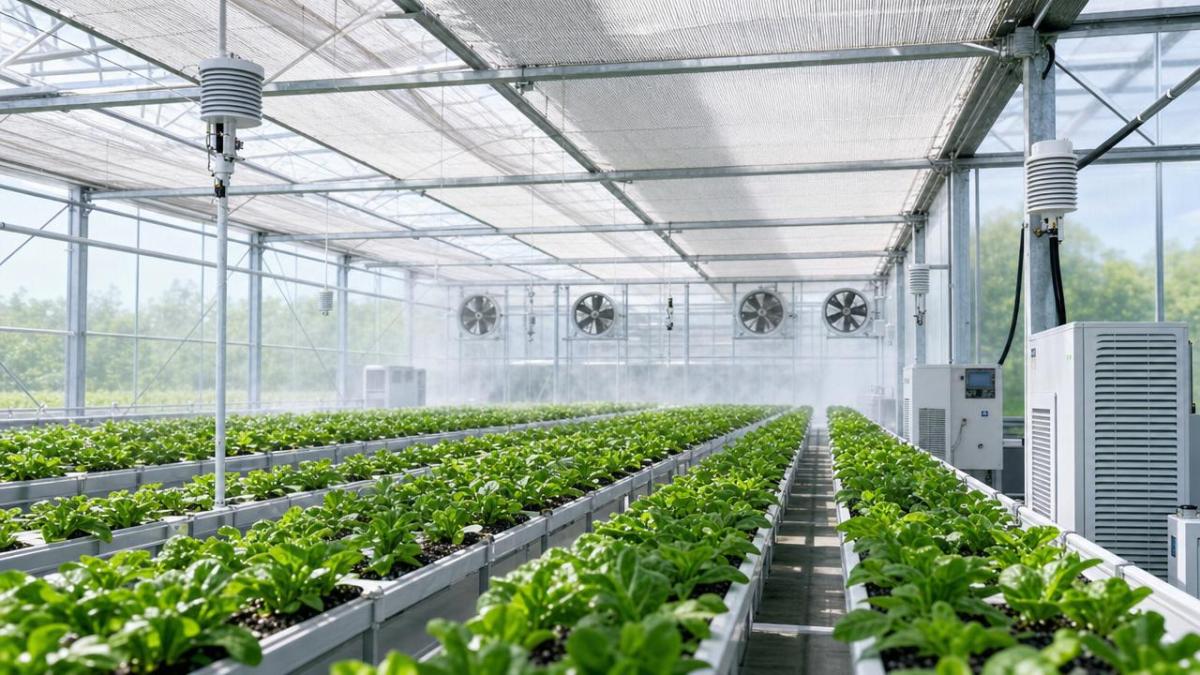
Industry overview: comparing system approaches in humid conditions
The table below summarizes how common environmental control approaches behave when moisture is the limiting factor rather than heat alone.
Application value for technical evaluation teams
For technical assessment personnel, the real value of climate control systems for greenhouse use lies in measurable operational outcomes. First, stable humidity management protects biological performance. A crop that transpires consistently is easier to steer for growth rate, nutrient uptake, and morphology. Second, stable environmental control improves planning accuracy. Production managers can predict harvest windows more reliably when stress events are reduced. Third, better environmental consistency supports documentation and traceability, which matter in supply chains tied to food safety, botanical extraction, pharmaceutical precursors, or export quality specifications.
This is particularly relevant to institutional buyers and industrial operators who read specialized intelligence platforms. They increasingly evaluate greenhouse assets like process infrastructure, not just agricultural shelters. In that context, the chosen system must align with compliance expectations, utility availability, labor skill levels, and future expansion plans. A technically elegant solution with poor local support may introduce procurement risk. Conversely, a scalable hybrid design with documented performance curves can strengthen long-term asset reliability.
Typical greenhouse scenarios and preferred control logic
Different production objectives change the preferred balance within climate control systems for greenhouse operations. The best approach depends on crop sensitivity, occupancy density, and the cost of environmental deviation.
Practical evaluation criteria before approval
A sound technical review should begin with psychrometric reality, not vendor claims. Teams should examine historical weather data, day-night humidity swings, and seasonal dew point patterns. They should then test whether the proposed system can maintain target conditions during the most difficult hours, which are often early morning and post-irrigation periods rather than midday peaks.
Key questions include: What is the moisture removal strategy when outside air is already humid? How will the system avoid condensation on glazing, structure, and leaf surfaces? Are sensors placed at crop level and calibrated for long-term reliability? Does the control software prioritize temperature at the expense of humidity, or can it optimize both? What redundancy exists if a fan bank, actuator, or communication node fails?
It is also wise to evaluate commissioning discipline. Many climate control systems for greenhouse projects fail not because the hardware is weak, but because setpoints, alarm thresholds, and air-balancing procedures are poorly executed at startup. Site acceptance should include airflow verification, sensor validation, trend-log review, and operator training under simulated high-humidity events.
Lifecycle considerations: beyond initial specification
In humid regions, corrosion resistance and maintenance accessibility deserve serious attention. Salt-laden coastal air, fertilizer aerosols, and constant condensation can shorten equipment life. Fan housings, coils, fasteners, sensors, and control enclosures should be checked for material suitability and ingress protection. Filter maintenance intervals, drain management, and biological fouling prevention also affect long-term system integrity.
Energy strategy must be reviewed with equal care. Some operations can reduce total cost by using staged control logic: natural ventilation when conditions allow, mechanical support during critical humidity windows, and thermal curtains to reduce latent and sensible load at night. Others may justify heat recovery or integrated building-management connections if the greenhouse is part of a broader industrial campus. For large operators, this systems perspective turns climate control from an isolated utility expense into a controllable production variable.
Implementation guidance for evidence-based decisions
For organizations comparing climate control systems for greenhouse deployment in humid zones, the most reliable path is phased technical validation. Start with environmental targets linked to crop physiology and quality metrics. Request vendor performance data under humid boundary conditions, not generic climate assumptions. Compare projected capex with modeled disease risk reduction, labor savings, and output consistency. Favor designs that provide measurable airflow patterns, moisture removal logic, clear maintenance protocols, and integration with supervisory control systems.
Where possible, require trend logging from pilot compartments or reference sites with similar external humidity profiles. This gives evaluators objective insight into how the system behaves during dawn recovery, storm events, and peak transpiration periods. In high-stakes supply chains, a documented operating envelope is more valuable than a nominal equipment rating.
Conclusion
In wet climates, the right climate control systems for greenhouse facilities are defined by balance: cooling with moisture control, efficiency with resilience, automation with maintainability, and capital discipline with crop protection. Technical evaluators who focus on psychrometrics, airflow uniformity, commissioning quality, and lifecycle serviceability will make stronger long-term decisions than those who compare temperature capacity alone. For industrial growers, OEM partners, and procurement teams operating in regulated or quality-sensitive sectors, that balanced approach is what turns environmental control into a durable production advantage.
Related Intelligence
- Climate Control & VentilationClimate control systems for greenhouse in humid zones: key tradeoffsClimate control systems for greenhouse operations in humid zones require smart tradeoffs. Explore energy, dehumidification, airflow, and automation factors to choose a more reliable, cost-effective solution.
- Climate Control & VentilationClimate control systems for greenhouse: sizing mistakes to avoidClimate control systems for greenhouse projects fail when loads are guessed. Learn the top sizing mistakes, compare options, and protect crop performance, energy efficiency, and budget.
- Climate Control & VentilationVietnam Enforces Smart Greenhouse Energy Labeling from May 2026Vietnam's new Smart Greenhouse Energy Labeling rule (effective May 2026) mandates VEL Level II+ for climate control equipment — act now to avoid port delays and secure market access.
The Morning Broadsheet
Daily chemical briefings, market shifts, and peer-reviewed summaries delivered to your terminal.
