

The Authority in Global Agricultural Chemistry & Bio-Resources
Feed & Grain processing equipment failures that start with poor layout
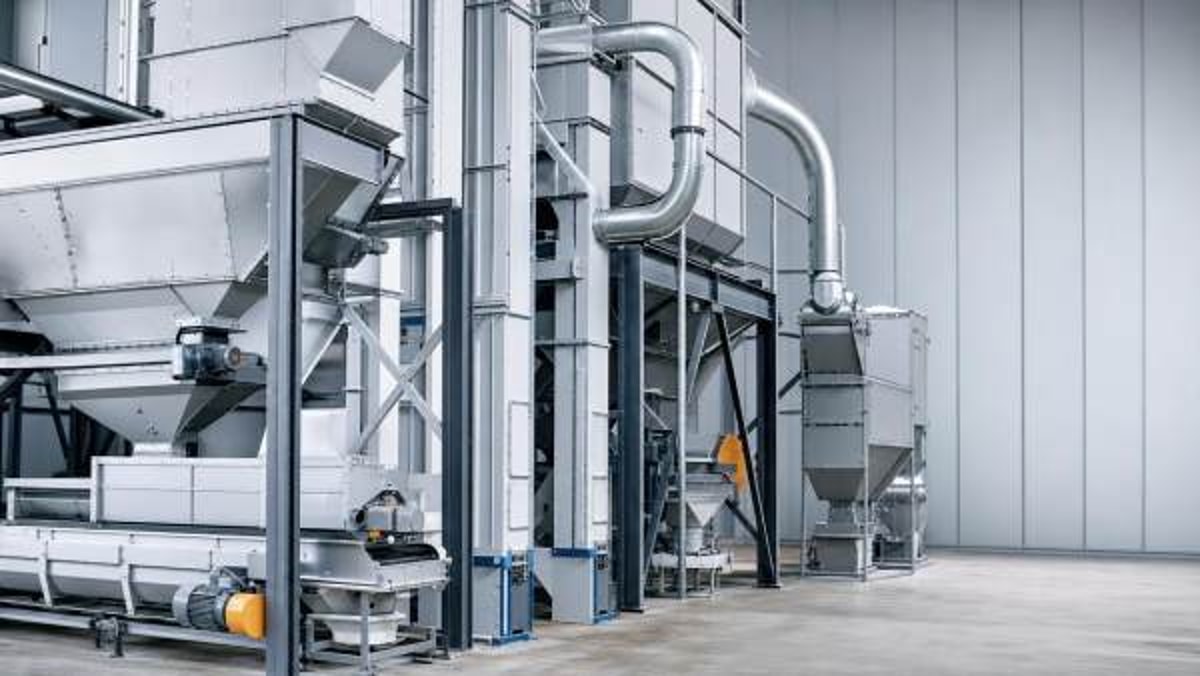
Many Feed & Grain processing equipment failures are not caused by wear alone, but by layout decisions made long before commissioning. For project managers and engineering leads, poor equipment placement can trigger bottlenecks, dust risks, maintenance delays, and rising lifecycle costs. This article examines how layout flaws undermine reliability, throughput, and compliance, and what to evaluate early to prevent costly operational setbacks.
Why layout risk is becoming a bigger issue in modern plants
A clear industry shift is underway: Feed & Grain processing equipment is being asked to do more in less space, under stricter safety expectations, with tighter labor availability and less tolerance for downtime. In older facilities, layout weaknesses were often absorbed by experienced operators who knew how to work around congestion, cleanup difficulty, or awkward access. In new or expanded plants, that margin is disappearing. Throughput targets are higher, product changeovers are more frequent, and compliance pressure around dust, sanitation, and traceability is stronger than it was a decade ago.
For project managers, this means equipment reliability can no longer be judged only by the machine specification. The practical question is whether the full arrangement of conveyors, bins, grinders, mixers, aspiration lines, access routes, and utility corridors supports stable operation. When the layout is wrong, even high-quality Feed & Grain processing equipment can experience chronic plugging, vibration, carryback, contamination risk, overheating, and delayed maintenance response.
The trend is especially relevant in integrated primary processing environments where grain handling, ingredient dosing, dust control, packaging, and outbound logistics are expected to function as one coordinated system. The layout has become a strategic reliability factor, not just a drafting exercise.
What has changed in plant design priorities
Several design priorities have shifted at the same time, and together they explain why poor placement now causes more visible equipment failures.
These changes matter because many failures attributed to machine quality are actually system-design failures. A hammer mill installed too close to a wall, a bucket elevator positioned without proper service clearance, or a conveying route with excessive turns may all appear to be isolated technical faults later. In reality, the root cause began when layout choices ignored operating reality.
The most common layout-driven failure patterns
In today’s plants, layout problems usually show up in repeatable patterns rather than dramatic one-time mistakes. Project leaders should watch for these warning signals early in design review:
Restricted maintenance access. When technicians cannot safely reach bearings, drives, screens, valves, or inspection doors, preventive maintenance gets postponed. That turns ordinary wear into emergency failure. Feed & Grain processing equipment depends on consistent inspection intervals; blocked access quietly destroys that discipline.
Poor material flow geometry. Awkward transitions, steep changes in direction, or inconsistent drop distances create surging, bridging, and segregation. The issue is not only lost throughput. Flow instability increases stress on motors, belts, and bearings while reducing process predictability.
Dust extraction conflicts. A layout that treats aspiration as an afterthought often creates dead zones, difficult duct runs, or maintenance areas exposed to fugitive dust. This affects housekeeping, explosion risk management, and sensor reliability.
Utility congestion. Compressed air, electrical trays, steam, water, and automation wiring are frequently forced into leftover space. Once utility routing becomes congested, future repairs become slower and unplanned outages become more disruptive.
Operator movement inefficiency. If sampling points, control stations, bagging lines, and cleanout locations are too far apart or located across busy forklift paths, the process becomes slower and less safe. This can indirectly raise failure rates by delaying response to alarms and abnormal conditions.
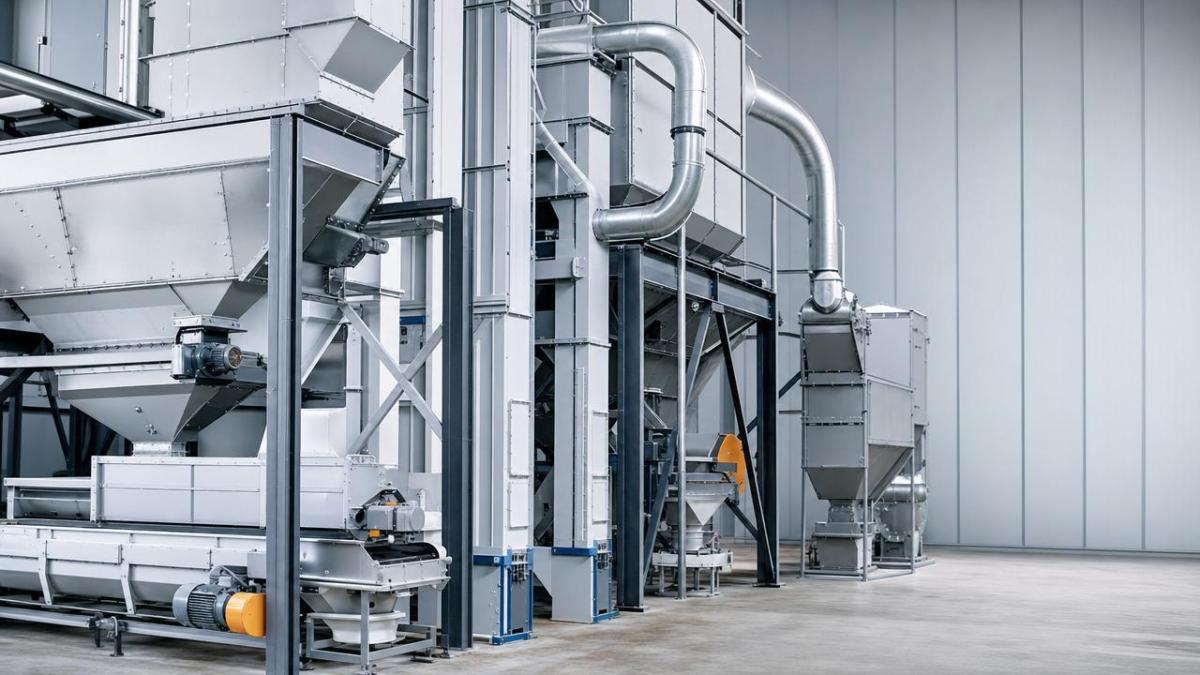
Why these failures are increasing in retrofit and expansion projects
One of the strongest signals in the sector is the rising number of brownfield upgrades. Many operators are not building entirely new sites; they are expanding existing facilities to meet demand, improve automation, or add product flexibility. That creates a difficult balance. The business wants faster capital deployment, but the physical footprint was never designed for current process expectations.
In retrofit projects, Feed & Grain processing equipment is often selected correctly at the unit level but inserted into a constrained arrangement that introduces hidden performance penalties. Ceiling heights may force tighter conveyor angles. Existing foundations may dictate machine orientation. Legacy dust systems may be reused beyond their practical capacity. In such cases, the equipment may commission successfully yet enter operation with built-in reliability weakness.
For engineering leads, this is an important change in project risk: layout is no longer just about fitting equipment into available space. It is about deciding which compromises create acceptable operational trade-offs and which ones guarantee recurring failures later.
Who feels the impact most across the project lifecycle
The consequences of poor placement are distributed across teams, but not evenly. Some roles absorb the damage earlier and more directly than others.
This multi-role impact is why layout review should happen as a cross-functional exercise. A design that looks efficient on a two-dimensional drawing may create serious problems when operators, electricians, mechanics, and EHS personnel test it against actual daily use.
What project managers should evaluate earlier than they used to
A notable industry change is the timing of critical layout decisions. In many projects, commercial pressure still pushes detailed operational review too late, after major procurement or civil commitments are already made. That approach is becoming more expensive. The earlier evaluation window now needs to include practical reliability questions, not only capacity and footprint checks.
First, test the material path, not just the equipment list. Ask where surging, buildup, or product degradation could occur between machines. Second, verify maintainability as a measurable requirement. If a screen cannot be removed safely or a gearbox cannot be serviced without scaffolding and shutdown coordination, the layout is already signaling future cost. Third, review interaction between dust control and process routing. Dust collection should not be left to late-stage coordination.
Fourth, evaluate changeover and cleaning logic. As product diversity rises, Feed & Grain processing equipment must support faster transitions with lower contamination risk. Finally, challenge the design against probable future modifications. A layout that works only in its exact initial state may become obsolete too quickly in a market that increasingly values flexibility.
How procurement expectations are changing for Feed & Grain processing equipment
Procurement teams are also changing what they ask suppliers and integrators to prove. The conversation is moving beyond machine performance data toward total operational fit. This is an important shift for decision-makers: the best Feed & Grain processing equipment purchase is not necessarily the unit with the strongest standalone specification, but the one that performs reliably within the real site constraints.
That means vendors are increasingly expected to support 3D review, service envelope confirmation, utility interface clarity, and practical maintenance planning. Buyers who skip these questions often inherit hidden site costs later in the form of rework, downtime, or safety exposure. In other words, layout intelligence is becoming part of equipment due diligence.
A practical judgment framework for the next project phase
For teams preparing a new line, expansion, or modernization effort, the most useful approach is not to search for a perfect design, but to judge where layout weakness will create the greatest lifecycle penalty.
The larger direction: from equipment selection to system resilience
The bigger trend behind all of this is a change in how industrial buyers define value. In the past, evaluation often centered on purchase price, rated capacity, and installation speed. Today, more teams are recognizing that resilience comes from system interaction. Feed & Grain processing equipment succeeds when placement, access, utilities, dust handling, operator movement, and maintenance logic work together over time.
For project managers and engineering leaders, that changes the decision standard. A layout should be judged not only by whether it can be built, but by whether it can be run, cleaned, inspected, repaired, and adapted without constant friction. Plants that understand this early are better positioned to protect uptime, control lifecycle cost, and meet rising operational expectations.
Final decision signals to confirm before moving forward
If your team is reviewing Feed & Grain processing equipment for a new build or retrofit, the strongest next step is to test the layout against real operational scenarios before final commitment. Confirm how the system behaves during maintenance, blockage clearance, cleaning, dust control, emergency access, and future modification. Ask which failure modes are being prevented by design, and which ones are merely being accepted as operator problems.
That distinction is where many costly setbacks begin. When companies want to judge how these trends affect their own projects, they should focus on five questions: where access is constrained, where flow is unstable, where dust is likely to accumulate, where people lose time, and where future changes will be hardest to absorb. Those answers usually reveal whether the layout will support reliable performance or quietly undermine it from day one.
Related Intelligence
- Milling MachineryFeed & Grain processing equipment failures that start with poor layoutFeed & Grain processing equipment failures often begin with poor layout. Learn how smarter plant design improves uptime, safety, maintenance access, and lifecycle cost.
- Milling MachineryFeed & Grain processing technology trends that change upgrade plansFeed & Grain processing technology trends are reshaping plant upgrade plans with smarter automation, energy savings, compliance readiness, and stronger ROI. Explore what matters before you invest.
- Milling MachineryFeed & Grain Processing Technology Trends Worth WatchingFeed & Grain processing technology trends shaping 2025: explore automation, traceability, energy efficiency, and compliance strategies that help plants cut costs, reduce risk, and stay competitive.
The Morning Broadsheet
Daily chemical briefings, market shifts, and peer-reviewed summaries delivered to your terminal.
