
The Authority in Global Agricultural Chemistry & Bio-Resources
Feed & Grain processing technology trends that change upgrade plans
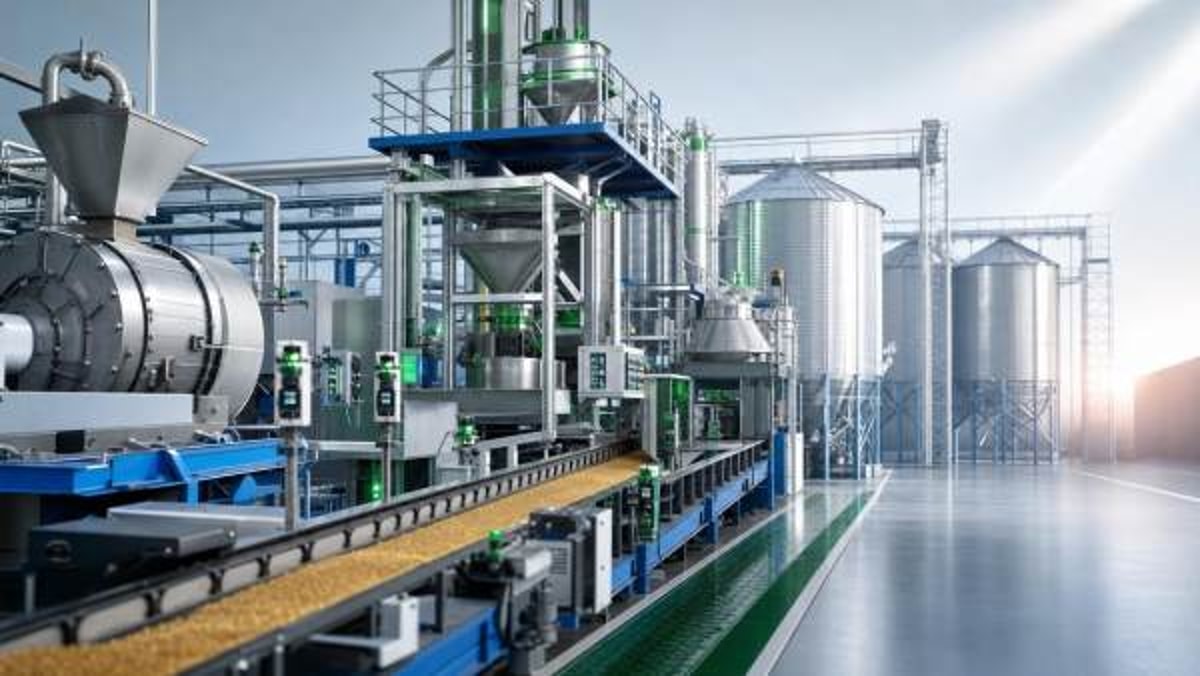
Feed & Grain processing technology is redefining how project leaders plan plant upgrades, balancing throughput gains with stricter compliance, energy targets, and supply chain risk control. For engineering managers and capital project owners, understanding the latest automation, data integration, and process optimization trends is now essential to making smarter investment decisions and building facilities that remain competitive under evolving market and regulatory pressures.
Why is Feed & Grain processing technology suddenly reshaping upgrade plans?
For many project managers, the shift is not sudden at all; it is the result of several pressures converging at once. Feed mills, grain handling terminals, and integrated processing plants are being asked to deliver more output with tighter quality consistency, lower operating cost, and greater traceability. At the same time, capital approvals are more demanding. Owners want proof that every upgrade supports measurable gains in uptime, energy efficiency, labor productivity, and regulatory readiness.
This is why Feed & Grain processing technology has become a board-level topic rather than a narrow engineering discussion. The conversation now covers smart conveying systems, automated batching, in-line quality sensing, digital twins, predictive maintenance, dust and explosion mitigation, and plant-wide data visibility. Instead of treating upgrades as isolated equipment replacements, leading teams are evaluating them as system redesigns that affect scheduling, procurement, utilities, operator training, and maintenance strategy.
For project owners in a broad industrial environment, the main implication is clear: old upgrade logic based only on nameplate capacity is no longer enough. A new hammer mill, pellet press, dryer, or cleaning line may look attractive on paper, but if it creates downstream bottlenecks, raises power peaks, complicates sanitation, or fails to integrate with ERP and MES systems, the project can underperform. The technology trend is therefore changing not just what plants buy, but how they define return on investment.
Which technology trends matter most when planning a plant modernization?
Not every trend deserves equal weight. Engineering leaders should separate high-impact trends from background industry noise. In current Feed & Grain processing technology planning, five trends usually drive the strongest effect on upgrade decisions.
First, automation is moving from task-level control to process-level orchestration. Plants are no longer automating only bagging, batching, or conveying. They are connecting intake, cleaning, grinding, mixing, pelleting, cooling, storage, and dispatch into a coordinated control environment. This reduces operator dependence and makes production changes faster and safer.
Second, real-time data integration is becoming a practical requirement. Sensors that monitor moisture, temperature, particle size, vibration, load, and energy draw help teams see where yield loss or instability begins. The advantage is not just visibility; it is faster decision-making during commissioning and long-term optimization after startup.
Third, energy performance is moving to the center of project evaluation. Drying, grinding, aspiration, and thermal processing are major cost centers. New Feed & Grain processing technology often includes variable frequency drives, heat recovery options, advanced burner control, and load balancing logic. These features matter because utility volatility can erase the expected payback of a capacity-led upgrade.
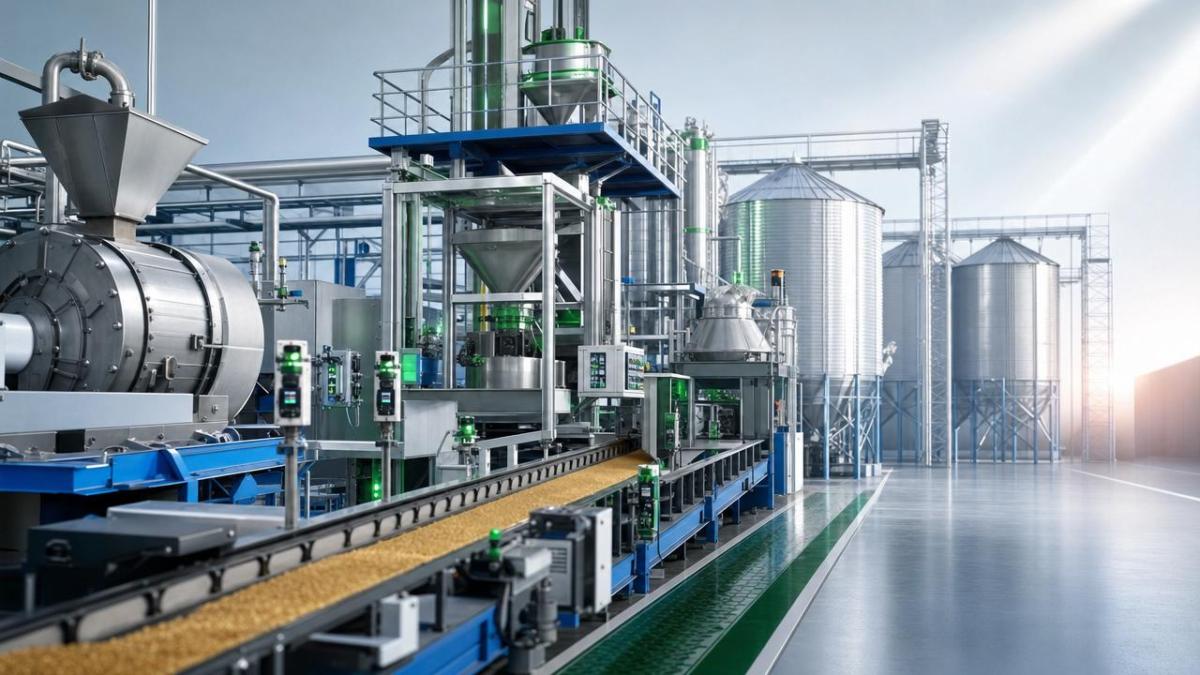
Fourth, traceability and compliance architecture are being designed into the process itself. This includes recipe control, batch genealogy, alarm history, sampling discipline, sanitation checkpoints, and document-ready reporting. In sectors where cross-border trade and audit exposure are increasing, technology that supports defensible records is now a strategic asset.
Fifth, modularity is gaining importance. Instead of full shutdown rebuilds, many owners prefer phased projects with skid-based systems, preassembled controls, or parallel line additions. This trend is especially valuable when customer demand is stable but operating windows for construction are short. In practice, the best Feed & Grain processing technology trend is often the one that reduces implementation risk while still enabling future expansion.
How can project managers tell whether a technology upgrade is truly suitable for their facility?
Suitability depends less on vendor claims and more on plant context. A technology that performs well in a greenfield feed complex may create problems in a brownfield grain site with legacy utilities, mixed raw materials, and irregular receiving patterns. Before comparing suppliers, project managers should define the operational reality the new system must handle.
Start with material behavior. Grain variety, moisture variation, oil content, density, contamination level, and seasonal fluctuations all affect equipment sizing and control logic. Feed & Grain processing technology must be selected around actual product behavior, not average brochure conditions. This is especially important for grinding, screening, pelleting, cooling, drying, and storage interfaces.
Then assess line balance. Many modernization projects fail because they optimize one process node while leaving hidden constraints elsewhere. A faster receiving pit means little if pre-cleaning cannot keep pace. A new dryer can create upstream congestion or downstream cooling delays. Suitability therefore requires a flow-based view covering capacity, surge volumes, residence time, maintenance access, sanitation routing, and utility loads.
Project leaders should also test organizational fit. Does the site have personnel capable of supporting advanced controls? Are spare parts and service available in the operating region? Can the maintenance team handle calibration, software updates, and instrument diagnostics? The most advanced Feed & Grain processing technology may not be the best choice if the local support model is weak or if training has been underestimated.
Quick evaluation table for upgrade suitability
Use the following checklist early in the feasibility stage to avoid overbuying or solving the wrong problem.
What are the most common mistakes when comparing upgrade options?
A frequent mistake is evaluating Feed & Grain processing technology only by headline throughput. Capacity matters, but project outcomes are shaped by uptime, changeover efficiency, product loss, emissions control, sanitation design, and control stability. An option with lower nameplate speed may produce more saleable output over a year if it is easier to clean, more stable under variable input conditions, and less prone to unplanned stoppages.
Another mistake is assuming digital functionality is automatically valuable. Dashboards, remote monitoring, and analytics can be powerful, but only if the data architecture is purposeful. Too many projects install instruments without deciding who will use the information, what actions follow alarms, or how data will support maintenance and process improvement. Good digital design begins with operating decisions, not with screens.
A third error is underestimating installation complexity in brownfield sites. Legacy foundations, tight pipe racks, old cable routes, inconsistent utility documentation, and dusty operating environments can turn a simple equipment replacement into a major shutdown event. In these cases, Feed & Grain processing technology selection should include constructability reviews, laser scanning, shutdown sequencing, and temporary bypass planning.
Many teams also separate process engineering from compliance review too late. Dust control, explosion venting, fire protection, hygiene zoning, environmental permits, and audit documentation should be reviewed at concept stage. If these issues are deferred until procurement or commissioning, redesign costs rise quickly and schedule certainty drops.
How do cost, timeline, and ROI assumptions change with newer Feed & Grain processing technology?
Newer systems often carry higher upfront costs, especially when controls, data infrastructure, safety systems, and integration engineering are included. However, comparing capital cost alone can be misleading. Project managers should model total value across several categories: energy consumption, labor intensity, maintenance burden, product giveaway, startup losses, compliance exposure, and flexibility for future recipes or raw materials.
Timeline assumptions also need updating. Advanced Feed & Grain processing technology usually requires more front-end definition, software coordination, FAT planning, and commissioning discipline than conventional equipment swaps. This can make early project phases feel slower. Yet better early definition often reduces surprises during installation and speeds stable ramp-up after handover. For owners, the right question is not simply “How fast can we install?” but “How fast can we reach reliable design performance?”
ROI is increasingly linked to resilience. If a technology platform allows remote diagnostics, easier recipe changes, faster cleaning, or lower dependency on scarce skilled operators, it may protect production in ways that traditional payback models miss. In volatile markets, resilience has financial value. The same applies to traceability features that reduce customer disputes or simplify export compliance.
This is why many sophisticated owners now use a tiered business case. Tier one covers direct savings and capacity gains. Tier two includes risk reduction and compliance support. Tier three considers strategic flexibility, such as easier expansion, product diversification, or smoother integration with future automation phases. Feed & Grain processing technology decisions become stronger when all three tiers are visible to stakeholders.
What should engineering leaders confirm before moving from interest to execution?
Before issuing purchase orders, engineering leaders should lock down a short list of practical questions. What exact problem is the project solving, and how will success be measured? Which interfaces are in scope, including civil works, utilities, controls, dust systems, and operator stations? What shutdown windows are realistic? Which site data are verified, and which are assumptions? These questions sound basic, but they prevent scope drift and contractor disputes later.
It is also important to define acceptance criteria in business terms rather than only equipment terms. For example, instead of accepting a line because a machine reaches test speed for one hour, define success around stable throughput, moisture target, product uniformity, energy use, alarm frequency, and cleaning time over a representative operating period. That approach aligns Feed & Grain processing technology procurement with actual production needs.
Supplier evaluation should go beyond references and include engineering depth, commissioning support, documentation quality, and responsiveness during design clarification. A capable vendor or integration partner will discuss layout constraints, access for maintenance, utility sensitivity, safety interlocks, and data mapping in detail. If those conversations stay vague, the execution risk is usually higher than the quotation suggests.
What are the key takeaways for teams building an upgrade roadmap?
The most important lesson is that Feed & Grain processing technology should be evaluated as an operational system, not as a collection of isolated machines. Upgrade plans work better when they begin with bottleneck evidence, raw material reality, compliance demands, and lifecycle support requirements. Technology trends are valuable only when they improve plant performance in measurable ways.
For project managers and engineering owners, the strongest roadmap usually combines phased modernization, clear data priorities, realistic commissioning plans, and a total-cost mindset. Automation, sensing, and digital integration can generate substantial gains, but only when process fit and organizational readiness are equally strong. If you need to confirm a specific solution, parameters, project direction, implementation cycle, budget logic, or cooperation model, the best next step is to discuss actual material characteristics, existing bottlenecks, utility conditions, control architecture, compliance targets, and shutdown constraints before finalizing any procurement decision.
Related Intelligence
- Milling MachineryFeed & Grain processing equipment failures that start with poor layoutFeed & Grain processing equipment failures often begin with poor layout. Learn how smarter plant design improves uptime, safety, maintenance access, and lifecycle cost.
- Milling MachineryFeed & Grain processing technology trends that change upgrade plansFeed & Grain processing technology trends are reshaping plant upgrade plans with smarter automation, energy savings, compliance readiness, and stronger ROI. Explore what matters before you invest.
- Milling MachineryFeed & Grain Processing Technology Trends Worth WatchingFeed & Grain processing technology trends shaping 2025: explore automation, traceability, energy efficiency, and compliance strategies that help plants cut costs, reduce risk, and stay competitive.
The Morning Broadsheet
Daily chemical briefings, market shifts, and peer-reviewed summaries delivered to your terminal.
