
The Authority in Global Agricultural Chemistry & Bio-Resources
Feed & Grain Processing Technology Trends Worth Watching
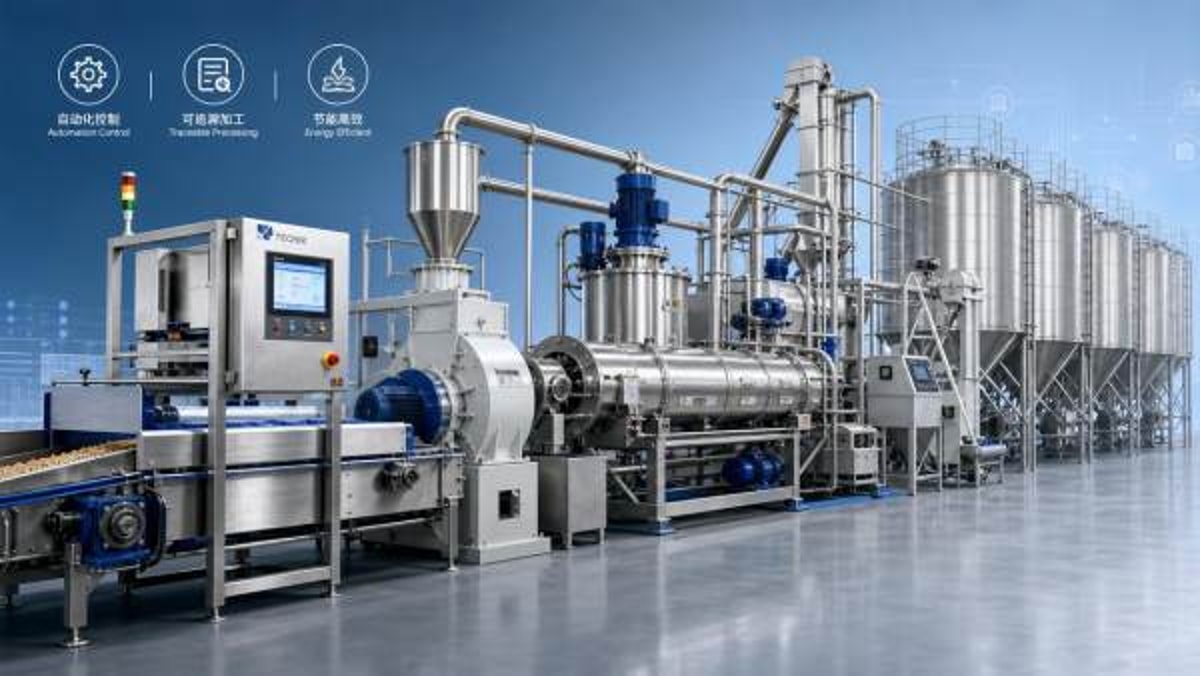
Feed & Grain processing technology is entering a new phase shaped by automation, traceability, energy efficiency, and stricter compliance demands. For business decision-makers navigating volatile supply chains and rising quality standards, understanding the trends worth watching is essential to protecting margins, strengthening procurement strategies, and building resilient operations in an increasingly competitive global market.
Why is Feed & Grain processing technology receiving so much attention now?
Feed & Grain processing technology has become a strategic boardroom topic because the sector now sits at the intersection of food security, cost volatility, regulatory scrutiny, and digital transformation. What once looked like a plant-level efficiency issue is now a supply chain risk issue. Rising energy prices, tighter residue and contamination controls, labor shortages, and pressure to document ingredient origin are forcing processors to modernize faster than many expected.
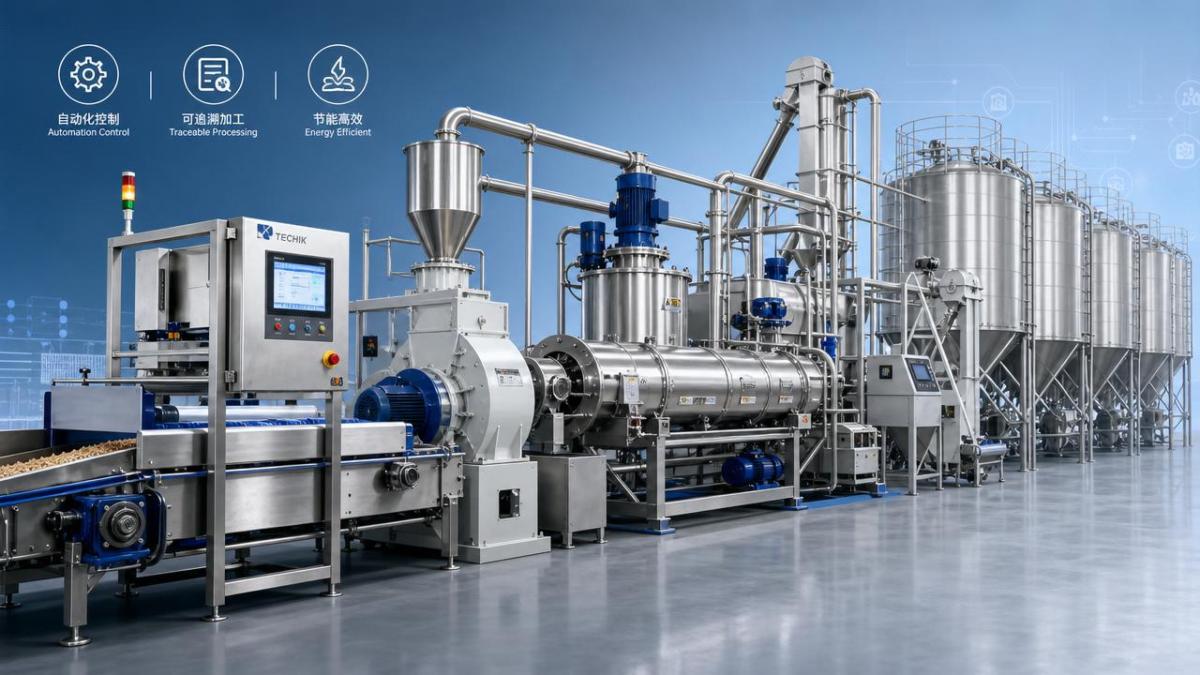
For enterprise decision-makers, the key shift is that processing performance no longer depends only on throughput. Buyers, regulators, and downstream customers increasingly want proof of consistency, safety, and sustainability. This means Feed & Grain processing technology must support not only grinding, mixing, pelleting, drying, and storage, but also real-time data capture, quality verification, and auditable process control.
The companies drawing attention today are not simply investing in larger equipment. They are investing in smarter lines that reduce variability, detect problems earlier, and make procurement more predictable. In practical terms, that includes sensor-enabled processing, automated formulation adjustments, lower-energy thermal systems, and digital traceability tools that connect raw material intake to final shipment records.
Which technology trends in Feed & Grain processing matter most for business leaders?
Several trends deserve close attention, but not all have equal business impact. The most important are those that influence operating margin, compliance readiness, and supplier resilience. The first is advanced automation. Modern systems can automatically adjust moisture, temperature, and particle size settings based on changing raw material characteristics. This reduces inconsistency and helps plants maintain output quality even when commodity inputs vary.
The second major trend is traceability by design. Digital lot tracking, integrated ERP connections, and line-level data logging are becoming essential in Feed & Grain processing technology. These capabilities help companies respond faster to audits, quality complaints, and export documentation requests. They also support procurement teams that need clearer supplier performance data over time.
A third trend is energy optimization. Drying, pelleting, and grinding are energy-intensive steps, so technology that lowers steam usage, improves heat recovery, or shortens processing cycles can deliver measurable cost benefits. Energy-efficient motors, variable frequency drives, and predictive maintenance platforms are moving from optional upgrades to standard investment considerations.
The fourth trend is contamination control and process assurance. As quality standards become stricter, processors are adding inline inspection, metal detection, automated sanitation routines, and better segregation protocols. This is particularly relevant for facilities supplying regulated or export-oriented markets where one contamination event can disrupt customer trust for years.
Finally, analytics-enabled decision-making is reshaping plant management. More companies are using dashboards and machine data to identify bottlenecks, compare batch performance, and forecast maintenance needs. In a competitive environment, Feed & Grain processing technology is no longer only mechanical infrastructure; it is increasingly a source of commercial intelligence.
How can leaders tell whether a technology trend is truly relevant or just industry hype?
This is one of the most practical questions in the market. Not every innovation justifies immediate investment. A useful test is to ask whether the technology improves one of four business-critical outcomes: cost per ton, process consistency, compliance visibility, or downtime reduction. If a solution does not materially affect at least one of these, it may be interesting but not urgent.
Decision-makers should also distinguish between digital visibility and operational control. Some platforms generate attractive data dashboards but do little to improve actual process performance. The stronger solutions in Feed & Grain processing technology are those that translate data into action, such as automatic parameter correction, deviation alerts, or maintenance scheduling tied to machine condition.
Another useful filter is implementation friction. A promising system that requires major line redesign, retraining across multiple shifts, and difficult software integration may not deliver returns as quickly as a more targeted upgrade. In many facilities, phased modernization creates more value than a full replacement strategy. For example, adding smart controls to existing pelleting or drying assets may produce a faster payback than building an entirely new line.
Leadership teams should also request evidence from comparable operating environments. A solution that performs well in a pilot facility may not scale smoothly in high-volume commercial production. Ask suppliers for case data on throughput, maintenance intervals, energy savings, and quality performance under realistic raw material variation.
What should companies evaluate before investing in new Feed & Grain processing technology?
Before approving capital expenditure, companies should evaluate fit across process, procurement, and compliance dimensions. Start with the raw material profile. Grain hardness, moisture fluctuation, ingredient diversity, and contamination risk all affect what type of Feed & Grain processing technology will perform reliably. A system optimized for stable input quality may underperform in regions with highly variable crop conditions.
Next, review integration requirements. Can the technology connect to current control systems, quality workflows, and reporting tools? If a new solution creates data silos, the business may lose some of the traceability benefits it expected. The right investment usually strengthens cross-functional visibility between operations, quality assurance, procurement, and management.
Supplier capability is equally important. Buyers should examine not only equipment specifications, but also commissioning support, spare parts availability, software update policies, cybersecurity posture, and response times for technical service. In mission-critical processing environments, the quality of post-sale support can matter as much as the machinery itself.
Companies should also model total cost of ownership rather than focusing only on acquisition price. Maintenance burden, operator training, energy usage, downtime risk, and validation needs can significantly change the financial picture. In many cases, higher-cost systems generate better long-term economics because they reduce rejects, support compliance, and improve line utilization.
Quick evaluation table for decision-makers
The table below summarizes how to prioritize common investment questions around Feed & Grain processing technology.
What are the most common mistakes companies make when upgrading processing lines?
A frequent mistake is buying for nameplate capacity rather than actual operating reality. A line may be rated for high throughput, but if raw material quality fluctuates or maintenance skills are limited, the plant may never achieve that performance consistently. In Feed & Grain processing technology, usable and repeatable output matters more than theoretical maximum speed.
Another mistake is underestimating data governance. Companies often invest in connected equipment without deciding who owns the data, how long records are retained, or how digital evidence will support audits and supplier claims. This weakens the value of traceability and can create internal confusion between operations and compliance teams.
Some businesses also focus too narrowly on equipment and overlook process discipline. Even advanced Feed & Grain processing technology cannot compensate for poor sanitation practices, weak incoming inspection, or inconsistent operator procedures. Technology works best when paired with clear SOPs, training, and accountability.
A further risk is treating sustainability as a marketing issue rather than an engineering issue. Energy savings, water use reduction, dust management, and waste minimization should be built into technology selection from the beginning. Buyers increasingly ask for measurable sustainability indicators, and regulators are paying closer attention to environmental performance in industrial processing operations.
How do automation, traceability, and compliance work together in modern Feed & Grain processing technology?
These three factors are often discussed separately, but in practice they reinforce one another. Automation improves repeatability by reducing manual variation in critical processing steps. Traceability documents what happened, when it happened, and which material lot was affected. Compliance frameworks depend on both: consistent control and credible records.
For example, if a moisture deviation occurs during conditioning or drying, an automated system can trigger an alert or adjustment before quality drifts too far. At the same time, the event is recorded in the batch history, making later review possible. This combined capability is where modern Feed & Grain processing technology creates strategic value. It reduces quality risk while giving management a clearer basis for decisions.
This also matters for supplier relationships. Better process records help buyers verify whether quality problems originated with raw materials, formulation changes, equipment performance, or operator action. Over time, that transparency strengthens procurement strategy because it links supplier performance with actual processing outcomes rather than assumptions.
What questions should decision-makers ask before moving forward with a supplier or project?
Before committing to a project, leaders should ask a small set of practical questions that reveal whether the solution is ready for serious evaluation. First, what exact business problem is the upgrade solving: yield loss, energy cost, contamination risk, labor dependence, traceability gaps, or export readiness? Clear problem definition prevents overspending on features that do not support the business case.
Second, what performance benchmarks can the supplier validate in a comparable environment? Third, what implementation timeline, training requirement, and shutdown window should be expected? Fourth, how will the system support future changes in formulation, capacity, or compliance obligations? And fifth, what data outputs will management receive to confirm that the promised value is actually being delivered?
In the current market, Feed & Grain processing technology should be assessed not just as equipment, but as a long-term operating platform. The strongest investments are those that improve resilience, create measurable efficiency, and strengthen visibility across the entire value chain.
Final takeaway: what should companies prioritize next?
The trends worth watching are the ones that convert complexity into control. For most industrial buyers and operators, that means prioritizing Feed & Grain processing technology that improves adaptive automation, digital traceability, energy efficiency, contamination prevention, and decision-grade analytics. Companies that move early on these priorities are better positioned to manage volatile inputs, tighter customer expectations, and increasingly demanding compliance environments.
If further evaluation is needed, the first conversations should focus on process pain points, target capacity, raw material variability, required certifications, integration constraints, expected payback period, and service support. Those questions will quickly show whether a vendor, project scope, or modernization path is aligned with your operational goals and procurement strategy.
Related Intelligence
- Milling MachineryFeed & Grain Processing Technology Trends Worth WatchingFeed & Grain processing technology trends shaping 2025: explore automation, traceability, energy efficiency, and compliance strategies that help plants cut costs, reduce risk, and stay competitive.
- Milling MachineryFeed & Grain Processing Equipment Bottlenecks to Check EarlyFeed & Grain processing equipment bottlenecks can derail throughput, safety, and startup. Learn the early checks that help project teams avoid delays, cut risk, and improve plant performance.
- Milling MachineryFeed & Grain Processing Technology Trends Worth Watching in 2026Feed & Grain processing technology trends for 2026: discover smarter automation, energy-saving systems, and traceability upgrades that help buyers improve efficiency and reduce risk.
The Morning Broadsheet
Daily chemical briefings, market shifts, and peer-reviewed summaries delivered to your terminal.
